
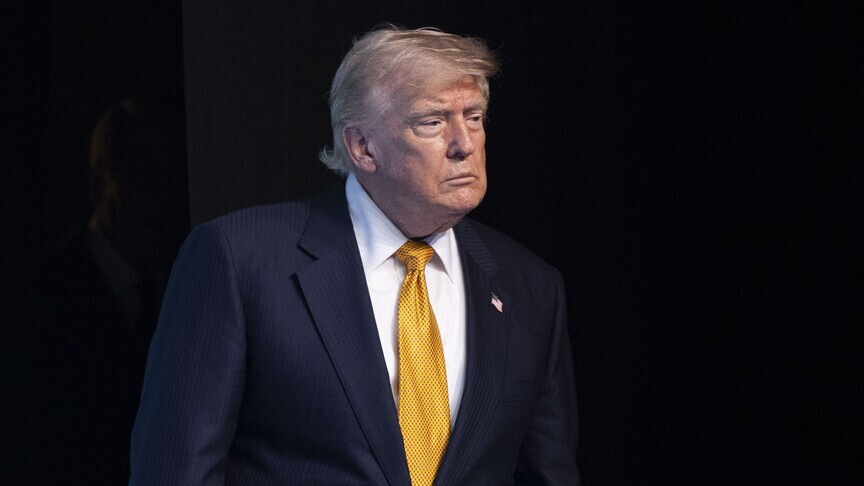
US President Donald Trump has recently indicated that he is at a pivotal moment regarding the ongoing conflict with Iran. His statements reflect a sense of urgency, suggesting that significant actions will be undertaken if Tehran does not alter its behavior.
Trump’s Ultimatum to Iran
In an interview with Fox News, Trump expressed his frustration over Iran’s actions, stating, “My question is if and when do I blow the entire nation up? They had better behave.” This stark warning reveals his intense dissatisfaction and highlights the precarious nature of U.S.-Iran relations. The president outlined three potential strategies: complete military destruction, economic deterioration, or diplomatic negotiations. He mentioned that “very big things are going to be happening in the not-so-distant future,” suggesting that major developments are on the horizon.
Potential Diplomatic Engagement
As the United Nations General Assembly’s high-level week approaches, Trump hinted at a willingness to engage in dialogue with Iranian officials. He mentioned that he would “probably be open” to meeting with Iranian President Masoud Pezeshkian. However, there has been no immediate response from Tehran regarding this potential meeting. The UN General Assembly is significant as it unites world leaders to discuss pressing global issues, offering a platform for critical diplomatic engagements.
Regional Tensions and Hostilities
Trump’s remarks did not stop at Iran, as he also addressed broader regional conflicts. He noted that the U.S. is actively maintaining communication with the Houthis in Yemen following their ballistic missile strikes against Saudi Arabia. According to Trump, the Houthis have committed to refrain from engaging U.S. forces, reflecting a tactical shift in their approach. This revelation underscores the complex web of alliances and enmities that characterize the ongoing conflict in the Middle East.
Forward-Looking Statements
Anticipating future developments, Trump claimed that the war with Iran is expected to “end after the midterms” in November. This statements illustrate the intersection of political strategy and foreign policy, emphasizing how domestic developments can influence international relations. In line with this growing tension, the U.S. State Department has also issued travel warnings to its citizens due to increasing instability in the region. The warning highlights the potential risks faced by American interests abroad, as Iran and its affiliates may target U.S. entities and citizens globally.
In conclusion, President Trump’s recent remarks underscore a volatile chapter in U.S.-Iran relations, combining elements of military posturing and the prospect of diplomacy. With heightened tensions and major decisions looming, the coming weeks could prove decisive for both Washington and Tehran. As the UN General Assembly convenes, the world watches closely to see whether diplomatic avenues will be pursued or if the situation will escalate further.