
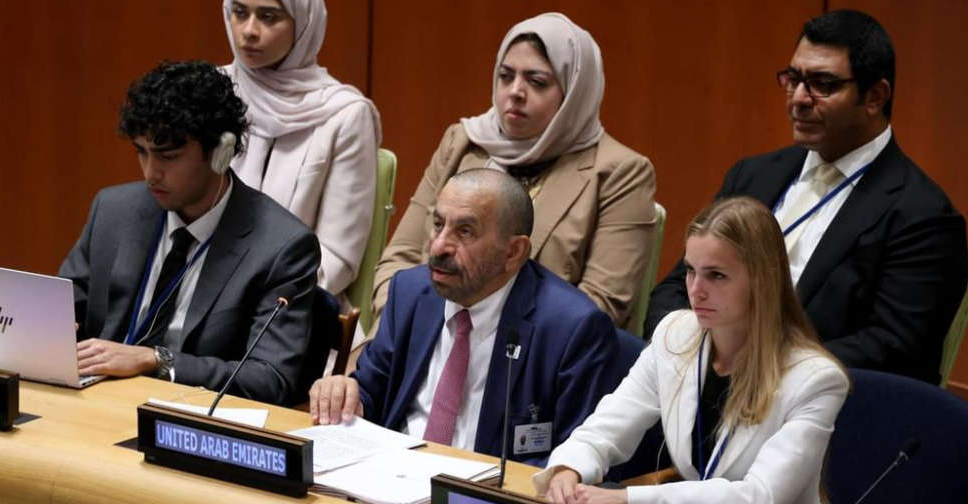
The United Arab Emirates (UAE) is pushing for a more comprehensive global strategy to combat extremism and hate speech. Highlighting the significance of involving community leaders, youth, civil societies, and technology firms, this call for action was made during a global conference in New York.
UAE’s Appeal for Inclusive Dialogue
Khalifa Shaheen Al Marar, the UAE Minister of State, underscored this need for inclusivity while addressing attendees at a conference focused on interreligious and intercultural dialogue. This event took place just ahead of a significant session of the UN General Assembly, where discussions on global initiatives often take center stage. Al Marar emphasized that fostering tolerance and addressing hate speech should be integral components of the United Nations’ activities. He advocated for this focus to be manifested in various aspects of UN operations, including crisis prevention and peacekeeping missions.
UAE’s Commitment to Social Cohesion
During his speech, Al Marar brought attention to the UAE’s own progressive initiatives aimed at promoting tolerance and harmony. He pointed out key projects like the Abrahamic Family House and the Document on Human Fraternity, both of which embody the UAE’s dedication to creating a nurturing environment for diverse cultures. Furthermore, he highlighted a pivotal achievement for the UAE: its influence in creating a UN Security Council resolution on peace, security, and tolerance, which was adopted in 2023.
The Importance of Cultural Diversity
Al Marar also remarked on the unique fabric of the UAE, where over 200 nationalities coexist and contribute to the nation’s growth. This diversity is not just a statistic; it embodies the UAE’s commitment to peaceful cohabitation and cultural understanding. By cultivating a society that values all identities, the UAE sets a model for how nations can benefit from multiculturalism, illustrating that different perspectives can coexist and thrive together.
A Collaborative Effort Against Hate Speech
The conference itself was organized by Morocco, collaborating closely with the UN Office on Genocide Prevention and the Responsibility to Protect, as well as the UN Alliance of Civilizations. Such partnerships signal the urgent need for collaborative efforts in tackling global issues related to violence spurred by hate speech and intolerance. As nations come together to share best practices and strategies, the hope is that these collective experiences can instill a sense of responsibility and urgency regarding the need for action.
In conclusion, the UAE’s push for a united front against extremism and hatred serves as a timely reminder of the importance of dialogue and engagement among diverse communities. By involving various stakeholders, including youth and technology companies, the UAE seeks to create a more inclusive and harmonious world, paving the way for a future defined by understanding rather than division.