
U.S. President Donald Trump has escalated tensions with Iran, indicating potential military actions as the United States focuses on reestablishing control over the vital Strait of Hormuz. This heightened crisis has significant implications not just for the region, but also for global trade routes and international security.
Trump’s Stance on Iran
During a meeting with his Cabinet at Camp David, President Trump expressed his firm position against Iran, stating, “we just want to win.” He signaled that U.S. military actions against the Iranian regime would persist until they can no longer sustain their aggressive behavior. Trump emphasized his intention to impose severe consequences on Iran, stating that the nation would feel the weight of U.S. military might until negotiations are made on terms deemed important by the administration. After a ceasefire agreement was reportedly violated by Iran, White House Press Secretary Karoline Leavitt reiterated U.S. frustrations, alleging that Tehran engaged in attacks against commercial vessels and U.S. personnel.
In light of these rising hostilities, the U.S. State Department issued security alerts for American citizens in ten countries throughout the region, urging them to exercise heightened caution. With Iran’s influence extending into many of the surrounding nations, travelers are advised to prepare for potential disruptions, including flight cancellations and airspace closures.
Escalating Attacks in the Region
Kuwait’s military is responding robustly to recent drone strikes believed to be part of Iran’s continuing wave of aggression against the nation. Major General Saud Abdulaziz Al-Otaibi announced that these attacks targeted key infrastructure, although fortunately, there have been no reported casualties. Meanwhile, incidents of tankers being attacked in the Strait of Hormuz also surfaced, raising alarms about the safety of maritime routes essential for global trade. Reports indicate that at least one tanker suffered engine room damage, although these events did not cause loss of life.
These assaults represent an extension of Iran’s broader strategy to assert control over key shipping lanes, further complicating the regional conflict landscape and underlining the repercussions for oil and trade logistics. As tensions mount, there is an increased risk of further military engagements.
Israeli Responses to Hamas
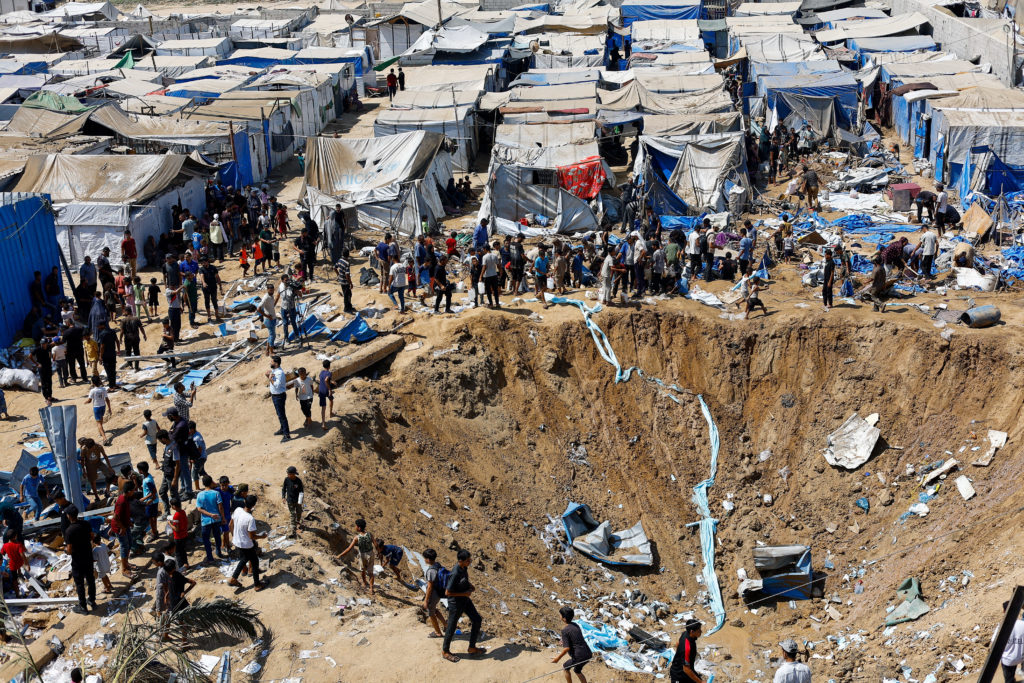
In a separate yet equally tense situation, Israel conducted a series of airstrikes in response to Hamas’ announcement of a willingness to disarm. This operation reportedly resulted in casualties and destruction of several Hamas storage facilities across the Gaza Strip. The strikes, which left at least four people dead, followed hours after Hamas confirmed its intention to disarm—a development that could signal a potential ceasefire but is met with skepticism by many in Gaza. Those affected by ongoing violence maintain a deep concern that until everyday necessities are met, promises of disarmament and peace remain hollow.
Despite this military action, the Israeli government has not officially acknowledged the ceasefire agreement. On social media, far-right Israeli lawmakers openly opposed the proposal, emphasizing the need for continued military actions against Gaza.
Strategic Maneuvers in Other Areas
Elsewhere in the Middle East, Houthi rebels have forced ships away from the Bab el-Mandeb strait, signaling a blockade on Saudi maritime traffic. Additionally, Israeli forces recently destroyed part of a tunnel believed to be used by Hezbollah militants, escalating tensions along the Lebanon-Israel border. Following a recent encounter with Hezbollah, an Israeli officer was injured, further feeding the flames of conflict in a region already rife with instability.
These developments illustrate the complex web of interrelated conflicts in the Middle East, where actions in one area can reverberate and impact tensions in another. As countries grapple with military engagements and negotiations, the outlook for peace remains precarious.