
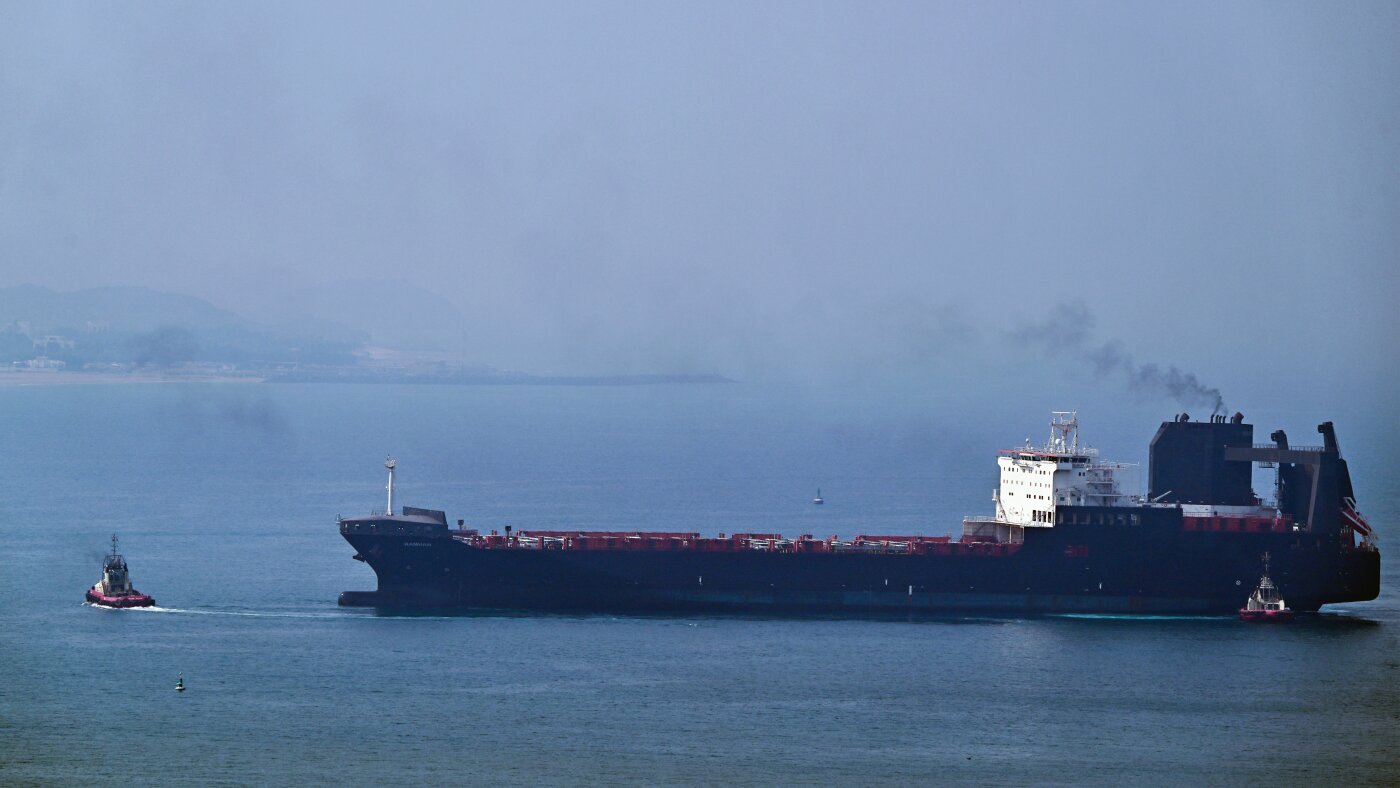
The situation in the Strait of Hormuz, a crucial maritime corridor, has escalated due to rising tensions between the U.S. and Iran. This narrow passage, vital for the global oil supply, has become a flashpoint following renewed military activities in the region. With over a fifth of the world’s oil transported through these waters, ensuring free passage is imperative for international trade.
Recent Developments in the Strait of Hormuz
In late June, after a ceasefire between the United States and Iran, the International Maritime Organization (IMO) undertook an operation to evacuate stranded vessels and more than 11,000 seafarers from the Strait of Hormuz. The region has faced significant disruptions since the U.S. and Israel launched attacks against Iran earlier this year. The IMO’s operation aimed to coordinate with Iran, Oman, and other coastal states to facilitate a safe passage for commercial vessels through the strait.
The IMO directed ships to take a safer route along Oman’s coastline, moving away from the Iranian side of the strait. John Canias, a former seafarer and maritime coordinator at the International Transport Workers Federation, noted that over 100 of the more than 600 vessels stranded managed to escape. However, shortly after, the operation faced setbacks when a cargo ship, the Ever Lovely, was attacked while navigating the safer route. This incident re-ignited fears and halted ship traffic once again.
The Broader Implications of Iranian Control
Historically, the Strait of Hormuz has been an international waterway, crucial for global commerce. However, Iran’s recent actions reflect an underlying strategy to assert control over this vital corridor. According to Gregory Brew from Eurasia Group, Iran seeks to establish a new status quo that would require foreign vessels to seek clearance before transiting. Such developments could inhibit free navigation and threaten the principles that have traditionally governed maritime trade.
Experts warn that recognizing Iranian control over the strait could prompt other nations to lay claim to significant waterways, potentially setting a troubling precedent. Todd Huntley, a director at Georgetown University, articulated concerns that this shift could encourage countries like the U.K. or Malaysia to assert sovereignty over other key maritime routes, leading to a potentially unstable global navigation environment.
Historical Context and Future Considerations
The concerns surrounding the Strait of Hormuz are not new; threats to international waterways have persisted throughout history. However, the current geopolitical landscape lacks robust mechanisms to prevent such conflicts. Unlike the Turkish Straits, which are governed by treaties like the Montreux Convention, the Strait of Hormuz lacks similar diplomatic safeguards, leaving it vulnerable to unilateral actions by states like Iran.
As tensions escalate, the importance of international maritime law and agreements becomes increasingly evident. However, both Iran and the U.S. have not ratified the U.N. Convention on the Law of the Sea, rendering these legal frameworks largely ineffective in this ongoing conflict. The situation underlines a broader trend: the international order may struggle to respond to emerging maritime threats, leading to darker prospects for global trade security.
In summary, as military and geopolitical tensions continue to escalate in the region, the urgency to address the situation in the Strait of Hormuz cannot be overstated. The potential implications for global commerce and international law create a pressing need for renewed dialogue and cooperative solutions to safeguard this vital maritime corridor.