
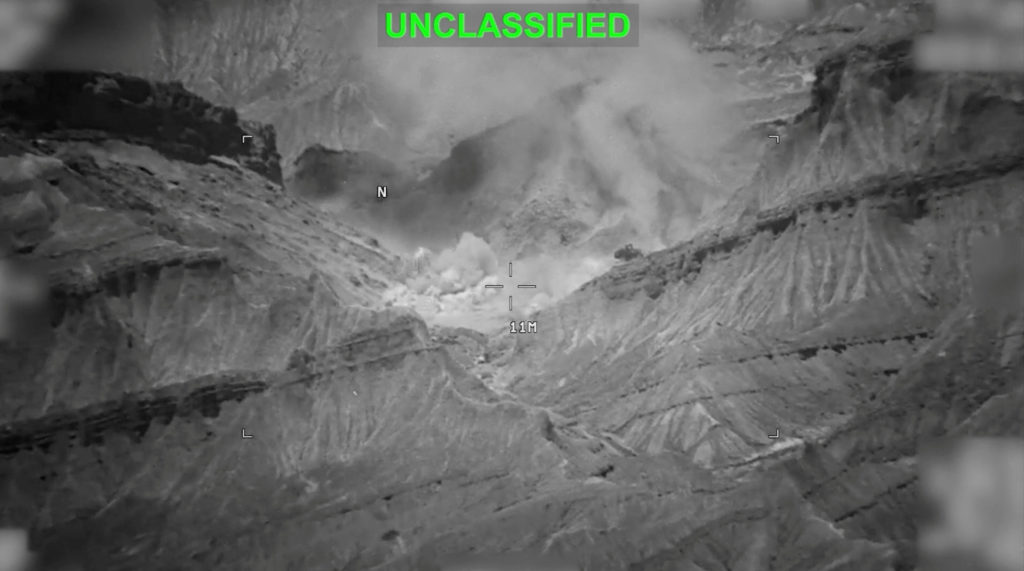
The ongoing conflict between the United States and Iran has reached a perilous escalation following a series of retaliatory airstrikes. As tensions mount, both nations are increasingly entangled in a cycle of violence that threatens to further destabilize the region.
Escalation of Military Actions
On Sunday, the U.S. military conducted new airstrikes against Iranian targets, responding to the recent fatal attack on American troops in Jordan. This latest offensive marks the continuation of a military campaign launched two weeks ago and is aimed at the Islamic Revolutionary Guard Corps, a significant power center within Iran. The U.S. strikes have targeted various critical infrastructures, including bridges, water desalination plants, and electrical facilities, aiming to diminish Iran’s operational capacity in the Strait of Hormuz. This strategic waterway is vital for international shipping and the transport of a substantial percentage of the world’s oil supply.
Iran has retaliated by launching missiles toward Jordan, raising fears of a broader conflict that could extend to neighboring Israel. Both Kuwait and Jordan have bolstered their air defenses in response to the looming threat from Iranian drones and missiles. Notably, Israel has expressed concerns that stray missiles may cross into its territory, marking a potentially dangerous escalation in hostilities.
Targeting of Civilian Infrastructure
The U.S. military described its operations as a necessary measure to degrade Iran’s military capabilities along the coast. Reports indicate that U.S. forces targeted various Iranian military sites, including those housing missile and drone storage, in a bid to swiftly retaliate against the Revolutionary Guard. The implications of these strikes are significant, as they not only affect military assets but also pose a risk to civilian infrastructure—an action that brings international humanitarian law into question. The Gulf Cooperation Council has accused Iran of committing war crimes through attacks on vital civilian infrastructures.
The Iranian government has claimed that recent U.S. strikes have specifically hit a construction site for a nuclear facility, a development that could escalate tensions even further. While satellite images from the site show minimal construction activity, the incident adds fuel to an already volatile situation. The International Atomic Energy Agency has previously confirmed that no nuclear materials were present at the site during its last inspection.
The Ongoing Struggle for Control
The situation in the region has amplified with Iran conducting strikes against U.S.-aligned Arab nations, including Kuwait and Jordan, rather than Israel. Jordan has successfully intercepted several of Iran’s missiles aimed at its territory, and there have been no reported casualties. This strategy suggests that Iran seeks to undermine U.S. influence in the region by destabilizing its allies.
The U.S. response has included reimposed naval blockades against Iran, which are aimed at disrupting the country’s crude oil shipments. This blockade is considered a crucial move, as it seeks to limit Iran’s economic capabilities while reinforcing military pressure. As a result, maritime traffic in the Strait of Hormuz remains low due to heightened risks, complicating global oil supply chains during an already pressured economic climate.
The situation remains intensely precarious, with Iranian leaders warning of severe repercussions should the U.S. continue its military actions. Both nations are now at a crossroads, with a high potential for further conflict unless diplomatic discussions can resurface. With a tenuous ceasefire in place, the risk of stumbling into a larger war continues to loom over the region, affecting not just the immediate parties involved but the global economy and security dynamics as well.