
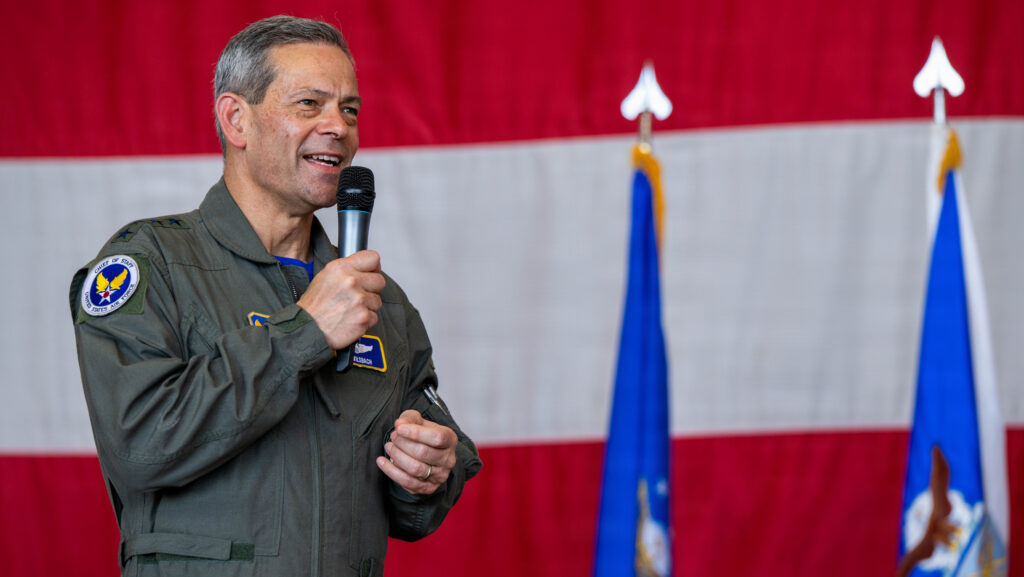
In recent months, Gen. Kenneth Wilsbach, the Chief of Staff for the US Air Force, has navigated a challenging landscape marked by rapid changes and emerging threats. His leadership comes during a time of significant shifts in defense policy and military strategy. The focus has turned to enhancing capabilities and safeguarding resources as geopolitical tensions escalate.
Recent Policy Changes and Military Strategy
Upon taking office, Wilsbach saw a series of policy reversals from the previous administration aimed at reforming military operations. These changes come amidst heightened concerns regarding national security, particularly following renewed military actions involving Iran. A recently proposed defense budget of $1.5 trillion indicates a robust commitment to modernizing the Air Force, further highlighting the urgency to adapt to evolving challenges.
In discussions with defense media, Wilsbach emphasized the need for improved base security and proactive measures to protect valuable air assets. The increasing frequency of attacks on airfields necessitates fortified military strategies that account for diverse threats, including drones and various munitions. Wilsbach’s approach underscores the importance of a comprehensive defense strategy that combines various technologies and methods for threat mitigation.
Emerging Technologies and Aircraft Challenges
One significant focus of Wilsbach’s tenure has been the introduction of the T-7 Red Hawk training jet, developed by Boeing. The T-7 aims to replace older models like the T-38. Wilsbach’s recent experience with the aircraft left him optimistic about its potential, calling it much easier to operate than its predecessor. However, he acknowledged existing limitations due to flight envelope restrictions, which will need addressing for it to be fully effective as a training platform.
Moreover, the ongoing delays with the F-35 program remain a pressing concern. Challenges in delivering fully combat-capable jets due to software and hardware issues have raised alarms. Wilsbach reassured that current deployments remain effective, but the full utility of the F-35 would be enhanced with timely upgrades, including the much-anticipated Block 4 advancements. The Air Force’s adaptability in managing resources has helped mitigate short-term impacts, yet there is a pressing need for improvements to maximize the F-35’s capabilities.
Securing the Future: Strategic Improvements
Wilsbach’s vision for enhancing airfield safety includes not only fortifying structures but also prioritizing defense systems that can counteract imminent threats. He advocates for a cost-effective mix of solutions such as low-cost protective measures against small unmanned aerial vehicles. Exploring advanced technologies, including directed energy systems, represents a forward-thinking effort to safeguard air assets effectively.
The emergence of a new career field focused on airbase defense demonstrates a commitment to evolving military needs. This strategic move prepares the Air Force to meet its operational objectives while ensuring servicemembers are equipped to confront modern threats effectively. As geopolitical tensions continue to rise, proactive measures and innovative strategies will be crucial in protecting national security interests and maintaining operational readiness.
In summary, Gen. Kenneth Wilsbach’s first year in leadership reflects a dynamic shift in the US Air Force’s operational strategy. His focus on adaptability, modernization, and comprehensive security measures reflects the complexities of contemporary military challenges. With an eye toward future conflicts and technological advancements, Wilsbach’s tenure highlights the need for continued evolution in defense policy to secure a resilient military force.