
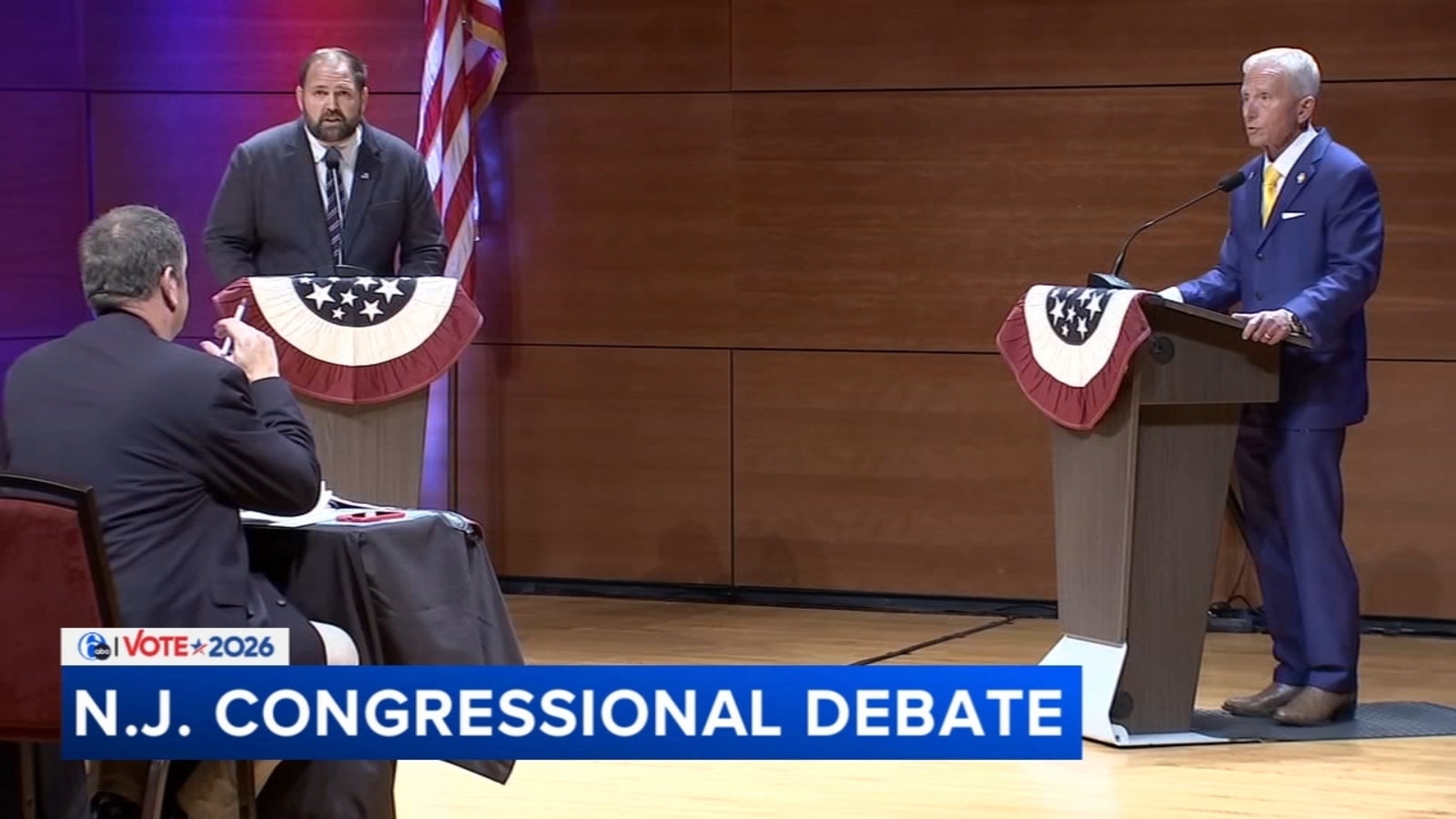
In a recent congressional debate held at Stockton University, tensions flared as incumbent Republican Representative Jeff Van Drew faced off against Democratic challenger Zack Mullock. The candidates engaged in a contentious exchange of ideas, with moderators frequently stepping in to ensure the conversation remained productive and on track.
Debate Highlights and Key Issues
Throughout the debate, both candidates tackled a range of pressing topics, including economic concerns, immigration policies, gas prices, and international conflicts. Van Drew, who is aiming for his fifth term representing New Jersey’s 2nd Congressional District, defended his track record, while Mullock, the current mayor of Cape May, attempted to unseat Van Drew in a district historically favoring Republicans.
Economic issues emerged as a central theme of the debate. Mullock criticized Van Drew’s policies, claiming they have unfairly burdened local farmers in Cumberland and Salem counties. He stated, “Our farmers here in Cumberland County and Salem County are all struggling because of his policies, what he’s voted for.” In response, Van Drew attributed rising energy costs and gas prices to inadequate energy policies, asserting, “We haven’t built the refineries that we need. We should no longer be depending on the Mideast and other countries.”
The candidates also clashed over implications of the ongoing war in Iran and its effects on South Jersey residents. Van Drew defended his voting history, stating, “I voted not to abandon our troops there, which would just cause turmoil in the Mideast.” Mullock countered by questioning the tangible benefits for South Jersey from the conflict, urging Van Drew to clarify how the war has positively impacted the community.
Concluding Remarks and Election Climate
As the debate wrapped up, both candidates made their final pitches to voters. Van Drew appealed to patriotism, asserting, “I’m never going to give up on America. My opponent represents a socialist agenda that threatens America’s structure.” On the other hand, Mullock highlighted a more inclusive vision, stating, “I want to work with everyone to ensure that the American dream is within reach for all.” He posed a critical question: “Are you better off than you were two years ago?”
The stakes are high as the election approaches. Van Drew secured his last term by nearly 17 points within this Republican-leaning district, while Mullock is working hard to sway moderate voters, knowing that he must bridge the gap between party lines to mount a successful challenge.
With early voting in New Jersey set to commence soon, the rhetoric and strategies employed by both candidates will play a pivotal role as they vie for the support of South Jersey residents ahead of Election Day on November 3. The outcome of this contentious race could reshape the political landscape in a district that has traditionally leaned Republican. It remains to be seen whether Mullock’s appeal to moderates and his criticisms of Van Drew will resonate enough to shift the balance in this upcoming election.