
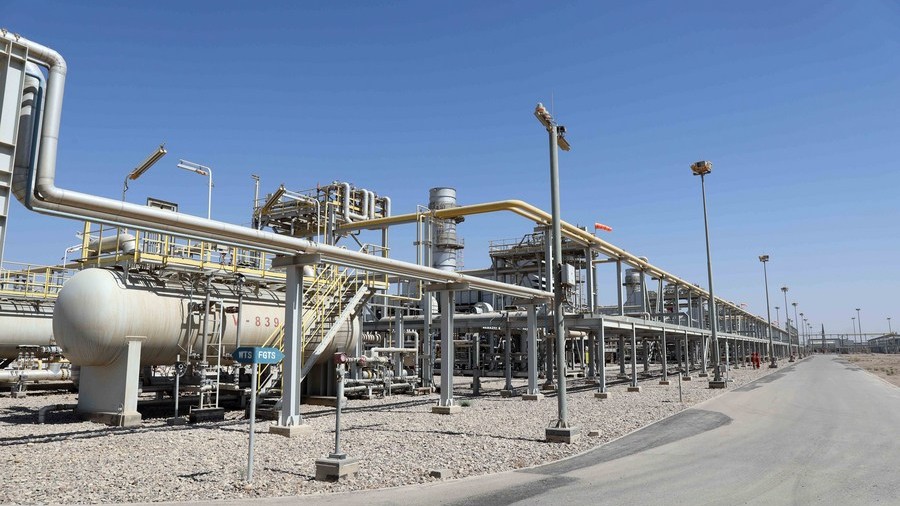
In late June and early July, crucial events typically unfold in Iraq that impact the global oil market. Every year, Iraq announces its ambitious intentions to ramp up crude oil production, coupled with a diplomatic visit from its prime minister to the U.S. aimed at securing funding and support. This year follows suit, with Iraq setting its sights on producing 7 million barrels per day (bpd) within three years, while Prime Minister Ali al-Zaidi prepares for discussions in Washington. However, the established pattern of Iraq promising reform yet failing to deliver may see a significant shift this time.
Shifting Dynamics in U.S.-Iraq Relations
Under President Trump, the U.S. has adopted a firmer stance regarding Iraq’s dealings with Iran, which affects its financial commitments. Trump has previously blocked waivers allowing Iraq to import Iranian electricity and supported legislation aimed at curtailing Iranian influence in the region. Such measures, including the ‘Free Iraq from Iran Act’ and the ‘No Iranian Energy Act,’ are designed to restrict Iraq’s reliance on Iranian resources while reinforcing U.S. leverage in Baghdad. These legislative actions and sanctions against high-ranking Iraqi officials signal a more aggressive U.S. approach that could limit Iraq’s historical double-dealing practices.
Potential for Enhanced Oil Production
The U.S. and its partners are focused on managing oil production efficiently across both southern and semi-autonomous northern Iraq, aiming for investment from Western firms while excluding Russian and Chinese interests. The stakes are high; Iraq possesses approximately 145 billion barrels of proved oil reserves, making it crucial in the battle for energy dominance between global superpowers. The geographical positioning of Iraq adds to its strategic value, with vital trade routes connecting the East and West.
A confidential report from 2012 outlined Iraq’s capability to increase oil production significantly, aiming for up to 13 million bpd by 2017. This outlined the opportunities presented by bringing in foreign investment, advancing technology, and enhancing infrastructure—efforts that echo the current target of achieving 7 million bpd within the next three years. The Common Seawater Supply Project (CSSP), designed to boost reservoir pressure, is a key initiative led by French company TotalEnergies as part of a $27 billion investment program in Iraq.
Western Firms Reshaping Iraq’s Oil Landscape
Recent developments indicate that Western companies like Chevron are playing pivotal roles in revitalizing Iraq’s oil output. An agreement between Iraq’s Basra Oil Company and Chevron to explore the West Qurna 2 oil field marks a significant step in future partnerships. This field alone has an estimated recovery potential of 13 billion barrels, underscoring the importance of U.S. investment and expertise in maximizing production. Given that previous operators had limitations due to sanctions, Chevron’s entry into this space presents a promising outlook for Iraq’s oil capabilities.
These arrangements signify a subtle but critical shift in Iraq’s long-standing strategy of balancing relations with both the U.S. and its adversaries. As Washington becomes increasingly assertive, combined with Iraq’s urgent need for investment and technological support, Baghdad may have to align its strategies more definitively in favor of the West. The upcoming discussions between Prime Minister al-Zaidi and U.S. officials may thus represent a pivotal moment for Iraq’s foreign relations and energy policy.
In conclusion, Iraq stands at a crossroads, with strategic partnerships poised to dramatically influence its oil production capabilities. While historical patterns of double-dealing linger, stronger U.S. sanctions and a shifting geopolitical landscape may compel Iraq to embrace a clearer alignment with Western interests, reshaping its role in the global energy market.