
On the afternoon of September 12, 2001, Yasser Arafat made a poignant gesture by donating blood for the victims of the previous day’s terrorist attacks in the United States. This act took place in Gaza and was broadcasted to millions. Meanwhile, news channels simultaneously aired footage of a few celebrating Palestinians, an image that would later be highlighted and misconstrued, overshadowing the sentiments of the larger Palestinian populace.
### The Strategic Calculations Behind Arafat’s Gesture
Arafat’s public act of solidarity wasn’t merely altruistic; it was a tactical move. He understood that if the American narrative linked the Palestinian struggle to Osama bin Laden’s jihadist agenda, the Palestinian cause could face devastating political ramifications. The urgency for him was evident; a traumatized United States might quickly lose its patience and support, leading to a significant isolation of his national movement.
### Regional Reaction to the 9/11 Attacks
The repercussions of the attacks were felt throughout the Middle East, prompting a wave of anxiety within presidential compounds and royal palaces. Established norms governing regional politics were abruptly disrupted. Traditionally, autocratic leaders in the Arab world tolerated or co-opted radical movements to bolster their security, but U.S. tolerance for ambiguity had waned. Governments scrambled to comprehend the intentions of a furious superpower eager for retribution in a long-term war on terror.
### The Shift in Power Dynamics
In Libya, Muammar Qaddafi recognized the threat posed by the escalating tensions. Historically a supporter of terrorism, Qaddafi observed the rapid decline of the Taliban and the looming invasion of Iraq. Responding decisively, Libya sought to pivot its strategy through secret negotiations with Western powers, ultimately dismantling its weapons programs to ensure its regime’s survival.
Conversely, Saddam Hussein’s course of action proved to be a grave miscalculation. While Iraq had engaged in limited discussions with al-Qaeda in the past, these contacts were invoked politically in the aftermath of 9/11, painting Iraq as a potential ally of terrorism. When American forces took Baghdad in 2003, the fallout was catastrophic, leading to the collapse of his regime and a shattering blow to the existing balance of power in the Arab world.
### The Unintended Consequences of U.S. Military Power
The post-9/11 environment revealed a paradox wherein America’s overwhelming military might dismantled regimes but also failed to control the resulting power vacuum. The U.S. did not intend to elevate Iranian influence by toppling Iraq and Afghanistan’s Taliban; however, by eliminating its rivals, Washington inadvertently facilitated a significant geopolitical shift toward Tehran.
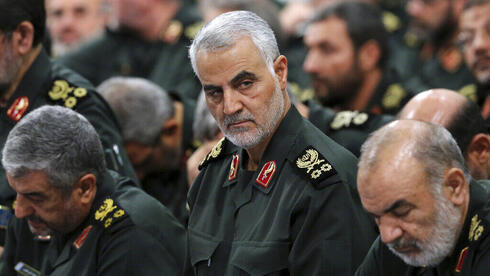
Iranian leaders, particularly those in the Islamic Revolutionary Guard Corps, swiftly capitalized on the chaos. As Iraq descended into sectarian strife, Iran utilized its intelligence networks to bolster political factions and militia groups, leveraging their positions to solidify its foothold in the region.
### The Fragmented Nature of Iranian Influence
Despite Iran’s expanded reach, its influence has never been uniform or permanent. Critics who argue that the lifting of sanctions under the 2015 nuclear deal empowered Tehran overlook critical issues, including economic instability and local resistance against Iranian dominance. The strategic landscape became starkly visible when Syria’s Assad regime eventually crumbled, dramatically reducing Iran’s ability to maintain its regional corridor to Hezbollah in Lebanon.
As of September 2026, while Iran remains a significant regional player with capabilities to threaten shipping routes and maintain nuclear ambition, its earlier aspirations for unchallenged dominance have been distinctly fractured.
### Lessons for America’s Future Engagement
The past quarter-century underscores that military power alone isn’t sufficient for effective foreign policy, nor can mere engagement with hostile regimes transform them. Large-scale interventions often generate unexpected repercussions, benefiting rival states. Therefore, America’s approach in the Middle East must evolve to abandon the myth of transformative interventions.
Moving forward, establishing a sustainable and secure regional order requires a sound strategy. Measures must focus on enhanced military capabilities, maritime security, and counteracting Iranian activities, ensuring that power dynamics do not again empower future adversaries. Proper diplomacy must be underpinned by credible military strength to avoid inadvertently creating power vacuums that would favor opposing forces.