
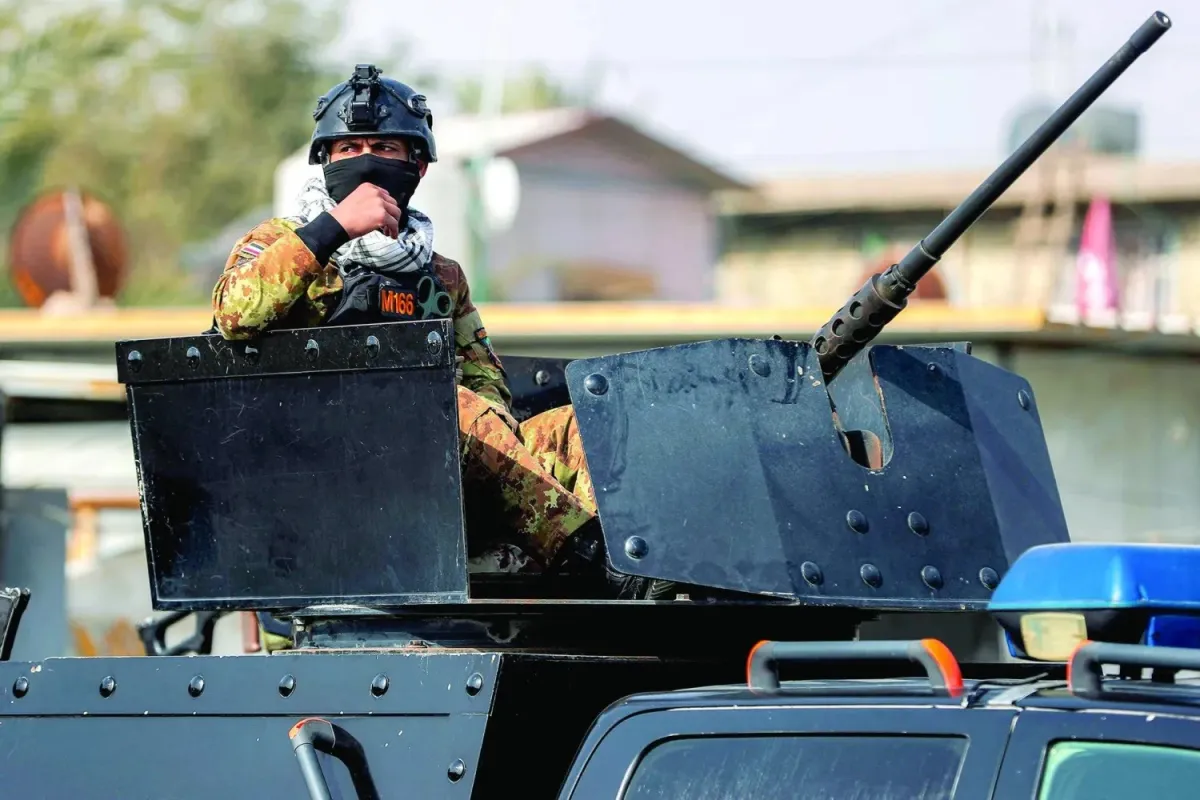
Iraq is facing renewed concerns regarding the potential resurgence of ISIS following a series of devastating attacks on security forces in the regions north of Baghdad. The recent violence has led authorities to implement a nighttime curfew in certain areas of Kirkuk province, emphasizing the need for heightened security measures to address this escalating threat.
Details of Recent Attacks
On a late Tuesday night, the second battalion of the Popular Mobilization Forces’ 61st Brigade was ambushed in Al-Barghaliya–Al-Dandish village, located in the Hawija district, southwest of Kirkuk. Reports indicate that a sniper targeted a military position, disabling a thermal imaging camera and triggering extensive search operations in the area. This ambush followed a prior attack on the Federal Police’s Ninth Brigade, where one officer was killed and four others sustained injuries. The slain officer, identified as Bakr Majid Mohammed, was killed while confronting ISIS militants during their attempt to breach his post.
In an immediate response to the turmoil, Federal Police authorities enforced a curfew from 6 p.m. to 6 a.m. in Hawija and surrounding villages. This curfew restricts movement during these hours and imposes tighter regulations on transportation methods such as motorcycles and cars, limiting their use to essential cases only with official permission. Residents are encouraged to adhere to these regulations, with warnings issued that violations may face legal repercussions.
Heightened Security Measures and Concerns
In light of the recent assaults, security protocols have been intensified near farms and villages that are close to Federal Police positions. Restrictions have also been placed on the movement of local farmers operating in these sensitive zones. Ahmed Ramzi Koprulu, chairman of the Kirkuk Provincial Council’s Security and Defense Committee, emphasized that these incidents highlight the ongoing risks posed by ISIS sleeper cells. He called for enhanced intelligence gathering and more vigorous security operations to stave off further attacks while advocating for improved coordination among various security agencies.
Compounding these concerns was an earlier assault endorsed by ISIS, which took place southwest of Kirkuk city and resulted in the death of an Iraqi police officer. This marked the first assault attributed to the organization since the withdrawal of U.S. troops from Iraq on September 30, which concluded their military role in the nation. Urging for constant vigilance, Iraqi Prime Minister Ali al-Zaidi pressed security forces to upgrade their operational strategies and make better use of modern technologies to maintain nationwide stability.
Assessment of the Threat Level
While the recent spate of violence is alarming, security analysts offer a measured assessment of ISIS’s current capabilities. Some experts, including Sarmad al-Bayati and Mukhlid Hazem, argue that ISIS is largely unable to regain control over territory as it did in the past. They contend that while the group retains access to weapons and small arms, its operations are restricted to limited attacks by sleeper cells, indicative of their weakened state.
Despite this assessment, Hazem cautioned against underestimating the potential for larger extremist groups to mobilize amidst the current insecurity. Political science professor Abbas Abboud mirrored these sentiments, highlighting advancements in Iraq’s intelligence operations compared to earlier years, which significantly mitigates the likelihood of ISIS expanding their activities. However, he warned that other terrorist factions could still pose unique threats as they might be enlisted by various entities pursuing specific agendas.
In summary, while the recent attacks and the announcement of a curfew underscore the prevailing threat from ISIS, analysts maintain that the group’s capacity to threaten Iraq’s stability has diminished significantly. Yet, with ongoing vigilance and cooperation among security forces, it remains crucial to prevent any resurgence or coordination among militant groups in the region.