
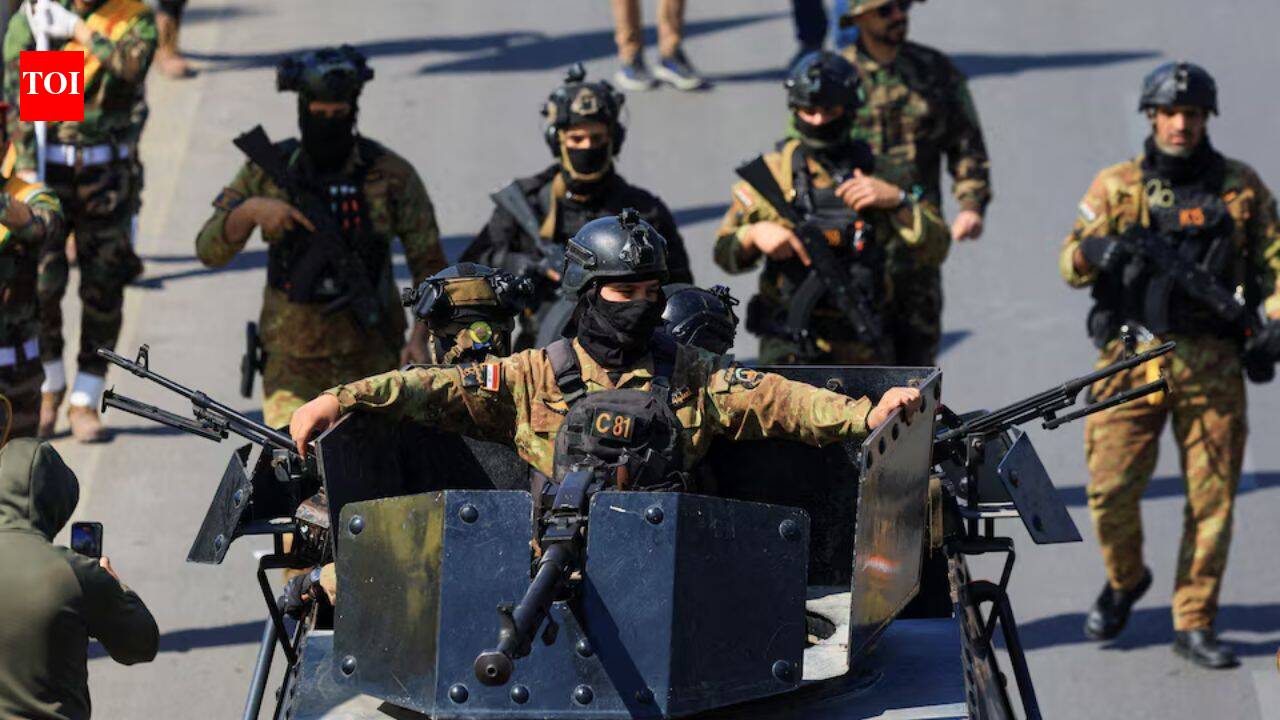
Iraq is currently at a critical juncture, with rising pressure on Prime Minister Ali al-Zaidi to disarm Iran-backed Shiite militias. This situation poses significant security and political challenges as tensions in the region continue to escalate, particularly between Iran and the United States. Amidst a backdrop of conflicting interests, the country faces the prospect of a changing landscape regarding its armed groups and international alliances.
The Push for Disarmament
Following a meeting with former US President Donald Trump in July, Prime Minister Zaidi committed to disarming influential militia groups by September 30, a date that coincides with the scheduled withdrawal of the remaining US-led coalition forces from Iraq. However, several armed factions, particularly the powerful Kataib Hezbollah, have openly rejected this timeline. These groups demand guarantees against any future return of US forces and a complete cessation of American political and economic influence. This puts Zaidi in a precarious position, as he must simultaneously navigate US expectations and the strong influence Iran exerts through its ties to local militias.
The situation is further complicated by the Islamic Resistance in Iraq, an umbrella group of about ten hardline factions that includes around 50,000 fighters, equipped with long-range missiles and anti-aircraft capabilities. Many of these factions are also part of the Popular Mobilization Forces (PMF), which were officially integrated into Iraq’s security apparatus in 2016. The political and military clout of these groups complicates the Iraqi government’s efforts to disarm them, as any attempt to do so forcibly could prompt significant backlash.
Historical Context of Militias
The presence of Shiite militias is not new to Iraq and has been a part of its security fabric for decades. Groups like the Badr Organisation emerged during the Iran-Iraq War in the 1980s and later fought against US forces during and after the 2003 invasion. Their influence surged during the ISIS crisis in 2014, when many ordinary citizens responded to Grand Ayatollah Ali al-Sistani’s call to arms, leading to the formation of the PMF. Although the PMF is now recognized as part of Iraq’s armed forces, it encompasses factions with varying loyalties, many of which maintain a close relationship with Iran and operate with significant autonomy.
The Impending U.S. Withdrawal
The anticipated withdrawal of US-led coalition forces adds an extra layer of complexity to the ongoing disarmament talks. With the coalition’s military mission winding down by September 30, Iraqi forces are expected to take on full security responsibilities, particularly concerning the threat posed by the Islamic State. Prime Minister Zaidi has emphasized this date as the “fixed and final” timeline for ending the coalition’s military presence. Starting October 1, Iraq is anticipated to transition into a new phase of security cooperation with the United States, though this will unfold in the absence of the previous coalition framework.
This withdrawal is particularly notable because militias aligned with Iran have historically opposed the US military presence in Iraq. Many of these groups are now resisting disarmament efforts, requiring assurances that American forces will not be reinstated and that US political and economic influence will be fully curtailed. The confluence of these dynamics signals a challenging future for Iraq as it navigates its internal conflicts and external relations.