
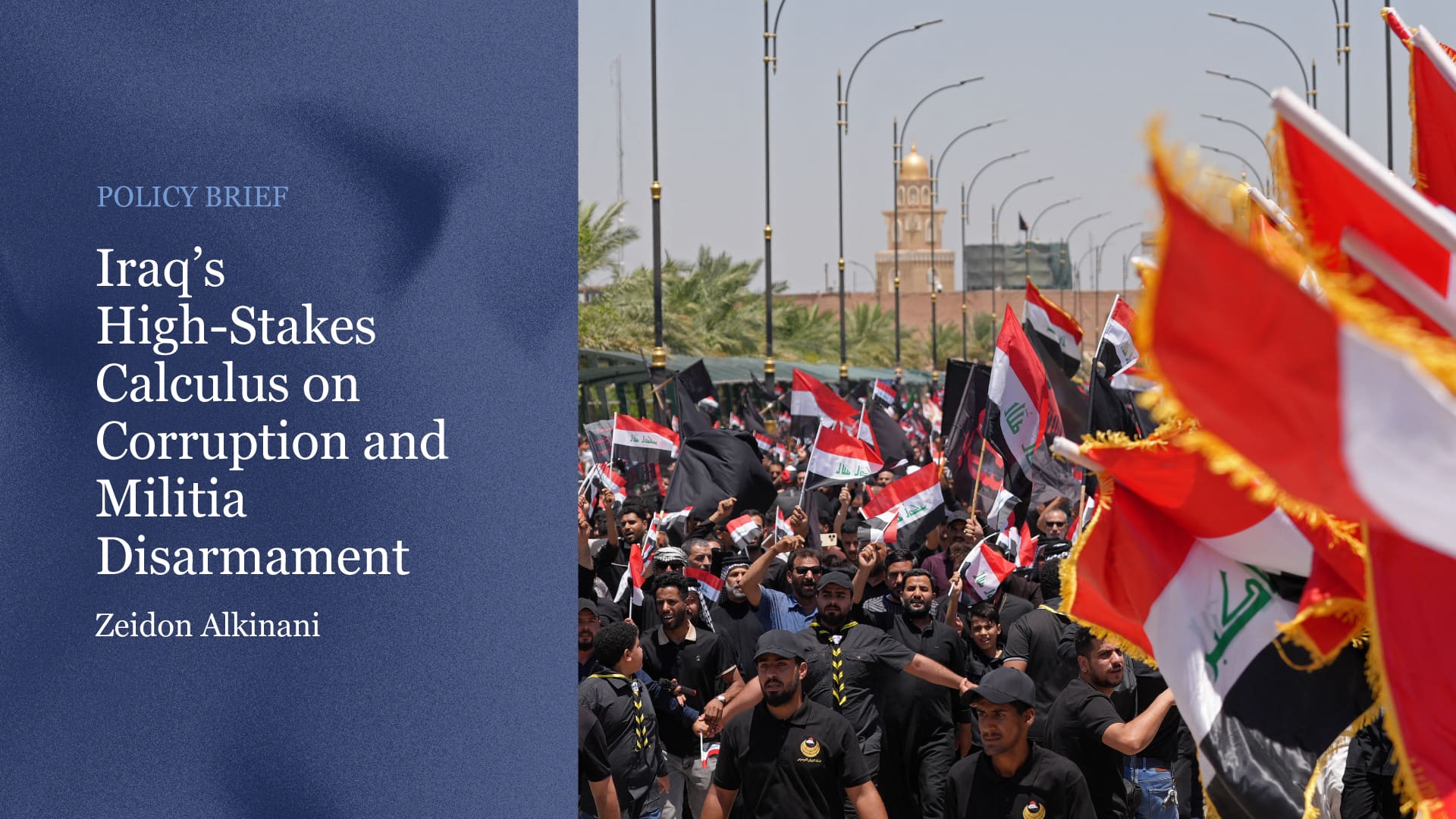
Iraq is currently navigating a complex political landscape as it attempts to assert state control over armed factions while also managing the competing interests of the U.S. and Iran. The recent initiatives from the Coordination Framework, including an anti-corruption crackdown and a militia disarmament deadline, reflect not only a quest for legitimacy but also a survival strategy to maintain political cohesion.
Coordination Framework’s Survival Strategy
Since the formation of Prime Minister Ali al-Zaidi’s government in May 2026, Iraq’s governance has relied on a delicate balancing act between reform and survival. The anti-corruption campaign is presented as a technocratic effort aimed at state-building; however, its underlying intentions are more complex. High-profile arrests and a commitment to disarmament by September 30 are meant to demonstrate allegiance to U.S. interests while leaving Iran-aligned militia groups largely unscathed. The tactical nature of these actions raises questions about their sustainability and effectiveness in the long term.
Compliance among militia factions is mixed. Some, such as Asaib Ahl al-Haq, have expressed a willingness to disarm, but more hardline groups like Kataib Hezbollah outright refuse. This divide suggests that the disarmament deadline may yield ambiguous results rather than a substantial reduction of militia influence. A superficial approach to disarmament could also lead to renewed conflicts, endangering U.S. and Gulf interests in the region.
The Balancing Act of Foreign Relations
The Iraqi government’s reliance on external narratives of reform is further complicated by domestic pressures, including unfilled cabinet positions and infighting among Shia factions. Notably, Muqtada al-Sadr has shown public support for the anti-corruption initiative, which may incentivize the Coordination Framework to adopt a more confrontational stance against Iran-aligned groups. This competition for legitimacy within the Shia community underscores the fragility of Iraq’s political landscape.
Internationally, how Washington interprets Baghdad’s actions will inevitably impact its sanctions policy and will put Iraq’s sovereignty to the test. The recent visits by U.S. officials have centered around military and political cooperation, emphasizing the need for a cohesive strategy. Without a commitment to sustained engagement from the U.S. and Gulf countries, Iraq may find itself vulnerable to Iranian influence as the political cost of reform becomes untenable.
Risks and Potential Outcomes of Disarmament
The disarmament process itself poses significant risks. Should arrests continue to bypass high-ranking militia figures, the anti-corruption narrative may be interpreted more as intra-coalition rivalry than as substantive governance reform. A mixed outcome by the September 30 deadline could mean accepting nominal compliance from some factions while those resistant to disarmament remain free to operate. This could exacerbate tensions with Iran and provoke attacks on U.S. and Gulf assets in the region.
The stakes are further raised by Iraq’s economic fragility. Prime Minister al-Zaidi has emphasized the fiscal pressure Iraq faces amid declining oil revenues, which complicates the country’s ability to exert control over militia groups. The urgent situation calls for careful alignment with both Western and regional powers while avoiding alignments that could plunge Iraq into deeper conflict.
In conclusion, achieving a stable and sovereign Iraq requires more than ephemeral disarmament deadlines or external pressures. It demands a long-term commitment to institution-building and a consistent strategy that prioritizes Iraq’s complex internal dynamics while addressing external influences. Balancing U.S. and Iranian interests will be paramount, and the international community must provide ongoing support to ensure that Iraq emerges as a unified state rather than a battleground for larger geopolitical conflicts.