
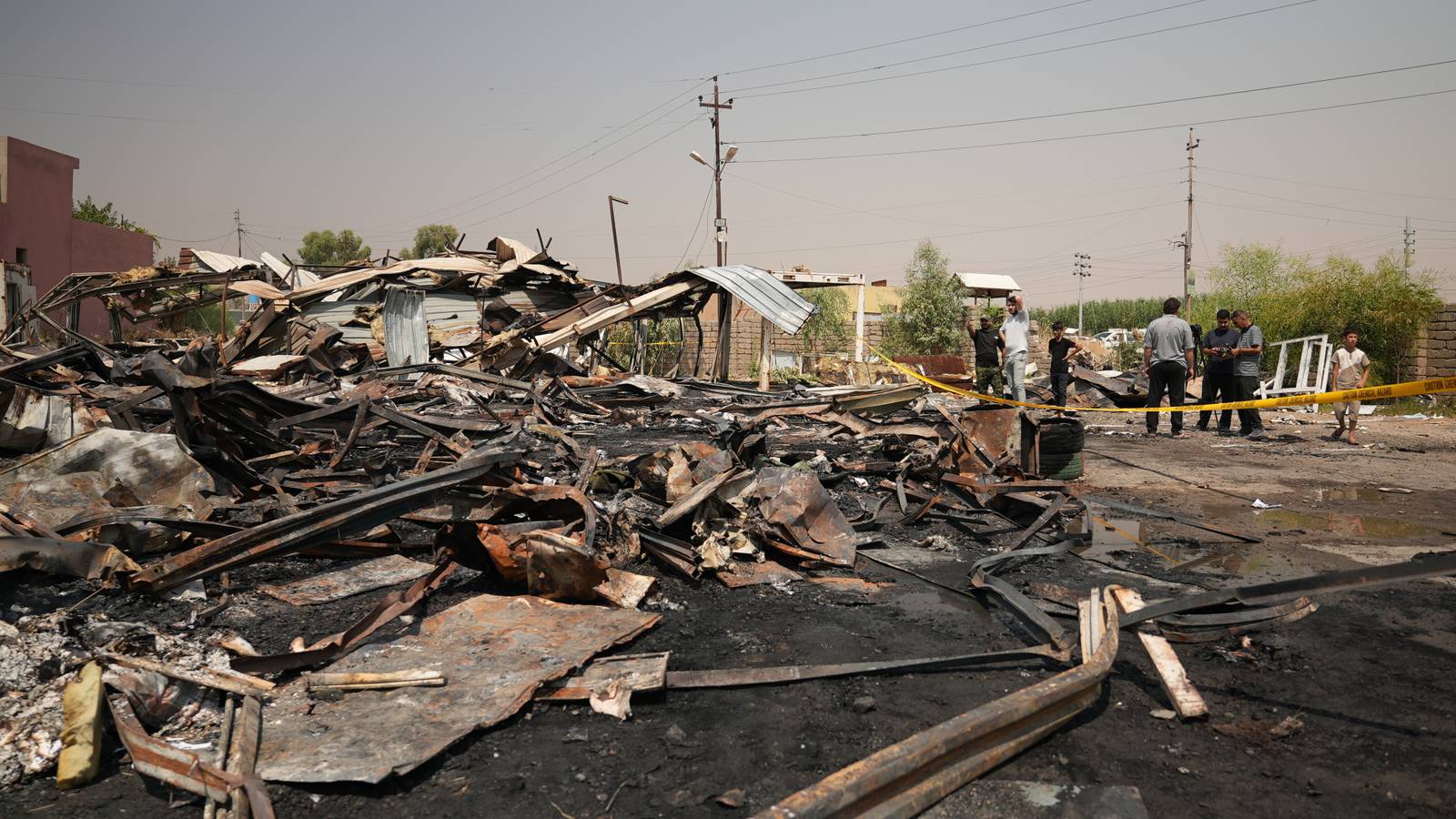
BEIRUT — Recent airstrikes by the U.S. and Saudi Arabia targeting Iran-aligned fighters in Iraq have put the Iraqi government in a precarious situation. This scenario is not new; since the 2003 U.S.-led invasion, Iraq has navigated a complex relationship between Washington and Tehran, attempting to steer clear of becoming a battleground for competing forces. The pressure has intensified, particularly after the onset of conflict between the U.S. and Iran in February.
### Rising Tensions and Retaliatory Strikes
Saudi Arabia has accused Iraqi militia groups of launching drone attacks on its oil facilities. In response, airstrikes in Iraq were directed at the Popular Mobilization Forces (PMF), a coalition of Iranian-backed armed factions that are officially recognized as part of Iraq’s security apparatus but frequently operate independently. These groups have, in turn, engaged in attacks against U.S. forces stationed in Iraq at the government’s invitation. The PMF’s operations raise questions about Iraq’s sovereignty and its ability to control armed groups within its borders.
The Iraqi leadership has stipulated that non-state armed factions must disarm by the end of September. However, many prominent factions, particularly those with strong ties to Iran, have made it clear that they have no intention of complying. U.S. President Donald Trump has recently praised Iraq’s Prime Minister Ali al-Zaidi, who is perceived as a political outsider. However, mounting pressure from Washington to rein in the PMF could lead to internal strife, making al-Zaidi’s task even more challenging.
### The Role of Iran-Backed Groups
The PMF includes predominantly Shiite, Iran-backed groups that rose to prominence during the fight against the Islamic State (IS) after the latter captured vast territories in Iraq in 2014. Originally, these groups partnered with a U.S.-led coalition against IS, but their increasing autonomy raises concerns about their integration into formal military structures. Lahib Higel, a specialist at the International Crisis Group, noted that while these brigades officially report to the Iraqi military, they have largely maintained their original command structures.
Since the U.S. and Israel began military actions against Iran, Iraqi militias have ramped up their assaults on U.S. military installations and diplomatic locations, as well as energy infrastructure. This context complicates the Iraqi government’s attempts to disarm these groups, as they view themselves as part of a broader network aligned with Iran.
### Saudi Allegations and Responses
Saudi Arabia has attributed recent drone strikes that targeted its oil facilities to Iranian-aligned Iraqi militias. However, these armed groups have denied involvement, stating that such claims are fabrications aimed to justify Saudi Arabia’s failures against its adversaries. The Islamic Resistance in Iraq, a coalition of Iranian-backed factions, implied that the true perpetrators were the Iran-aligned Houthi rebels in Yemen.
In light of the U.S.-Saudi airstrikes, Iraq’s National Security Council condemned the actions, asserting they resulted in civilian casualties and undermined Iraqi sovereignty. The officials indicated that investigations into the allegations were ongoing, emphasizing Iraq’s commitment to ensuring U.S. troop withdrawals while consolidating arms under state control.
### The Dilemma of Disarmament
Prime Minister al-Zaidi’s promise to disarm non-state armed groups poses a significant dilemma for his administration. Coming to power amid political deadlock, he was supported by Shiite factions allied with Iran as well as by the Trump administration. His ambitious plan to eliminate non-state arms by the Sept. 30 deadline for U.S. troop withdrawal faces resistance from powerful groups that have no inclination to surrender their weapons.
Iraq’s situation mirrors challenges faced by Lebanon, where a U.S.-backed government struggles to disarm the Iran-backed Hezbollah. Officials face the risk of sparking conflict if they enforce disarmament too aggressively, while hesitance could lead to U.S. repercussions. Unlike Lebanon, Iraq has an opportunity to integrate some PMF factions into the military, but factions like Kataib Hezbollah firmly refuse to comply.
Experts believe that the disarmament process will be lengthy, as many groups currently reject restrictions on their armament. As long as tensions between the U.S. and Iran persist, groups committed to Iran’s regional influence are likely to remain unwilling to yield their arms or change their operations.