
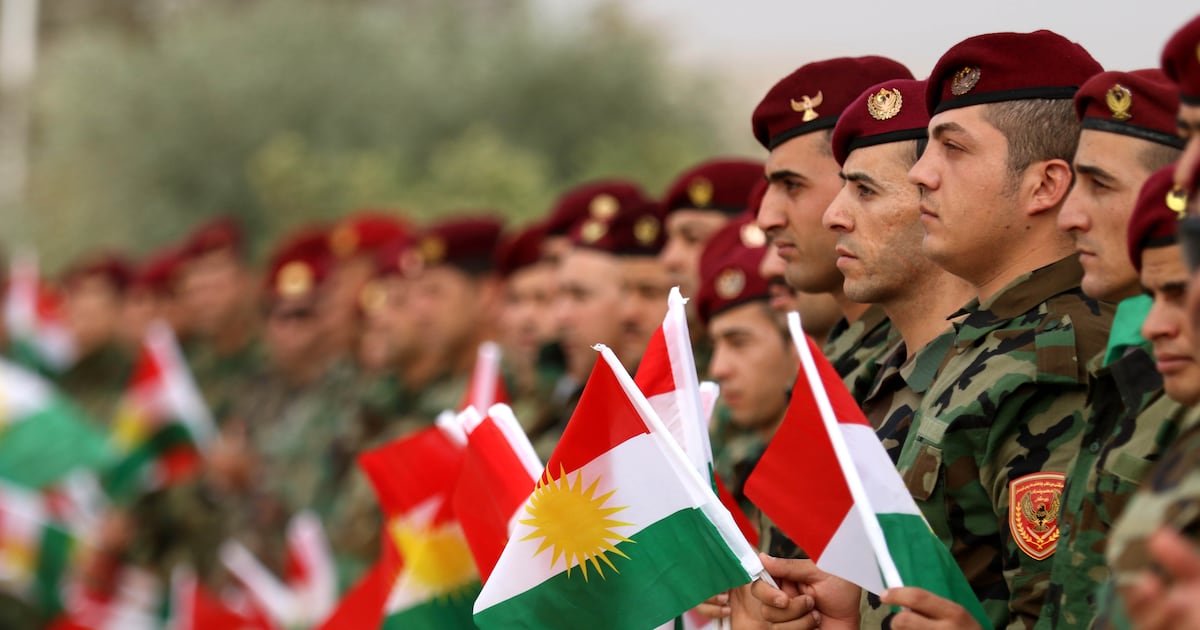
The Kurdistan region of Iraq recently made strides towards unity by officially merging its Peshmerga forces under the Ministry of Peshmerga Affairs. This decision marks a significant moment, putting an end to decades of separation between the military branches linked to the two major Kurdish political parties: the Kurdistan Democratic Party (KDP) and the Patriotic Union of Kurdistan (PUK).
The Historical Context of the Peshmerga
The Peshmerga, which translates to “those who face death,” is the military force of the Kurdish people in northern Iraq. For many years, they have been central to the Kurdish struggle against the central Iraqi government in Baghdad. Following the 2003 U.S.-led invasion that removed Saddam Hussein, the Peshmerga gained recognition as an essential component of Iraq’s national security framework. However, despite the establishment of a Ministry of Peshmerga, the forces remained allegiant to the KDP and PUK, leading to challenges regarding command structures and operational effectiveness.
Despite numerous attempts at unity, previous efforts to consolidate the Peshmerga forces faced obstacles, mainly due to political divides and varying loyalties. However, the recent announcement signals a shift. U.S. officials had pressed for this unification as part of their military reform agenda, emphasizing that a united Peshmerga is crucial not just for Kurdish autonomy but also for Iraq’s overall stability.
The Significance of Unification
At the formal ceremony in Erbil, prominent Kurdish leaders, including Nechirvan Barzani and Prime Minister Masrour Barzani, expressed the historic nature of this unification. Barzani highlighted that this move is intended to create a professional military body free from political influences, stating, “The Peshmerga must be a national force far from party influence.” He emphasized that this military consolidation aims to honor the sacrifices made by Kurdish fighters who have stood together in tough times.
Masrour Barzani termed the day as “historic for Kurdistan and the Peshmerga,” reflecting on the long-standing demand from the Kurdish population for a unified armed force. By positioning all Peshmerga units under one command, the regional leadership aims to build a more effective military infrastructure designed to protect both Kurdistan and its people.
International Implications and Future Steps
The unification of the Peshmerga is also intricately linked to U.S. interests in the region. Over the years, Washington has supplied the Peshmerga with substantial funding, training, and arms, making full consolidation a prerequisite for ongoing military support. U.S. officials have cautioned that divided commands jeopardize the effectiveness of military operations, particularly against ISIS, which has raised concerns about accountability and party control.
In response to international pressures, Barzani expressed gratitude to the U.S. and partner nations for their support in fostering Peshmerga unification. He reaffirmed the necessity of strengthening military capabilities and acquiring advanced weaponry while reinforcing that a unified Peshmerga would become integral to both the Kurdistan Region and Iraq as a whole. The intention is to enhance the Peshmerga’s capacity, transforming it into a vital constitutional force within Iraq’s national defense system.
As Iraq grapples with the challenge of integrating armed factions, this unification effort represents more than a military necessity; it is essential for the region’s sovereignty and political stability. While the Kurdish reform consolidates two historically rival parties into a single, recognized military entity, Iraq’s government simultaneously seeks to address a diverse and fragmented array of armed groups, emphasizing the importance of unity for national integrity. Ultimately, both efforts are framed as critical steps toward a stable future.