
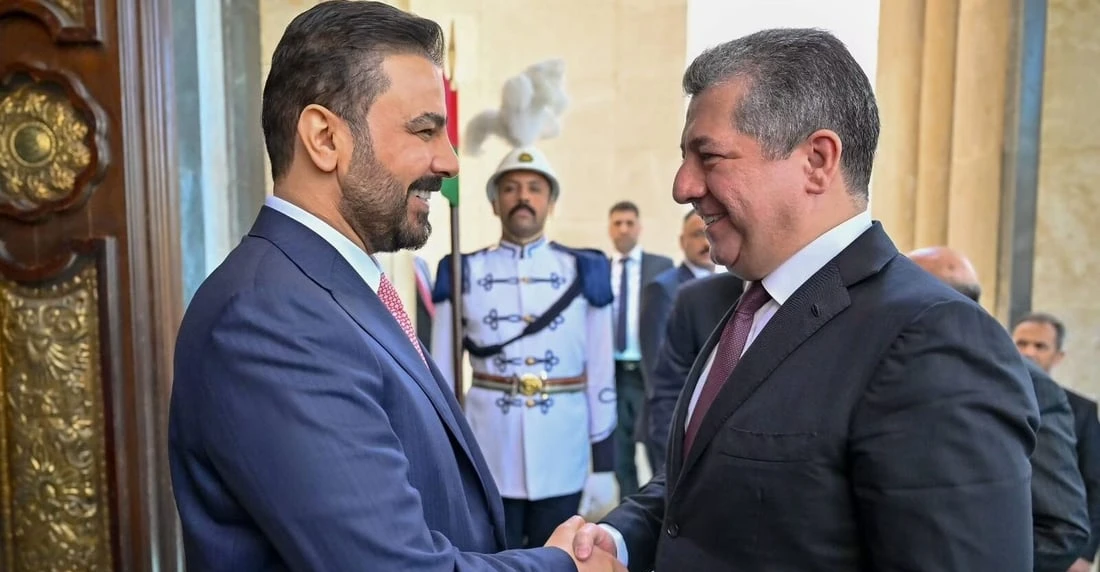
The Iraqi government has taken significant steps to address salary discrepancies in the Kurdistan Region. Recent discussions between Kurdistan Regional Government (KRG) Prime Minister Masrour Barzani and Iraqi Prime Minister Ali al-Zaidi indicate a new approach towards funding civil servant salaries in the region, aligning them with those of the rest of Iraq. This development marks a crucial moment in the often tumultuous relations between Baghdad and Erbil.
Funding Civil Servants’ Salaries
Omed Sabah, a member of Barzani’s entourage during the talks, confirmed that directives had been given to ensure regular and nondiscriminatory salary payments for Kurdistan Region civil servants. This issue has long been a contentious point, leading to disruptions in public sector payments. The acknowledgment by the federal Finance Ministry to standardize these payments could vastly improve the working conditions for civil servants in the Kurdistan Region.
Key Discussion Areas
The meetings touched on several critical topics, including employee salaries, non-oil internal revenues, oil export strategies, the return of international oil companies, dam projects, and the implementation of the ASYCUDA automated customs system at border crossings. The inclusion of these various issues points to a broader agenda aimed at enhancing financial cooperation between the two governments.
Of particular interest is the oil discussion, wherein foreign companies operating in the Kurdistan Region have insisted on security guarantees from Baghdad due to recent attacks on oil fields. Prime Minister al-Zaidi addressed these concerns directly, offering assurances during the discussions.
Future Negotiations and Cooperation
Following the Eid al-Adha holidays, a high-level delegation from the KRG Ministry of Natural Resources, along with representatives from foreign oil companies, is set to meet with officials in Baghdad. This meeting aims to negotiate terms for resuming oil exports and reach a comprehensive agreement.
The Shiite Coordination Framework lawmaker Mukhtar al-Moussawi expressed optimism regarding the recent talks, viewing them as evidence of a “shared political will.” This sentiment suggests that if the current momentum is maintained, a new phase of cooperation between Erbil and Baghdad could emerge.
Political Backing and Commitments
In addition to salary funding, discussions also addressed broader political commitments. The KDP, a dominant political party in the Kurdistan Region, has shown support for al-Zaidi’s leadership and has pressed for resolutions to outstanding issues between Baghdad and Erbil. Among these is the constitutional budget share for the Kurdistan Region and the vital Article 140, which addresses the status of disputed territories, including the significant oil-rich province of Kirkuk.
These developments are crucial for fostering stability and securing the economic future of both regions. If the current dialogue continues to progress, it may pave the way for a more unified approach to tackling these long-standing issues.