
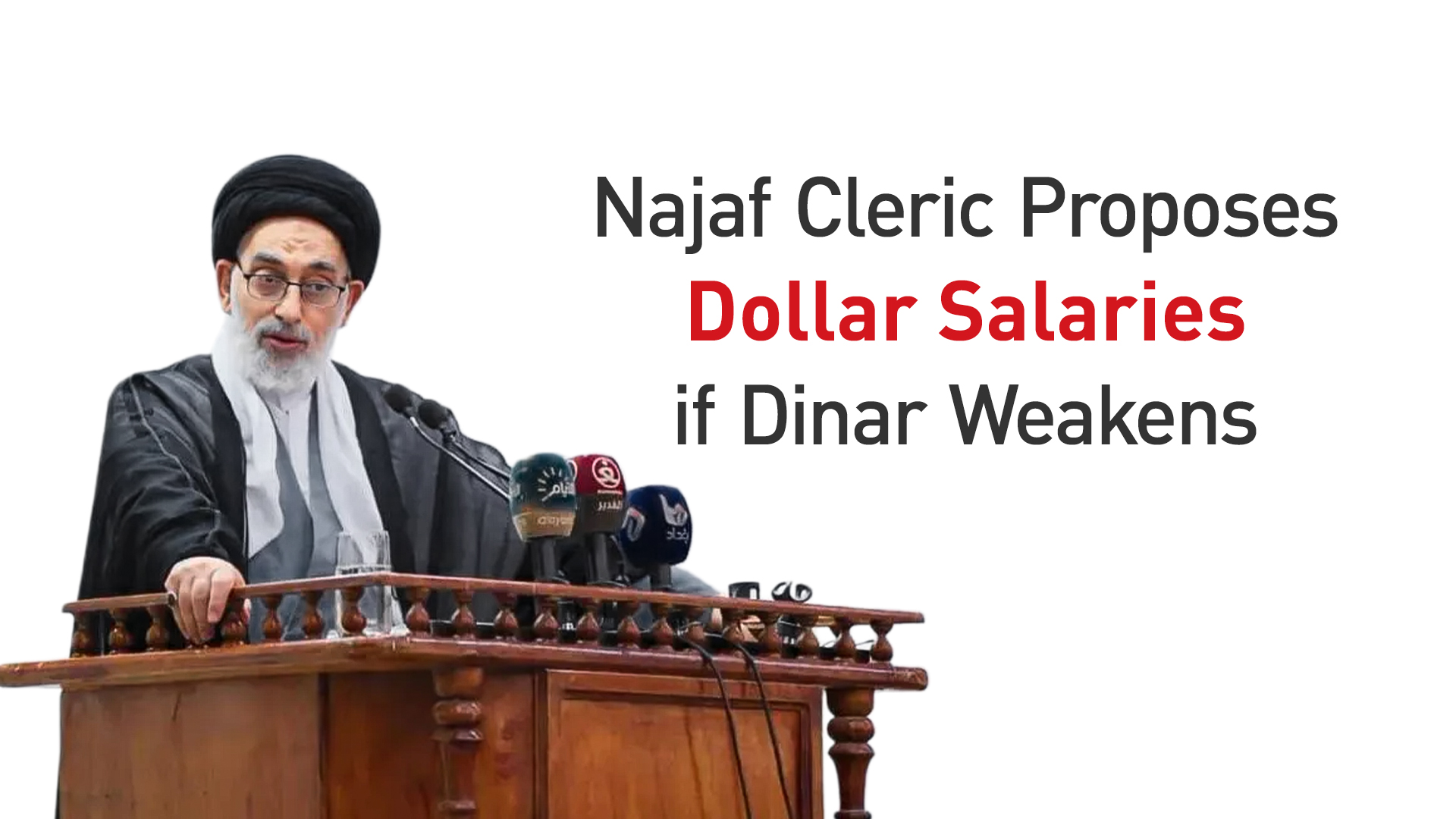
Sayyid Sadr al-Din al-Qubanchi, the imam of Najaf’s Grand Mosque, has raised concerns regarding the Iraqi government’s decision to devalue the dinar. During his recent sermon, he joined calls from the public and various sectors to reevaluate this financial strategy, emphasizing the negative impact on citizens due to the rising dollar value. His proposals include paying public employees in U.S. dollars if the dinar remains weak, an idea aimed at safeguarding their salaries against inflation.
Concerns Over Currency Devaluation
Al-Qubanchi’s sermon on October 9 highlighted the essential need for the government to reconsider its choice to devalue the national currency. He underscored the heavy reliance of Iraq’s economy on oil revenues, which account for nearly 90% of the country’s revenue. With religious tourism contributing only about 3%, he argued that there should be alternative solutions rather than imposing further pressure on the dinar and subsequently impacting everyday citizens.
His arguments brought attention to statements from the government about the status of the oil export route through the Strait of Hormuz, suggesting it remains accessible for larger Iraqi tankers. According to him, the previous month alone saw around four million barrels of oil transported via this route. He insisted that issues affecting oil exports should be tackled directly rather than exacerbating the situation for the average Iraq citizen through a faltering currency.
Proposed Alternatives for Employees
Should the government decide that devaluation is unavoidable, Al-Qubanchi suggested that the salaries of public-sector employees be issued in U.S. dollars. This measure aims to protect their purchasing power from the inflationary pressures that accompany a weaker dinar. This proposal arises in the wake of changes made by the Central Bank of Iraq, which adjusted the official exchange rate to 1,500 dinars per dollar, leading to concerns about the increasing costs for imported goods and the overall purchasing power of households.
The new rate has already drawn criticism from various sectors, including lawmakers and business groups, worried that the increased costs could negatively impact employment, construction projects, and investment opportunities. The Iraqi Contractors Federation has particularly voiced concerns about how the higher dollar rate would hinder the local economy.
Government’s Defense of the Decision
In defense of the exchange rate modification, Iraqi Prime Minister Ali Faleh al-Zaidi stated that his government is grappling with inherited public debt that exceeds 208 trillion dinars. He emphasized that to meet the country’s financial requirements, approximately 10 trillion dinars must be secured monthly. The Prime Minister has also linked the economic pressures to disruptions in oil exports, reiterating that speculators previously exploited the differences between official and parallel market rates.
The central bank has characterized the devaluation as a precautionary measure aimed at creating a financial buffer against regional instability, diminished oil revenues, and liquidity pressures. Despite these reassurances, skepticism remains among businesses and consumers facing higher prices due to the new fiscal policies.
Broader Implications of the Currency Shift
With the recent adjustments to the exchange rate, market rates persistently overshadow the official rates, intensifying apprehension among consumers unable to acquire dollars through legal channels. Al-Qubanchi’s intervention has injected a significant religious perspective into the public discourse surrounding Iraq’s financial issues. As the debate evolves, discussions focus on whether the government’s attempts to stabilize public finances will impose undue burdens on households through elevated costs and a compromised national currency.
In conclusion, Al-Qubanchi’s emphasis on protecting public employees’ purchasing power of their salaries by potentially paying them in U.S. dollars outlines a clear call for the government to alleviate financial burdens on the general populace. The overarching challenge remains finding a balance between necessary fiscal measures and their impact on everyday citizens.