
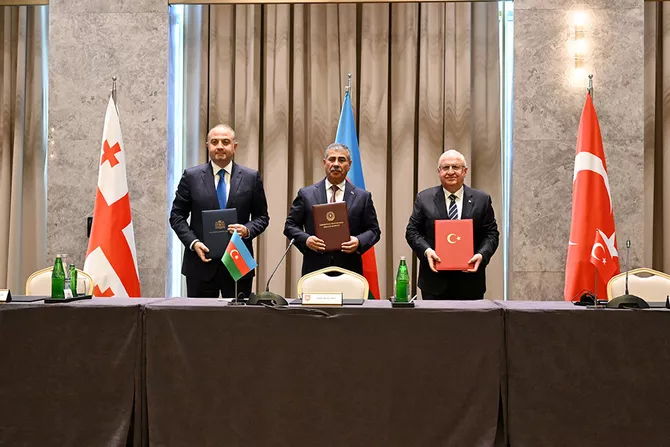
The recent 13th Trilateral Meeting of the Defense Ministers from Türkiye, Azerbaijan, and Georgia in Shusha highlights a pivotal moment in regional security cooperation. Convening on October 2, the event underscored the interconnectedness of these nations in terms of security and stability in the Caucasus region. Hosted by Azerbaijani Defense Minister Colonel General Zakir Hasanov, the gathering included Turkish National Defense Minister Yaşar Güler and Georgian Deputy Prime Minister and Defense Minister Irakli Chikovani. This meeting further solidified an ongoing trilateral mechanism that prioritizes collective security and collaboration.
Historical Context and Institutional Growth
Hasanov opened the proceedings by recalling the previous meetings held in Türkiye and Georgia, marking the evolution of this strategic dialogue. This 13th iteration signifies a matured framework that has evolved from informal discussions to an institutionalized platform characterized by established processes. It reflects a commitment to long-term cooperation, fueled largely by the mutual respect and friendship between the leaders of all three nations. Through this strategic partnership, the ministers emphasized the importance of fostering peace, security, and stability in the region, aiming to serve as a model for neighboring countries.
Solidarity and Commitment to Regional Stability
Deepening the diplomatic bonds, the Azerbaijani and Georgian ministers expressed condolences over the tragic loss of Turkish service members in a recent plane crash. Such gestures of solidarity are essential as they enhance the emotional and societal dimensions of this trilateral relationship. As the discussions unfolded, it became evident that these nations value their long-standing relationships based on trust and collaboration. The historical ties among the peoples of Türkiye, Azerbaijan, and Georgia serve as a solid foundation for their commitment to a cooperative future.
Key Areas of Focus and Future Outlook
Güler articulated the conceptual heart of the meeting by stressing the historical and geographical ties connecting the three nations. He noted the transformative landscape of the South Caucasus and welcomed recent peace developments between Azerbaijan and Armenia, believing they can open new avenues for cooperation. Throughout the dialogue, the ministers underscored the critical importance of connectivity through existing energy, transportation, and communication projects. These initiatives not only foster economic growth but also enhance regional security. The discussions evolved to cover joint military exercises and training initiatives aimed at further solidifying their defense capabilities.
Implications for Regional Security
The outcomes of this trilateral meeting encapsulate three significant implications. First, the consolidation of a minilateral security framework indicates that these states are not establishing a formal alliance directed at any specific adversary. Rather, they aim to create a predictable security environment centered around territorial integrity and the prevention of destabilization. Second, as global political tensions persist, the strategic importance of East-West transit routes has intensified, transforming economic lifelines into security imperatives. This shared responsibility for corridor protection promises to fortify their collaborative approach. Lastly, the adaptive capacity revealed during these discussions highlights the need for the trio to explore new avenues for cooperation while ensuring that existing ties remain robust amidst external pressures.
In conclusion, the Shusha protocol does not resolve all regional disputes, nor does it replace ongoing bilateral peace processes. However, it establishes a tangible framework through which Türkiye, Azerbaijan, and Georgia can align their perceptions of risk, strengthen their cooperative bonds, and promote a stable post-conflict environment. If the commitments made on October 2 are diligently upheld, this trilateral cooperation could epitomize the connection between the security of the Caucasus and the individual security of these three nations.