
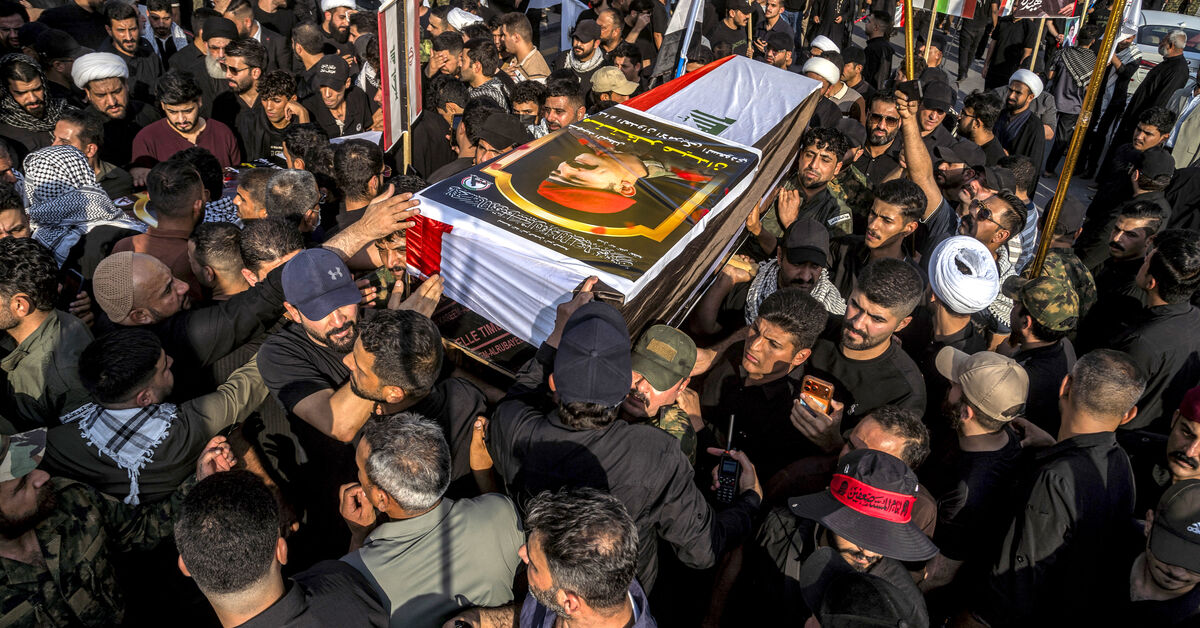
In a significant development for Iraq’s security landscape, Iraqi forces attempted to search the headquarters of the Iran-backed militia Harakat al-Nujaba but faced immediate resistance. The operation, which took place in Baghdad’s Jurf al-Naddaf district, highlights the challenges Prime Minister Ali al-Zaidi faces in asserting governmental control over armed factions, especially with the U.S.-led coalition’s mission nearing its conclusion.
Confrontation at Harakat al-Nujaba Headquarters
On July 24, a contingent of Iraqi troops arrived at the Harakat al-Nujaba compound, armed with orders to inspect for drones and missiles. However, they were met with armed fighters from the militia who threatened the soldiers, effectively halting the mission. The ensuing standoff quickly escalated as commanders from the Popular Mobilization Forces (PMF) and federal police were ordered to withdraw, revealing the significant power dynamics at play between state forces and paramilitary groups.
This incident marks the initial significant challenge to Zaidi’s commitment to centralize arms control in Iraq in light of a rapidly evolving security environment. His promise to bring all weapons under state jurisdiction by September 30 has now been placed in jeopardy, as the events at Harakat’s headquarters display the deep-seated influence these militias wield.
Government Authority vs. Militia Power
While this operation ultimately failed, its implications extend beyond a mere tactical setback—it demonstrates the complicated landscape in which the Iraqi government operates. Unlike previous confrontations characterized by violence and chaos, this standoff was marked by discretion and reluctance to escalate tensions. Such caution is revealing; both sides are wary of being perceived as overly aggressive ahead of the looming deadline for disarmament.
Experts like Haider al-Shakeri argue that while the failed raid does not represent a loss in conventional terms, it underscores Baghdad’s struggles to navigate the intricate balance between asserting state power and managing militias. The Iraqi government seems to be adopting subtler strategies, focusing more on logistical pressure than headline-grabbing raids. However, the underlying issue remains: without effective legal and political repercussions for militia actions, Baghdad risks appearing weak.
Political Tensions and External Pressures
The failed raid unfolded against a backdrop of increasing tension between Zaidi and Iran-backed factions, especially following his recent trip to Washington. Many of these groups have expressed opposition to perceived “economic occupation” through increased U.S. investment, further complicating Baghdad’s efforts to reassert authority. The simultaneous Iranian drone strike on a facility in the Kurdistan Region during Zaidi’s visit underscores the fragility of Iraqi sovereignty and the external challenges it faces.
Moreover, the situation has drawn the attention of international actors, with Saudi Arabia recently reporting drone incursions from Iraqi territory, blaming Iran-backed militias. This multi-directional pressure exacerbates Iraq’s already complex political climate, revealing the government’s limited capacity to maintain security and stability.
Looking Ahead: The Path to Disarmament
The timeline for full disarmament, now set for September 30, appears increasingly unrealistic. The failed raid on Harakat al-Nujaba shows that the government still struggles with powerful militia factions, who continue to wield significant autonomy. To achieve meaningful disarmament, there would need to be substantial dismantlement of these organizations and removal of weapons production capabilities, an endeavor that risks igniting internal conflict.
Thus, Baghdad’s objectives may need recalibration. A more achievable goal might involve gradually curbing the militias’ influence while simultaneously asserting some degrees of control over their operations. However, the situation remains fluid, and the path forward hinges not only on Iraq’s internal strategies but also on the geopolitical dynamics between Washington and Tehran.
In conclusion, while Prime Minister Zaidi’s current administration may aim to control armed factions, the recent events reveal the complexities and limitations of enforcing state authority. The effectiveness of Baghdad’s strategy will ultimately be judged on its ability to limit the militias’ capacity for violence and maintain stability within its borders.