
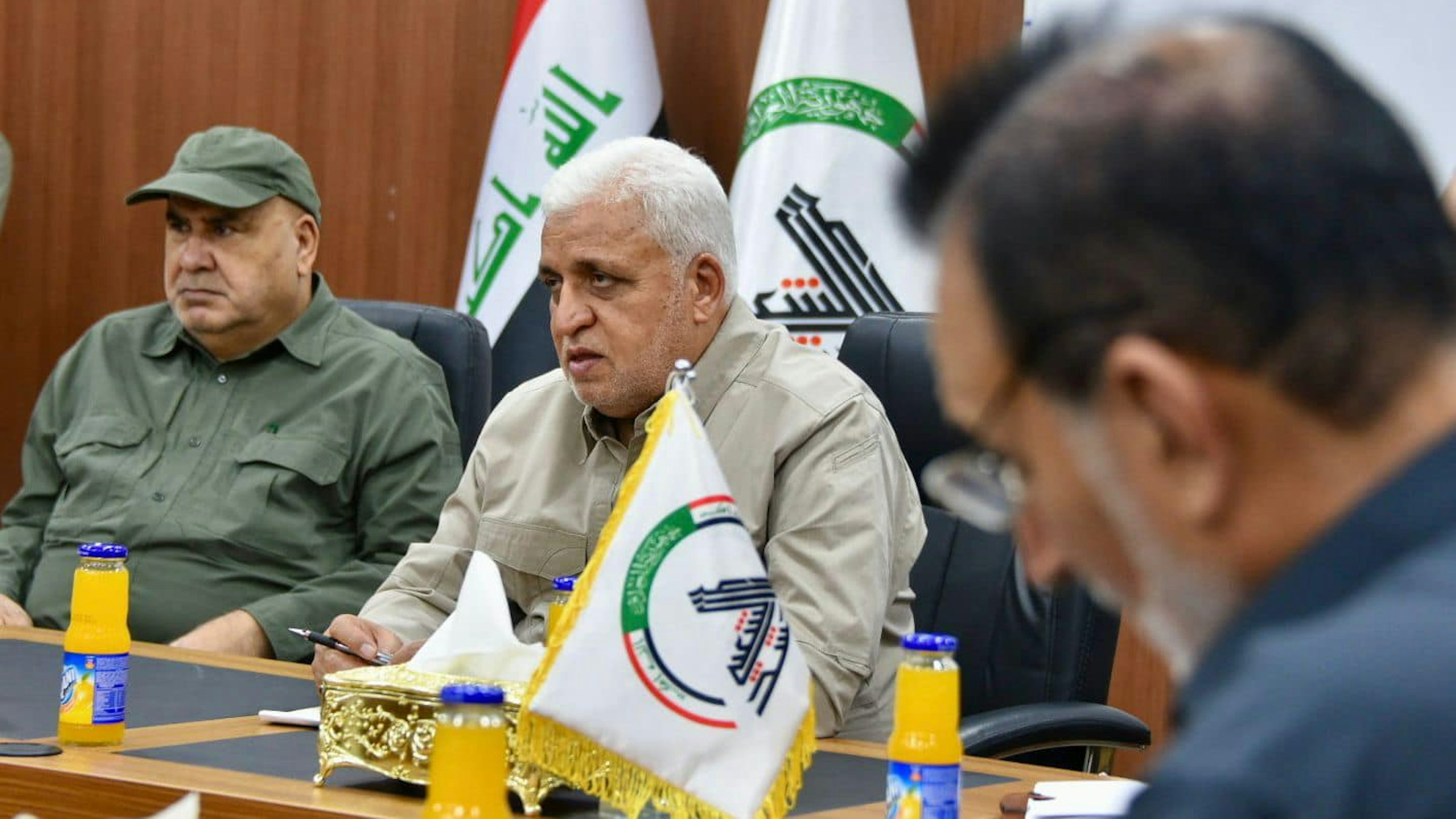
In recent weeks, tensions have intensified within Iraq’s Popular Mobilization Units (PMU), raising concerns over the stability of Shiite political affiliations. This internal conflict has emerged from accusations against PMU Chairman Falih Al-Fayyadh for allegedly failing to heed warnings regarding impending airstrikes orchestrated by Saudi-US forces targeting PMU bases. Although Fayyadh refutes these claims, the escalating pressure on Prime Minister Ali Al-Zaidi is palpable, especially with a looming deadline of September 30, which mandates the government to achieve exclusive control over arms.
The Power Struggle within the PMU
The PMU, formed initially to combat ISIS, has transformed into a powerful sectarian entity, playing a pivotal role in Iraq’s security landscape. However, its influence has led to significant internal rivalries, particularly regarding leadership. The recent crisis centers around allegations that Fayyadh’s inaction resulted in the PMU being caught off guard by coordinated airstrikes, reflecting deeper fractures in the relationship between Shiite factions and external political forces.
Notably, members of Asa’ib Ahl Al-Haq, a prominent armed group operating under the PMU umbrella, have fiercely criticized Fayyadh’s leadership. Their accusations not only underscore a deepening rift within the movement but also cast doubt on the efficacy of the PMU in responding to threats. This dissent highlights the intricate balance of power among various Shiite factions, each vying for greater influence and resources.
The Implications for Iraqi Politics
The power struggle within the PMU has wider implications for Iraq’s political landscape. Prime Minister Al-Zaidi faces an urgent challenge to consolidate authority amid swirling discontent. As the deadline for securing a monopoly on arms approaches, failure to resolve these internal disputes could result in further destabilization of Shiite alliances, undermining governmental authority and national security.
Moreover, the situation presents a precarious dilemma for foreign stakeholders, particularly the United States and Saudi Arabia, who aim to curb Iranian influence over Iraq. A fractured PMU complicates their strategic objectives, potentially leading to increased regional tensions. For Iraq, the internal conflict poses a risk of civil unrest, particularly if factions within the PMU are unable to reconcile their differences.
The Path Forward for the PMU and Iraqi Governance
As tensions escalate, the future of the PMU and Iraq’s governance appears uncertain. Key stakeholders must work diligently to foster dialogue among the various Shiite factions, seeking to bridge their differences before they escalate into larger conflicts. Al-Zaidi’s administration needs to demonstrate a commitment to unity and control, showcasing its capability to manage armed groups effectively while ensuring national security.
Ultimately, the resolution of the internal power struggle within the PMU is essential for Iraq’s political stability. A cohesive Shiite alliance is necessary not just for addressing the immediate threats posed by external forces, but also for the long-term resilience of Iraqi governance. Failure to navigate these issues may lead to greater fragmentation within the PMU and, by extension, jeopardize Iraq’s political landscape. The coming weeks are crucial as the government attempts to regain control and ensure the security and unity of the nation amidst this spiraling crisis.