
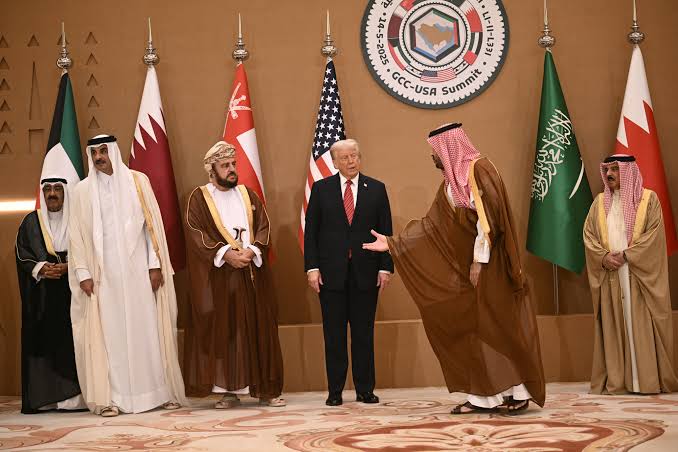
United States President Donald Trump’s upcoming discussions with Gulf leaders during the United Nations General Assembly are set to broaden significantly. Initially centered on the six members of the Gulf Cooperation Council (GCC), the meeting is now expected to include Iraq, Jordan, and possibly Egypt. This newfound inclusivity underscores a strategic effort by Washington and regional allies to foster a united Arab stance regarding the ongoing tensions with Iran, activities by the Houthis, maritime safety, and the overall power dynamics in West Asia.
Expanding the Dialogue
Originally framed as a consultation primarily between the U.S. and GCC states, the inclusion of Iraq and Jordan transforms the discussion into a more comprehensive regional dialogue. Iraq is especially significant due to its extensive political, economic, and security ties with Iran, while Jordan’s geographical position connects Gulf concerns with those of the Levant and Israel. The potential involvement of Egypt would further enrich the talks, bringing in critical discussions on Red Sea and Suez security—areas deeply affected by regional trade and energy disruptions.
UAE presidential advisor Anwar Gargash emphasizes the necessity of a more extensive framework for the future landscape of the region, arguing that discussions should not be limited to U.S.-Iran relations but should actively engage Arab states as well. This broadening perspective seeks not only to address immediate conflicts but also to lay the groundwork for post-conflict stability.
Context of the Expanded Meeting
The timing of this expanded meeting is particularly poignant as the Iran issue enters a delicate diplomatic phase. The U.S. has kept the option of military escalation and negotiation on the table, while Iran has publicly defined its conditions for renewed discussions. Meanwhile, Gulf states have ramped up efforts to deter a broader confrontation. The escalating military involvement of the Houthis around key maritime regions has raised alarms, suggesting that any agreements focused solely on U.S.-Iran dynamics may overlook significant regional security challenges.
For Arab governments, the prevailing concern extends beyond the immediate resolution of the current conflict; they are increasingly aware of the implications of any new agreement with Iran. Questions surrounding missile deterrence, maritime safety, non-state militant groups, U.S. military presence, and future relations between Tehran and Arab capitals are all intricately tied to the outcome of these discussions.
A Shift in Regional Security Approach
Thus, Trump’s decision to include additional regional players reflects a shift in Washington’s perspective on the Iran issue. It is no longer viewed merely as a bilateral conflict but rather as a collective security challenge requiring the involvement of Arab nations. Whether this meeting will yield a unified stance remains to be seen, especially given the varied relationships and levels of engagement each state has with Iran.
Notably, the participation of Iraq and Jordan points to a desire among Arab governments to assert influence in shaping the regional order that will emerge following any ceasefire or diplomatic resolution. Rather than awaiting terms dictated by external powers, these nations seek to play a proactive role in defining the future of regional security dynamics. As the situation evolves, the commitment to broader participation will be essential for achieving comprehensive and lasting security solutions in West Asia.