
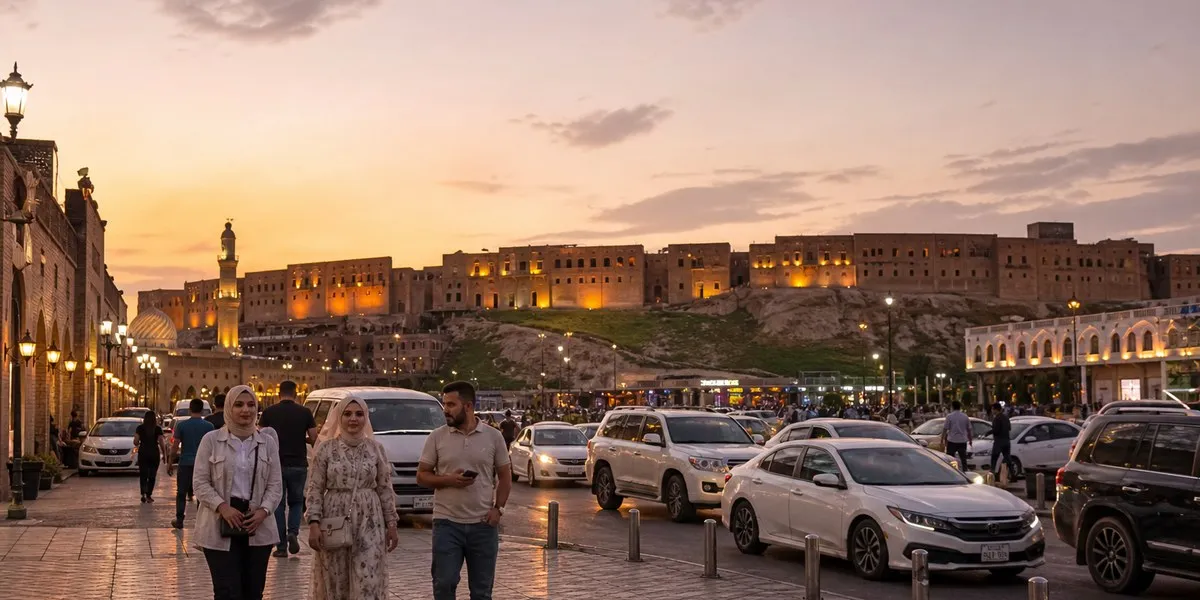
The impending withdrawal of U.S. military forces from Iraq, scheduled for September 2026, raises significant security concerns for the autonomous region of Iraqi Kurdistan. With the threat of Iranian aggression and the influence of paramilitary groups, local authorities are on high alert as they prepare for a future without U.S. military support.
Heightened Tensions in Iraqi Kurdistan
The recent escalation of hostilities from Iran illustrates the precarious situation in Iraqi Kurdistan. Following military actions by the U.S. and Israel against Iranian positions, Tehran reportedly launched over a thousand missile and drone strikes targeting Kurdish opposition groups based within the region. Among these organizations are several notable factions, including the Democratic Party of Iranian Kurdistan and other leftist groups like Komala and PJAK. The Kurdistan Freedom Party, which previously collaborated with Kurdish peshmerga forces against the Islamic State, has also been a target of these attacks.
The ongoing missile strikes have struck locations of key political figures, including the offices of President Nechirvan Barzani and Prime Minister Masrour Barzani. This pattern of aggression underscores the vulnerabilities faced by Kurdish authorities and the urgent need for enhanced defensive measures in the region.
Urgent Call for Enhanced Defense Measures
In light of the growing threats, Prime Minister Masrour Barzani has addressed the pressing need for improved defense systems in a recent discussion with the Financial Times. Emphasizing that Iraqi Kurdistan requires better protection against aerial strikes, he also pointed out the necessity of further support for the peshmerga forces. The potential end of U.S. financial backing alongside the troop withdrawal raises concerns about the sustainability of Kurdish defenses. The Iraqi Kurdish leadership has initiated reforms aimed at unifying and strengthening their military forces to better face these challenges.
Historically, Iraqi Kurds have enjoyed a significant degree of autonomy, particularly since the early 1990s, when their status was solidified in Iraq’s constitution following the 2003 U.S. invasion. A referendum for independence in September 2017 revealed overwhelming support for sovereignty among Kurdish voters, with more than 92% favoring independence.
The Future of U.S.-Kurdish Relations
As the timeline for the U.S. military withdrawal draws closer, the focus now shifts to the ramifications for Kurdish security and governance. The U.S. will maintain a substantial consulate in Erbil, but the withdrawal of military personnel could signal a shift in the dynamics of U.S.-Kurdish relations. The Kurdistan Regional Government is actively seeking alternative sources of support while navigating the complex geopolitical landscape.
In conclusion, the upcoming U.S. withdrawal has significant implications for the stability of Iraqi Kurdistan. With increasing threats from Iran and concerns over the future of military support, Kurdish authorities are compelled to bolster their defenses and seek cooperation with other international partners. The Kurdish region’s autonomy and aspirations for independence remain a vital aspect of Iraq’s overall stability, making it essential for the U.S. to consider its strategic priorities in the region as it proceeds with troop withdrawal.