
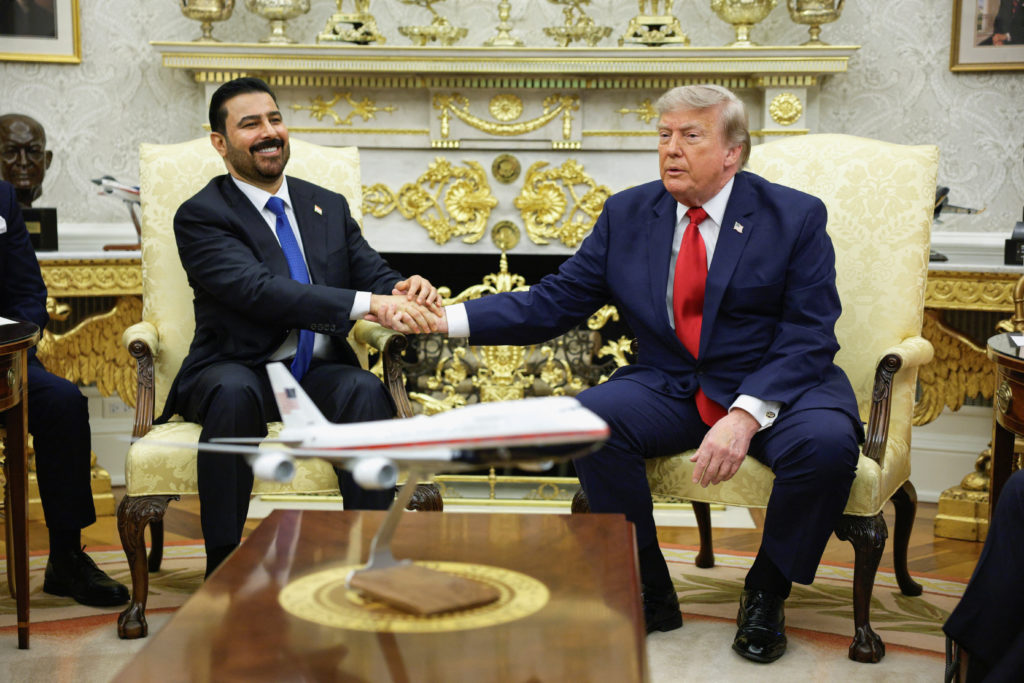
Trump Welcomes New Iraqi Prime Minister Amid Regional Challenges
In a significant diplomatic meeting, President Donald Trump warmly welcomed Iraq’s newly appointed Prime Minister, Ali al-Zaidi, to the White House. Highlighting their mutual appreciation, Trump remarked on the “tremendous chemistry” between them. Both men come from business backgrounds, with al-Zaidi representing a break from traditional politics in Iraq, an aspect Trump seemingly values. This meeting comes in the wake of a long-standing deadlock in Iraq regarding leadership, emphasizing the complexities of political dynamics in the region.
Regional Stability and U.S. Support
Al-Zaidi emerged as a unifying figure in Iraq after prolonged discussions following last year’s parliamentary elections. Trump’s support for al-Zaidi was notably vocal, indicating a willingness to cut off U.S. assistance to Iraq if another candidate took the helm. During their meeting, Trump expressed confidence in al-Zaidi’s potential to influence the Middle East positively, stating, “This man is going to be a great leader.” Such endorsements come with high hopes for stability in a nation grappling with numerous challenges.
A significant focus of their discussions revolved around disarmament of Iran-supported militias in Iraq. Some of these groups have been implicated in attacks against U.S. interests in the region. Officially, Iraq has set a deadline for these militias to disband, yet many remain defiant. Al-Zaidi insisted there would be no justification for their existence post-deadline. The Trump administration has signaled it will closely monitor Iraq’s efforts in this regard, with officials indicating that the U.S. will remain supportive, provided tangible progress is made.
Comparisons to Trump: The Business Politician
Iraqi political dynamics are further complicated by comparisons drawn between al-Zaidi and Trump himself. Some analysts refer to al-Zaidi as the “Trump of the Middle East,” due to their shared business backgrounds and outsider status. Victoria Taylor from the Atlantic Council pointed out that al-Zaidi’s wealth and non-political history make him appealing, especially in a region where political nepotism and corruption are rampant. However, she also cautioned that al-Zaidi cannot escape the existing political structure and may face significant obstacles in executable reform.
Amidst these pressures, al-Zaidi cleverly sidestepped questions relating to sensitive historical events, including the U.S. assassination of Iranian General Qassem Soleimani, stating he wasn’t involved in politics at that time. This approach reflects his intent to focus on future relations rather than past grievances, possibly to cultivate a constructive dialogue with the U.S.
Energy Deals and Economic Partnerships
As the diplomatic discussions unfolded, both leaders hinted at a forthcoming energy agreement that would have substantial implications for Iraq’s economy. Reports suggest that a contract involving U.S. companies, including Chevron, is on the verge of being formalized, aimed at constructing an oil pipeline stretching from southern Iraq to ports in Turkey and Syria. This project holds the promise of enhancing Iraq’s oil export capabilities, crucial for its economic rejuvenation.
Additionally, al-Zaidi’s administration is making strides against corruption, a pressing issue in Iraqi governance. Under his leadership, several high-profile arrests of officials have been made, highlighting a commitment to reform and accountability. The Prime Minister’s visit to Washington involves a delegation designed to foster economic links and attract investment—critical elements for Iraq’s development strategy, particularly within the energy sector.
As Iraq navigates through a challenging landscape fraught with political and regional complexities, the partnership with the U.S. appears to be pivotal for both economic growth and efforts to stabilize the country. Al-Zaidi’s tenure is positioned at a crossroads of potential, where the efficacy of his leadership will be closely scrutinized by both Iraqi citizens and international observers.