
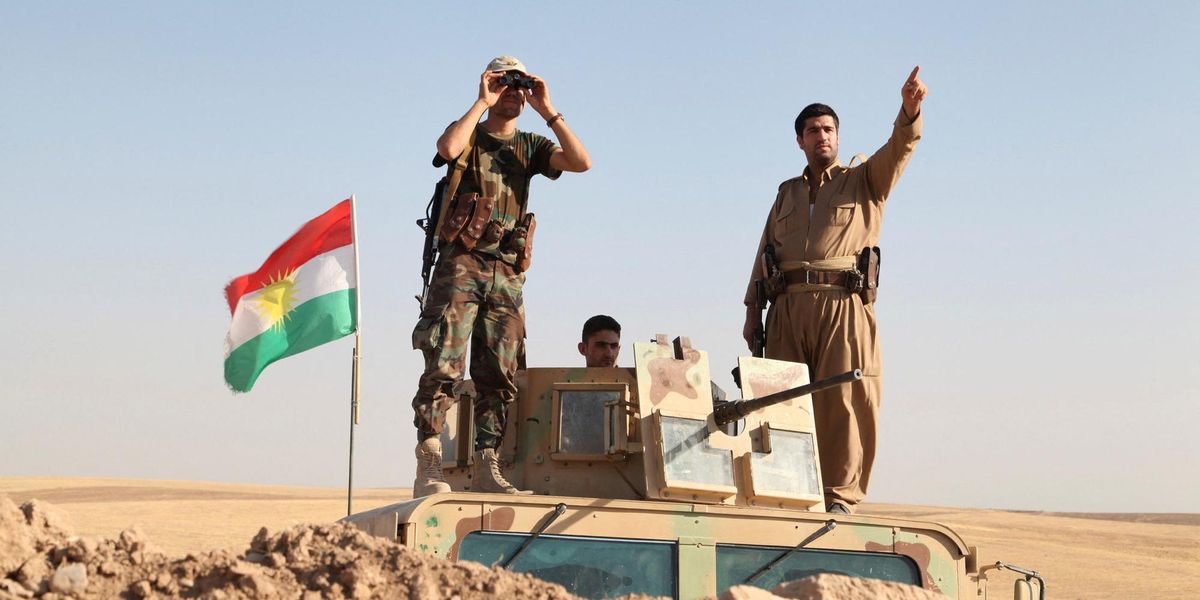
On September 21, the Kurdistan Region of Iraq made a significant announcement regarding the consolidation and reorganization of its Peshmerga forces under the Ministry of Peshmerga Affairs (MoPA). This move marks a critical step toward unifying the Kurdish armed forces, historically known for their fragmented state. The Peshmerga, who have fought for Kurdish autonomy and rights for decades, have faced internal divisions since the fallout from the 2003 invasion of Iraq. The unification of their forces has implications not only for Kurdistan but also for regional stability as foreign military presences shift in the area.
The Historical Context of Peshmerga Forces
The Peshmerga’s origins date back to Kurdish guerrilla fighters who resisted Iraqi governance throughout the 20th century. However, post-2003, instead of forming a cohesive national military, they splintered into two primary factions: the Kurdistan Democratic Party (KDP) and the Patriotic Union of Kurdistan (PUK). Each party maintained its military force, leading to a situation in which the Peshmerga was more a collection of competing interests than a united front. Kurdish leaders hailed the recent unification as a pivotal moment for the Kurdish people, signaling potential strength amid the U.S.’s impending military withdrawal.
U.S. Involvement and Future Security Architecture
As U.S. military forces downsize in Iraq, questions arise about the security framework that will be left behind. A unified Peshmerga could serve as a vital player in mitigating potential threats from Iran-aligned militias and a resurgence of ISIS. The U.S. has supported the Peshmerga’s transformation into a more professional military entity through years of training and cooperation, particularly in the context of countering ISIS. With the completion of U.S. troops’ withdrawal, the responsibility for security in the region will increasingly rest on local forces, including the newly unified Peshmerga.
The timing of this unification—occurring just before the U.S. exit—raises intriguing questions. While not explicitly part of Washington’s withdrawal plan, the unification serves both Kurdish interests and U.S. interests, specifically in containing Iranian influence and preventing a vacuum that could foster extremism. The U.S. aims to maintain its interests in Iraq through support methods that include training and intelligence sharing, ensuring that local forces can effectively manage security challenges moving forward.
The Challenges of Intra-Kurdish Fragmentation
One of the most pressing challenges in the unification process is overcoming deep-rooted political divisions between the KDP and PUK. Critics argue that the current command structure still reflects party loyalties rather than a functional military command. Despite the Ministry of Peshmerga Affairs’ recent accomplishments—such as centralizing salary payments and promoting professional military standards—completely severing party ties remains a complex task. Kurdish officials have expressed optimism in resolving these issues, but meaningful change requires sustained political will.
With parliamentary elections stalled due to a deadlock between the dominant political factions, the future of the Kurdish region’s governance hangs in the balance. The key question is whether external pressure, particularly from the U.S., may motivate the KDP and PUK to overcome their differences. As U.S. military presence diminishes, the focus shifts toward encouraging cooperation that can stabilize governance and protect Kurdish interests.
Looking Ahead: The Role of the Peshmerga and Regional Stability
As the U.S. withdraws, the question of how to stabilize Iraq without its direct military presence looms large. The recent unification of Peshmerga forces is a critical factor in this equation, but it is only one of many elements at play. The Iraqi government must navigate the complexities of disarming Iranian-aligned groups while ensuring that local forces are adequately prepared to manage security threats. While the Peshmerga’s consolidation could act as a buffer against potential chaos, the ultimate success of these efforts hinges on overcoming political divisions and establishing a cohesive operational command.
In this transitional phase, the Peshmerga stands as a potential pillar of security for both the Iraqi state and broader regional interests, particularly as tensions with Iran continue to simmer. While the path ahead is fraught with challenges, the recent milestones in unification provide a glimmer of hope for a more structured and united military force capable of addressing the pressing challenges ahead.