
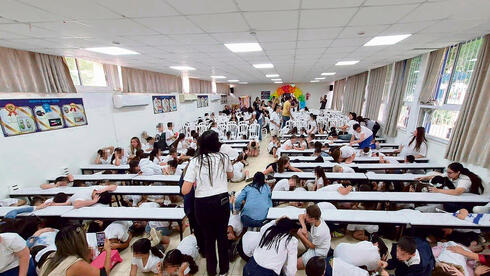
The results of Israel’s 2025 PISA exam reveal a concerning drop in educational performance among 15-year-old students. The Program for International Student Assessment (PISA) evaluates students in mathematics, reading, and science, and this year, Israel achieved its lowest scores ever across all subjects. This decline places Israel below the OECD (Organization for Economic Co-operation and Development) average and positions it among the underperformers of developed nations.
Significant Declines in Mathematics, Science, and Reading
In the latest PISA assessment, Israel’s average score across mathematics, reading, and science plunged by 29 points. This decline was the second-largest among the 75 countries evaluated, with only Latvia experiencing a steeper drop. Specifically, Israel’s mathematics score fell to 433, a decrease of 25 points from 2022. This marks a stark contrast to its earlier performance, as the country scored 442 in 2006 and peaked at 470 in 2015.
In terms of science, Israel recorded a score of 442, down 23 points from 465 in the previous assessment. This decline is substantial, even dipping below its earlier low of 454 points in 2006. The science score is now 40 points below the OECD average. Similarly, the reading score declined to 436, a drop of 38 points, signifying the second-worst decline globally after Latvia. This decline has pushed Israel from 30th to 37th place in the overall rankings.
Shifts in Student Performance Levels
One of the most alarming findings is the widening gap in student performance levels. An increasing number of students fall below the baseline proficiency, particularly in mathematics, where the percentage of low-performing students surged from 37% in 2022 to a staggering 46% in 2025. This contrast against the OECD average of 34% paints a grim picture of the educational landscape in Israel.
Moreover, the proportions of top-performing students have dwindled. Among students excelling in mathematics, the share fell from 8% to 5%. In comparison, leading countries like Singapore and urban China boast far higher percentages of high-achieving students. The scenario is similar in science, where the share of low-performing students has jumped to 40%, significantly above the OECD average of 25%.
Insights from the Education Minister and Future Improvements
In light of these concerning results, Education Minister Yoav Kisch attributed the drastic decline to the educational disruptions caused by prolonged conflict. He noted that despite the hardships faced over nearly a year and a half of war, the resilience of the Israeli education system is commendable. Kisch emphasizes that the current results should be viewed as a snapshot of learning during challenging times, with the Ministry already launching initiatives aimed at boosting academic achievement even before the results were published.
The Ministry also underlined that PISA 2025 offers a glimpse into a period marked by the evacuation of communities and inconsistent educational continuity. As steps are taken to mitigate these declines, there is hope for improvement in future assessments. The commitment to enhancing educational outcomes remains a priority, reflecting a serious acknowledgment of the current deficiencies.
In summary, the 2025 PISA results underscore an urgent need for strategic changes within Israel’s educational framework. Addressing the downturn in student performance will require not only immediate reforms but also long-term investments in educational resources and stability to secure a better future for the upcoming generations.