
On Sunday, foreign ministers from eight Muslim nations strongly criticized Israel’s refusal to accept the latest proposal for implementing U.S. President Donald Trump’s Gaza peace initiative. This collective condemnation highlights ongoing tensions and the complex dynamics surrounding the Israel-Palestine conflict, especially considering the broader implications for regional stability.
Israel’s Response to the Gaza Peace Plan
The foreign ministers from Saudi Arabia, Egypt, Jordan, Pakistan, Indonesia, Türkiye, Qatar, and the United Arab Emirates issued a joint statement asserting that Israel’s rejection of the peace plan constitutes a “direct repudiation.” They warned that this stance jeopardizes the potential for implementation and undermines the collective pursuit of a lasting and just peace. In their view, Israel’s actions confirm its responsibility for obstructing peace efforts, particularly in Gaza and the Occupied Palestinian Territories.
The proposed roadmap, which has received approval from Palestinian factions, is the result of extensive diplomatic engagements led by Egypt, Qatar, Türkiye, the United States, and the High Representative of Gaza. This plan outlines crucial steps for disarmament, the withdrawal of Israeli forces, and the establishment of an International Stabilization Force. It also addresses the transfer of administrative authority to a designated committee for Gaza’s management and envisions reconstruction efforts, reinforcing its significance in the peace process.
Consequences of Rejection
Rejecting the roadmap is viewed as an overt halt to the progression of the peace initiative. The foreign ministers emphasized that such a stance threatens to derail the extensive efforts made by President Trump to end hostilities in Gaza and create conditions conducive to lasting peace. They called for the United States to play an active role in ensuring that Israel adheres to its commitments under the peace plan, to prevent further delays or obstructions.
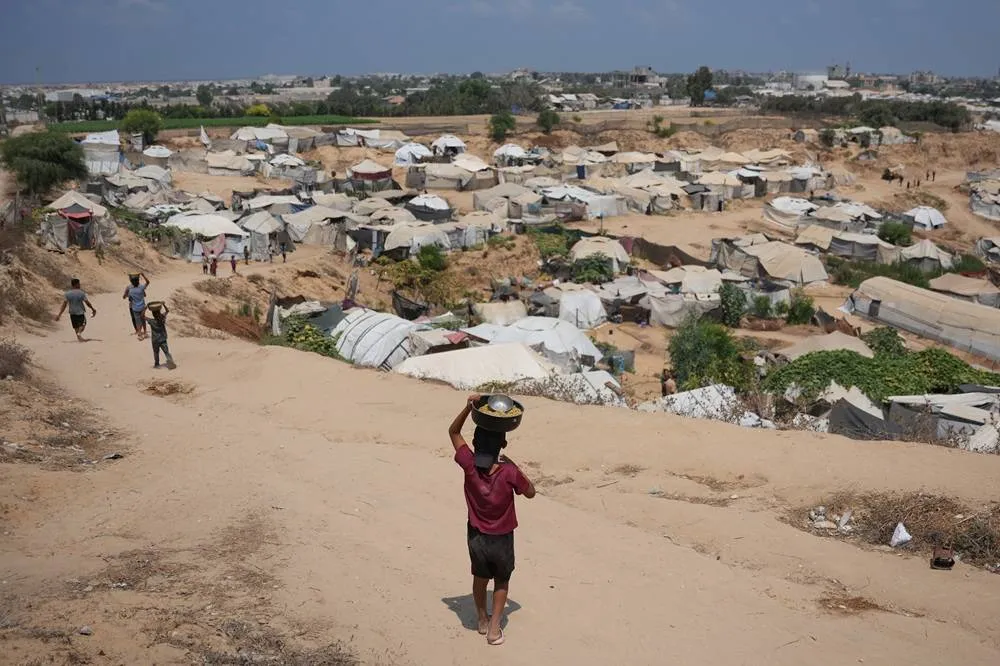
The ministers warned that Israel holds full responsibility for any negative consequences stemming from its continued rejection of the plan. They specifically mentioned the potential escalation of violence and instability as a direct result of this non-compliance, urging immediate action to address the worsening humanitarian crisis in Gaza. An urgent call to action was made to implement the peace plan fully and promptly to restore security and stability in the region.
Path Forward for Peace
The statement underscored the necessity of establishing a just and lasting resolution, rooted in international law and the right of Palestinians to self-determination. The foreign ministers rejected any maneuvers that seek to undermine Palestinian statehood, including unilateral actions that could further complicate the peace process. They asserted that a viable two-state solution is critical, envisioning an independent and sovereign Palestinian state based on borders established in 1967, with East Jerusalem designated as its capital.
The ministers called for the continued role of the Board of Peace, urging all parties to supportive engagement for implementing the proposed roadmap and advancing subsequent phases of the peace plan. They insisted on urgent, concrete measures to protect the integrity of the peace initiative, emphasizing collaboration with the United States to mitigate any actions that could obstruct its execution and undermine the goal of peace and stability throughout the region.
In summary, the foreign ministers of the eight Muslim nations not only condemned Israel’s rejection of the Gaza peace plan but also highlighted the pressing need for cooperation and commitment on all fronts to achieve enduring stability and peace in the Middle East.