
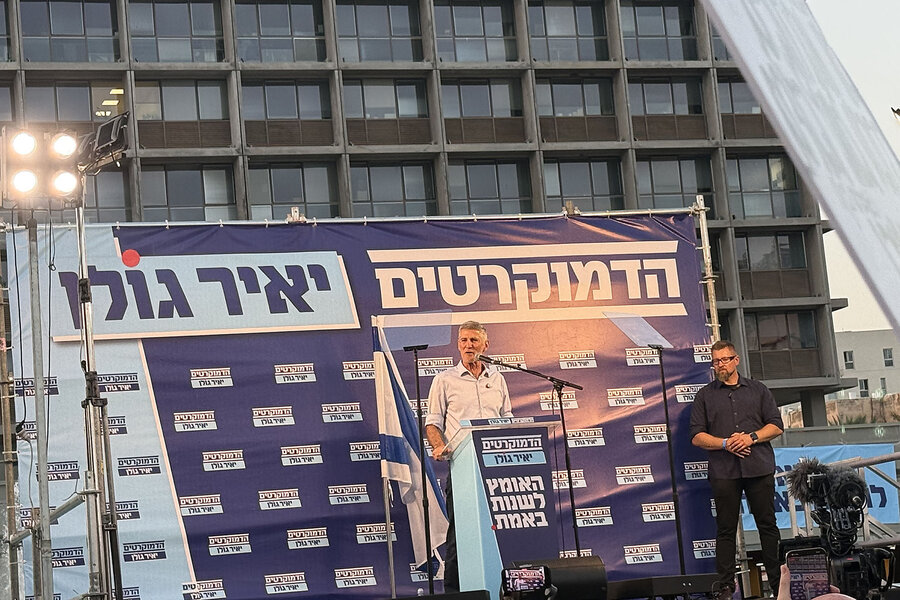
At a recent rally in Tel Aviv, Israel’s newly formed left-wing party, the Democrats, launched their election campaign. The party’s leadership strongly criticized Prime Minister Benjamin Netanyahu’s hard-right administration, branding it as “rotten” and addressing concerns that have been prevalent in the media. Their agenda promised to reverse governmental efforts aimed at undermining the judiciary, to address acts of Jewish terrorism against Palestinians in the West Bank, and to establish an inquiry into the catastrophic Hamas-led attack on October 7, 2023, which marked a dark day in Israeli history.
### The Absence of Peace in Political Discourse
Notably absent from the discussions at the rally was any mention of peace with Palestinians. This silence highlights a significant shift in the Israeli left’s priorities. The Democrats, while historically advocating for negotiations and a two-state solution, are now more focused on ousting Netanyahu than discussing how to advance peace discussions. Even speakers who broached the subject of peace did not specify with whom that peace should be sought. The attack on October 7 has not only eroded support for Palestinian statehood but has also hardened public sentiment against any conciliatory measures toward the Palestinian cause.
The political landscape has changed dramatically, with the left now cautious about openly supporting Palestinian sovereignty due to concerns of alienating voters. The opposition’s primary objective is to replace Netanyahu, who is seen as being responsible for the civilian and military casualties that have recently occurred. In response to this growing sentiment, Netanyahu has resisted pressure, including from U.S. leaders, to restore a ceasefire in Gaza, fearing that any perceived concessions to Hamas could jeopardize his political future.
### A Shift in Strategy on the Left
This shift in the left’s rhetoric regarding Palestine indicates an ongoing rightward political trend that is reshaping Israeli society. The leaders of the Democrats are hesitant to emphasize the importance of negotiating an end to the long-standing conflict. Though they may express support for a two-state solution, it is often framed as a distant aspiration rather than an actionable goal. Recent polls underscore this transformation; a June survey indicated that support for a two-state solution among Jewish Israelis has dipped significantly, falling to just 25%, compared to levels prior to the events of October 7.
Prominent voices within the left, such as Efrat Tolkowsky, have felt the impact of this change. Tolkowsky, who had long championed peace initiatives, has shifted her focus away from the Democrats altogether. She argues that the chronic violence attributed to Palestinian factions shapes public perception, reinforcing a narrative that dismisses pathways to peace. The recent spike in global criticism towards Israel, especially following the large-scale conflict in Gaza, has further complicated the Israeli left’s ability to effectively present a peace-oriented agenda.
### Reorienting Domestic Focus
In light of these challenges, the left’s current strategy is primarily centered around domestic political reform rather than the establishment of a Palestinian state. Experts like Tamar Hermann emphasize that the left is now prioritizing local political change, believing that without addressing internal governance issues, discussions about the peace process may not materialize for the foreseeable future. Leaders such as Yair Golan have suggested that moving towards a two-state solution is currently unrealistic. Instead, they advocate for civil separation between Israelis and Palestinians, a proposal aimed at managing the ongoing tensions while still retaining security responsibility.
Despite the prevailing sentiments, some activists continue to emphasize the need for dialogue. Candidates from emerging parties, such as Makom Lekulanu, advocate the necessity of re-establishing conversations between Israelis and Palestinians to cultivate a shared future. They argue that dismissing these discussions has only exacerbated tensions.
### The Pragmatic Approach to Change
At the Democrats’ rally, attendees like Giselle and Tzvi Tal expressed a dual desire for change in government while stressing the necessity for Palestinian statehood. They acknowledged the hardships faced by their family members yet maintained the belief that dialogue could lead to a two-state solution. However, there exists a consensus among various political factions that adapting messages to align with public sentiment is critical for electoral success.
Former diplomats within the party point out that the desire for peace persists amidst the broader skepticism towards the peace process. Many Israelis have grown wary of previous attempts that resulted in heightened violence, which has led to a dominant narrative emphasizing survival over dialogue.
### Conclusion: Navigating a New Reality
As the elections draw near, voters are grappling with the complexities of the Israeli-Palestinian conflict, especially in the aftermath of the recent violence. The rallying cry of various factions emphasizes a need for pragmatism, where the focus remains squarely on security and the idea of cohabitation becomes increasingly contentious. While some still clamor for peace, they recognize the drastic shifts in public sentiment and acknowledge that discussions of a hopeful future may need to be tabled until domestic stability is established.