
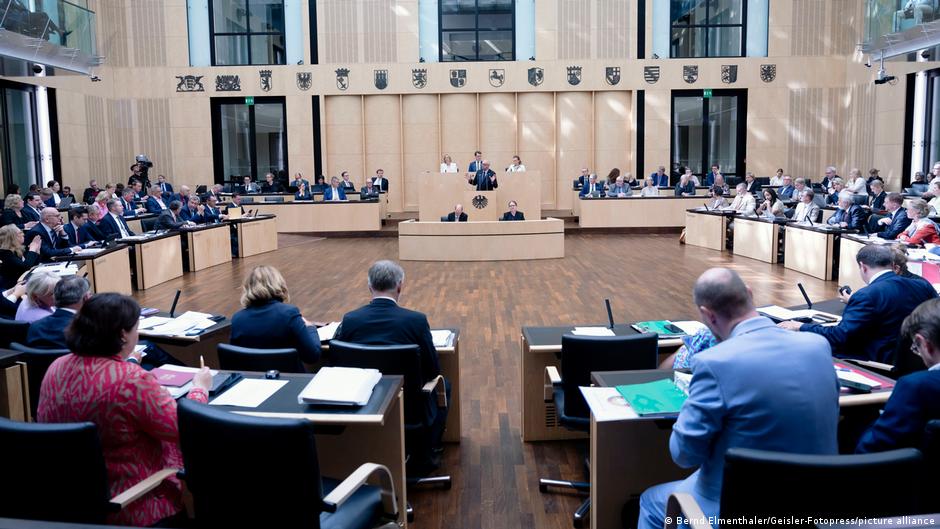
Germany’s parliamentary body, the Bundesrat, is advocating for a statutory ban on expressions that deny Israel’s right to exist. This initiative comes on the heels of escalating antisemitism, particularly in light of recent geopolitical tensions.
Legislative Push from Hesse
In a recent session before the summer recess, legislators approved a proposal from the state of Hesse aimed at tackling antisemitic speech. The bill stipulates that anyone who publicly denies Israel’s right to exist or advocates for its destruction could face criminal charges, but only if such actions incite violence or discrimination against Jewish individuals. Advocates argue that current German laws addressing hate speech are inadequate to tackle this growing concern.
Hesse’s Justice Minister, Christian Heinz, explained that since the onset of Hamas attacks on October 7, 2023, antisemitism has visibly increased in Germany. He lamented that antisemitic expressions have begun to appear openly in public spaces. Heinz emphasized that while the legislation is designed to curb hate, it will not restrict legitimate critiques of Israeli government policies or impede discussions about potential peace solutions in the Middle East.
The Balancing Act of Free Speech
Critics raise concerns about the implications of this legislation on free expression. Some scholars and legal experts argue that the proposal may not align with the German Constitution, which protects freedom of expression, restricting criminalization to general laws without targeting specific opinions. Hesse’s initiative has received mixed reactions; while it garnered support from various states, legal opinions indicate that it may be unconstitutional.
Discussion surrounding this legislation is not new. The Central Council of Jews in Germany has consistently urged for stronger measures against antisemitism, emphasizing that while government criticism is acceptable, questioning Israel’s existence crosses a moral line. Critics, however, point out that many who critique Israel, including some Israelis, do not harbor antisemitic sentiments.
Controversy and Future Implications
Daniel Cohn-Bendit, a prominent figure and former European Parliament member, labeled the initiative as misguided. He argued that condemning individuals who criticize Israel does not equate to addressing antisemitism. While Cohn-Bendit acknowledges that BDS (Boycott, Divestment, Sanctions) proponents like Judith Butler may have misguided positions, he insists that not all critiques stem from hatred.
The debate ultimately raises significant questions about how democracies navigate the line between protecting citizens from hate and preserving freedom of speech. Many believe that the introduction of this bill will open up further discussions on antisemitism and legislative accountability in Germany. The consideration of historical context is also crucial, given Germany’s past and its connection to the Holocaust.
As this contentious conversation continues, the potential for judicial involvement increases. With contrasting opinions on the balance of fundamental rights, the constitutional court may soon need to weigh in on this significant issue, shaping both legal and social landscapes in Germany for years to come.