
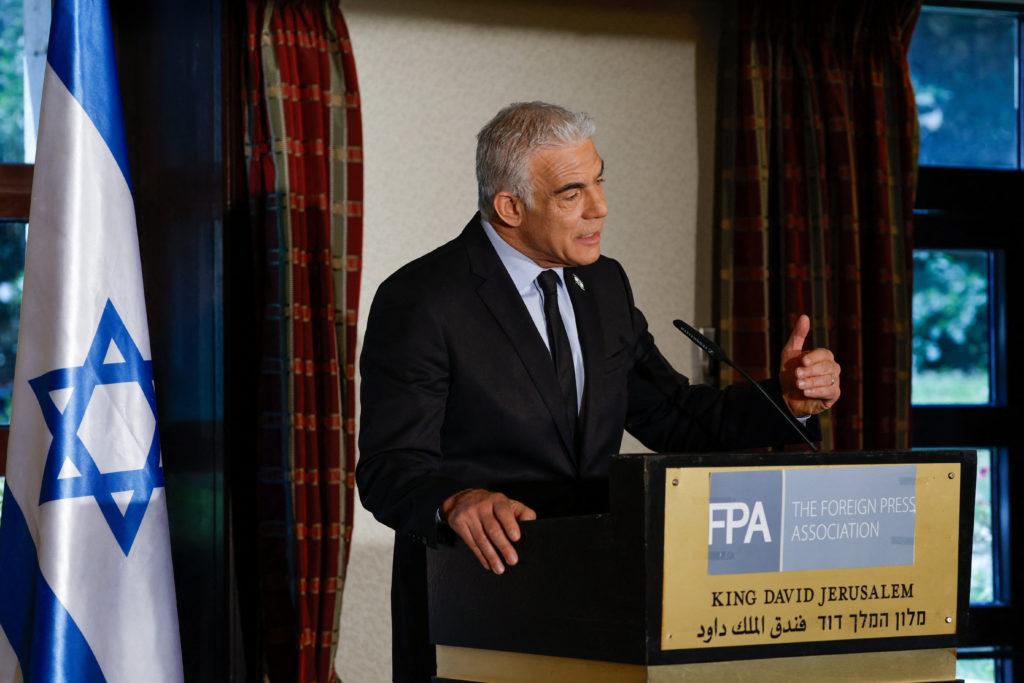
Concerns Over U.S.-Iran Deal: Israel’s Opposition Voices Alarm
The burgeoning agreement between the U.S. and Iran has sparked significant anxiety in Israel, particularly among political figures opposing Prime Minister Benjamin Netanyahu. Yair Lapid, the opposition leader, has voiced profound concerns regarding the implications of this deal and the perceived inadequacies of Netanyahu’s influence in the negotiations.
The Deal’s Implications for Israel
Lapid, a key figure in the political alliance aimed at ousting Netanyahu, declared the proposed deal “disturbing.” He argued that it falls far short of addressing Israel’s primary objectives in the ongoing conflict with Iran, which launched on February 28 with the aims of dismantling Iran’s missile capabilities, curtailing its backing of proxy groups in the region, and preventing its pursuit of nuclear armament. Moreover, both Netanyahu and former U.S. President Donald Trump had aspirations to destabilize Iran’s government as part of their strategy.
According to reports, the agreement under discussion would see Iran relinquish its highly enriched uranium stockpiles and reopen the strategic Strait of Hormuz, in return for the cessation of U.S. sanctions and an end to an Iranian port blockade. However, critical issues surrounding Iran’s missile development and its assistance to regional militant factions remain unaddressed. This backdrop has elevated Israeli concerns over national security and regional stability.
Netanyahu’s Lack of Coordination
While Lapid acknowledged Trump’s role in initiating the conflict, he criticized Netanyahu for lacking proper coordination with Washington during the negotiations. He emphasized that Israel’s ability to sway U.S. decisions is at an unprecedented low, highlighting Trump’s remarks that suggested Netanyahu would simply follow orders from his administration. This sentiment has provoked fears among many Israelis that their nation’s sovereignty is compromised.
Lapid underscored the notion that Israel is an independent state, not merely a satellite or protectorate of the U.S. “We are a sovereign nation,” he stressed, indicating a call for more assertive actions in the face of what he sees as inadequate U.S. proposals regarding Iran.
Political Landscape and Future Agendas
Lapid’s political agenda also encompasses issues of Palestinian independence, though he acknowledges that the current climate is unsuitable for pursuing a two-state solution, particularly after the traumatic Hamas attacks on October 7, 2023, and subsequent conflicts. He believes that any future Palestinian state would struggle to exist given the historical context and existing security concerns.
Despite his opposition, Lapid has ruled out any unilateral moves that would jeopardize the possibility of a future Palestinian state. He has received assurances from coalition partner Naftali Bennett that Israel will not move toward annexation of the West Bank, which aligns with Lapid’s cautious approach.
As elections approach, Lapid seeks a definitive strategy to counter Netanyahu’s leadership. Polls indicate that forming a governing coalition without support from Arab lawmakers may prove challenging. Past collaborations, especially with Arab representatives like Mansour Abbas, were landmark decisions in Israeli politics, yet Lapid is adamant that the current political climate has shifted dramatically, making such alliances infeasible.
In conclusion, Yair Lapid’s criticisms highlight a critical moment in Israeli politics, especially concerning national security and foreign relations. The proposed U.S.-Iran deal serves not only as a focal point of anxiety but as a bellwether for Israel’s diplomatic stance and domestic political maneuvers as the country approaches its elections. Lapid’s resistance to potential compromises illustrates the ongoing challenges facing Israel as it navigates a complex geopolitical landscape.