
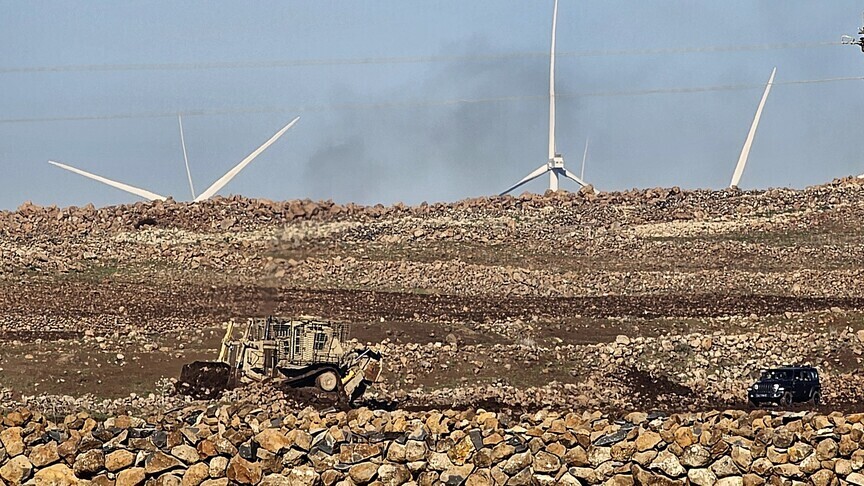
Israeli incursions into Syrian territory have become a prominent concern, especially in Quneitra province, where military actions have sparked tensions recently. Reports indicate ongoing violations of Syrian sovereignty, with implications for regional stability.
Recent Military Actions in Quneitra
On Tuesday, Israeli forces shelled agricultural areas near Hamidiya village in the northern section of Quneitra, reportedly firing three shells, according to Alikhbariah TV. This aggressive move comes alongside reports of another Israeli unit entering the town of Kudna, where they established a temporary military checkpoint. This pattern of military encroachment highlights a significant escalation in the ongoing conflict.
The Syrian Arab News Agency (SANA) confirmed earlier reports that an Israeli contingent of six military vehicles had moved into Kudna, where they set up a checkpoint for searching individuals. Furthermore, Israeli forces were also spotted on the outskirts of Samdaniyah village, further demonstrating their willingness to assert control over the region. These military operations have not only increased tensions but also pose a direct threat to the safety and security of local residents.
Governor’s Response and Regional Implications
Syrian President Ahmad al-Sharaa has publicly condemned these Israeli military actions, stating that they threaten the security of the entire region. He has urged Israel to withdraw its forces from areas it occupies, emphasizing the need for a diplomatic resolution to restore stability. The rhetoric underscores the broader implications of these incursions, which could destabilize the already fragile situation in southern Syria.
In recent months, southern Syria has experienced an uptick in Israeli military activities, including raids, arrests, and the creation of various checkpoints. The situation has escalated significantly since December 2024, following the collapse of Bashar al-Assad’s regime. Israel has declared the 1974 Disengagement Agreement void, resulting in its increasing control over the Syrian buffer zone, a move viewed as a direct challenge to Syrian sovereignty.
Conclusion
The developments in Quneitra represent a troubling trend in the ongoing conflict and a direct violation of international norms. The persistent incursions and military activities indicate that the conflict, rooted in territorial disputes and regional power dynamics, shows no signs of abating. As tensions rise, the call for an effective resolution becomes ever more urgent, highlighting the need for diplomatic engagement and international attention to restore peace and security in the region.