
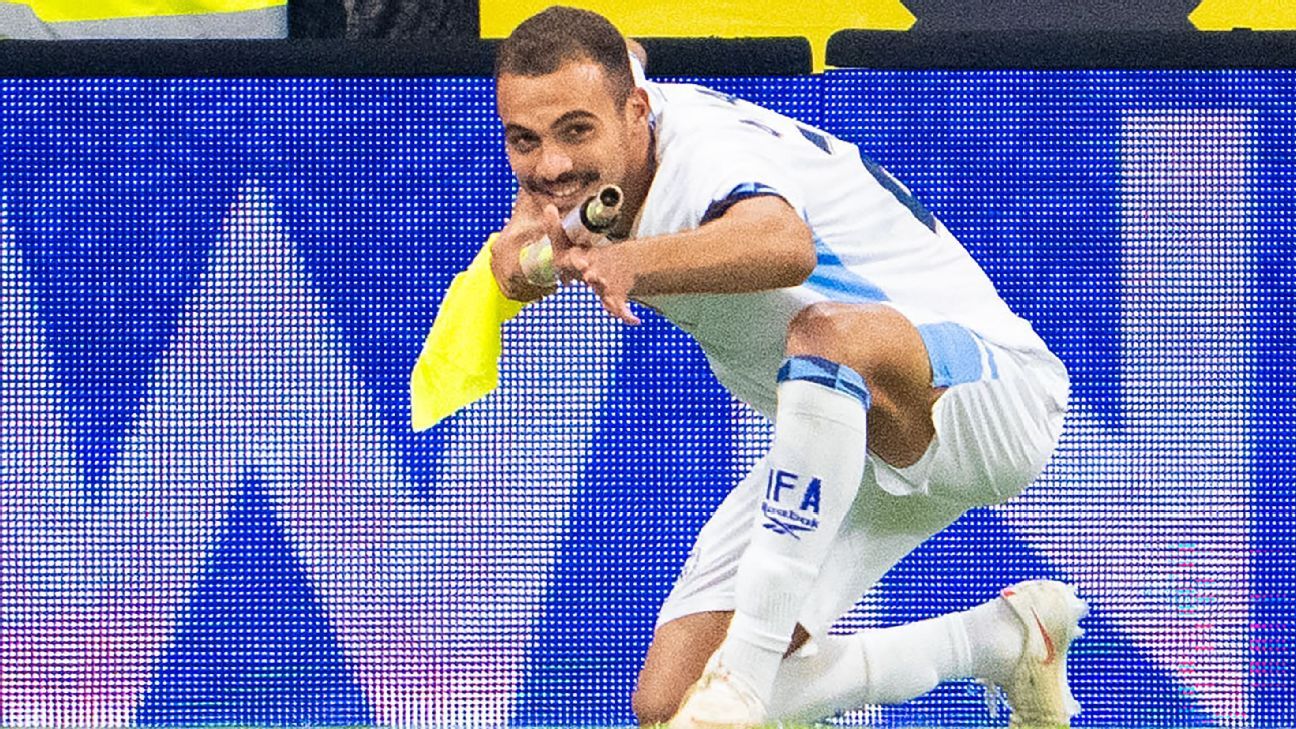
In a standout moment during the Nations League match on September 24, 2026, Israeli forward Saied Abu Farchi faced an unexpected dismissal after his goal celebration. His equalizer against Austria not only showcased his scoring prowess but also led to a controversial end to his participation in the match.
Controversial Goal Celebration Leads to Red Card
Abu Farchi’s goal came early in the second half, leveling the score at 1-1. His celebration, however, sparked immediate debate. After scoring, he approached the corner flag, removed it from its base, and mimicked a firing gesture with the pole resting on his hand. This peculiar act raised questions about whether he was referencing a weapon or simply imitating a pool shot. The celebration ultimately backfired, leading to a swift response from the match officials.
A mere four minutes after receiving his first yellow card, the referee issued a second, triggering Abu Farchi’s expulsion from the game. The rapid succession of cards highlights how closely players must tread the line between celebrating their successes and adhering to sportsmanship standards. This incident has since stirred discussions among fans and analysts alike regarding the boundaries of goal celebrations.
A Closer Look at Match Dynamics
Prior to Abu Farchi’s goal, the game had already seen a pivotal moment when Romano Schmid netted a penalty for Austria. His goal set the tone for a competitive match, but it was Abu Farchi’s equalizer that turned the tide, at least momentarily. Following the dismissal of the Israeli forward, Austria seized the momentum, with additional goals from players Philipp Mwene and Saša Kalajdžić sealing the deal with a 3-1 victory.
The match’s outcome not only affected the standings in the Nations League but also highlighted the difficulties teams face when navigating unexpected setbacks. In this case, the ramifications of Abu Farchi’s actions were felt not just by him but by the entire Israeli team, who had to regroup and respond to Austria’s rising confidence.
Reflections on Sportsmanship and Player Conduct
Abu Farchi’s situation brings to light the importance of understanding the fine line between celebration and provoking disciplinary actions. Goal celebrations can be an expression of excitement and unity, but they must also remain respectful and within acceptable boundaries. The reactions from fans and commentators emphasize the pressing need for players to be aware of how their actions might be perceived.
As the world of sports evolves, the rules surrounding player conduct are being scrutinized more than ever. The incident serves as a critical reminder that, in high-stakes games like the Nations League, players must balance their enthusiasm with the responsibilities that accompany professional football. The incident with Abu Farchi will likely echo in discussions about acceptable celebration practices for years to come.
In conclusion, Saied Abu Farchi’s early dismissal due to a celebration will forever mark an eventful match between Israel and Austria. It has initiated conversations about sportsmanship and the role of emotions in defining a player’s conduct on the field. As teams head into future matches, lessons learned from this experience will undoubtedly influence how celebrations are conducted and how players manage the fine line between joy and repercussions.