
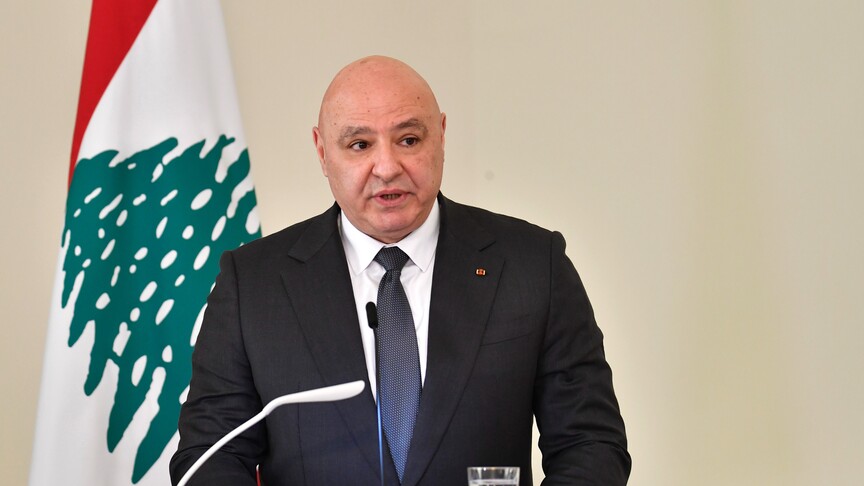
Lebanon’s President Joseph Aoun recently addressed the outcome of US-mediated negotiations with Israel, asserting that the newly established framework respects Lebanon’s rights while not equating to any form of capitulation. This statement comes during his meetings with members from both the Beirut and Tripoli bar associations and various economic entities in the capital, reinforcing the sentiment that Lebanon is acting in accordance with its sovereign rights.
Framework Negotiations: A Sovereign Approach
In an official statement, President Aoun emphasized that the newly formed framework is a reflection of Lebanon’s authority and autonomy in international negotiations. He stated that Lebanon engaged in dialogue because it was the most viable route following the failures of previous conflicts. “Lebanon is a sovereign state negotiating on its own behalf,” he reiterated, highlighting the strategic value of diplomacy over warfare.
Aoun elaborated on the framework, noting that it meticulously safeguards Lebanon’s rights, both in legal terms and in practical application. “We did not surrender, nor did we abandon our rights,” he confirmed, illustrating his commitment to Lebanon’s territorial integrity. The president’s strong statements demonstrate a collective national resolve to protect the country’s interests while navigating complex geopolitical dynamics.
The Human Element: Security and Stability
Addressing the ongoing challenges facing residents in southern Lebanon, Aoun underscored the moral obligation to ensure their safety. He affirmed that every citizen, regardless of their sectarian background, has a right to live without the fear of violence and displacement. “Residents should not continuously bear the burdens of war, destruction, and loss,” he poignantly remarked, highlighting the urgent need for peace and stability in the region.
Furthermore, Aoun took a firm stance against claims suggesting his administration’s intent to oust key military leaders, including Army Commander Rodolphe Haykal. “Those assertions are unfounded,” he declared, reinforcing that the military and security agencies play a crucial role in maintaining Lebanon’s sovereignty and public safety.
Recent Developments: Delays and Consequences
Amidst these diplomatic efforts, recent actions by Israel have raised concerns. Although a US-sponsored framework agreement was signed to facilitate a gradual withdrawal of Israeli forces from Lebanese territories, Israel announced a postponement of this withdrawal. This delay is attributed to the requirement of establishing joint monitoring mechanisms with Beirut, raising questions about the timeline for achieving peace.
The backdrop to these negotiations is serious, as the ongoing military offensive launched by Israel on March 2 has resulted in substantial loss of life and displacement in Lebanon. The Lebanese Health Ministry reports that over 4,240 lives have been claimed, with more than 12,190 individuals injured and over 1 million citizens displaced. These staggering figures underscore the urgent need for effective and lasting resolutions to the conflict.
In summary, the Lebanese administration is navigating complex negotiations with Israel while asserting its sovereignty and commitment to its citizens’ safety. With an emphasis on diplomatic solutions and respect for national rights, President Aoun’s leadership could be pivotal in shaping Lebanon’s immediate future, as ongoing tensions highlight the fragility of peace in the region.