
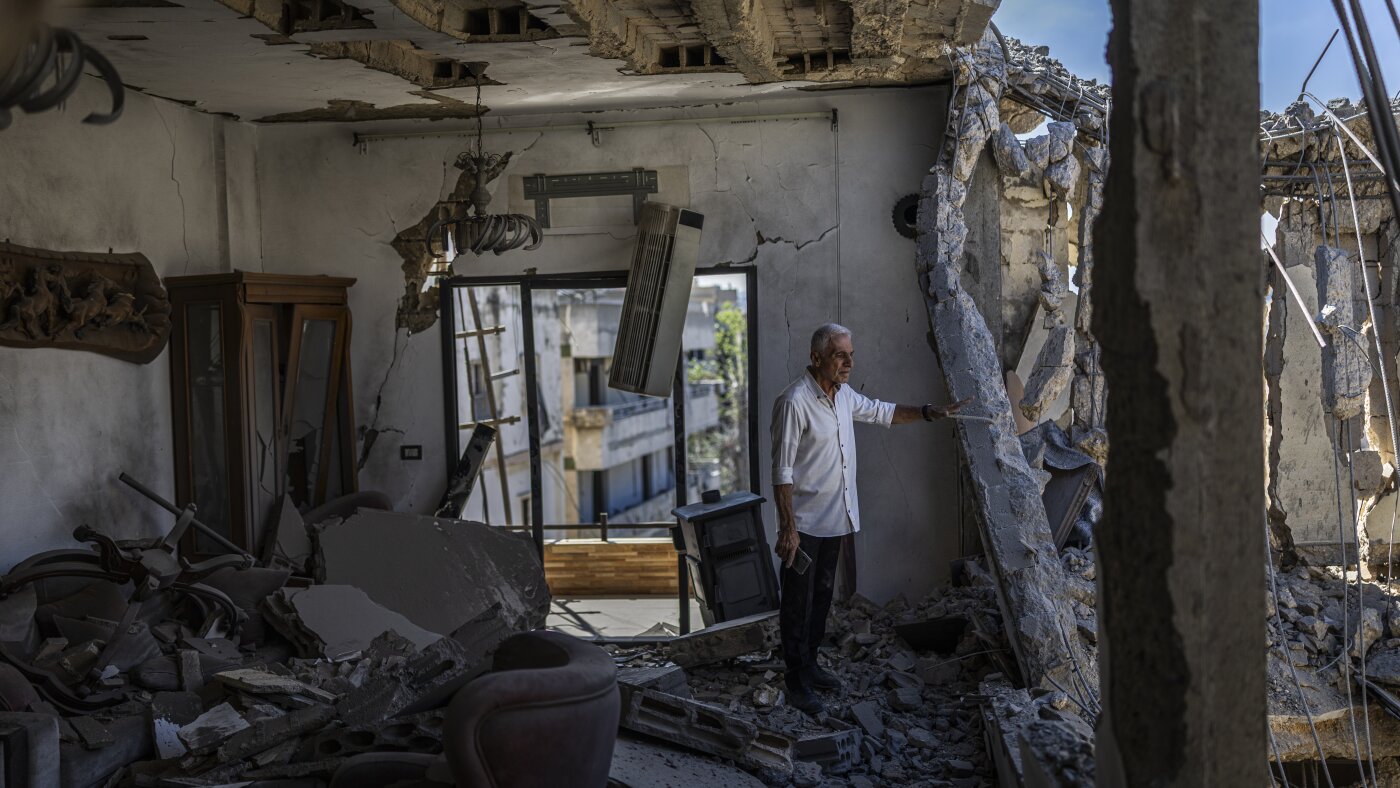
Nabatiyeh, a city in southern Lebanon, has been heavily impacted by ongoing conflict and destruction. The community faces significant challenges as residents attempt to reclaim their lives against the backdrop of destruction. The story of Najib Ayyad and other locals reveals the harsh realities they endure amidst this crisis.
Life Amidst the Rubble
Najib Ayyad’s apartment stands as a testament to the destruction wrought by war. Once a comfortable home, it now lies in ruins, with shattered glass and debris littering the entrance. “They can see us clearly from there,” he remarks, pointing at the imposing Beaufort Castle, a historical fortress occupied by Israeli forces. Despite the physical damage, Ayyad’s grief is compounded by the loss of his sense of safety and connection to home. “Even if my apartment weren’t damaged, I couldn’t stay,” he admits, reflecting the trauma that transforms not just buildings but lives.
Visibility of Israeli artillery strikes and the ominous presence of drones highlight the ongoing violence. As Ayyad salvages the last remnants of his past, he is not alone—many residents share a similar plight. They navigate the dangers of a city marred by warfare and socio-political strife. “It’s a struggle to even get to my apartment,” he explains, as shattered concrete covers the path to his building, a cruel reminder of the city’s deteriorating condition.
Demolished Community, Indomitable Spirit
Nabatiyeh serves as more than a geographical location; it embodies the resilience of its people. Reports state that at least 4,200 lives have been lost since the recent conflict escalated on March 2, with a significant portion of casualties being innocent civilians. “We must be there whenever the country needs us,” reflects Ali Rida, a paramedic who volunteers despite the constant threat of violence. His commitment exemplifies the spirit of many who refuse to back down, even as they mourn lost friends and family.
The community’s attempts to rebuild are stunted by ongoing attacks. As families sift through ruins to recover belongings, many realize that returning to normalcy may be an impossible dream. “Now when we look at the neighborhood, we ask ourselves – where are the children?” laments Hanan Hamadi, a local shop owner who has reopened her store despite extensive damage nearby. Her resolve to serve the community amidst such adversity encapsulates both the gravity of the situation and the hope for recovery, no matter how fragile it may seem.
A Struggle for Survival
As cleanup efforts begin, the residents face a grim reality: many bodies remain buried beneath collapsed structures. The scale of loss feels insurmountable, and families are left with haunting questions about the fate of their loved ones who ventured out seeking safety or supplies. “They were wonderful people,” Hamadi recalls of the Basma family—her neighbors—who perished in an airstrike. Stories like these, shared in quiet tones, illustrate the human cost of a conflict that fails to discriminate between combatants and civilians.
Nabatiyeh has historically been a commercial hub, fostering social connections and economic exchange. However, the recent destruction appears targeted at dismantling this civic infrastructure. Mayor Abbas Fakhreddin voices concerns over rebuilding efforts, pointing out the lack of essential resources to support returning residents. “There is a huge amount of work to be done here,” he states, clearly aware that the road to recovery will be long and fraught with challenges.
In the face of overwhelming adversity, resilience becomes these communities’ lifeline. As they navigate daily hardships, tales of collective hardship emerge, showcasing a shared narrative of endurance and survival. Long after the airstrikes cease, the echoes of conflict will resonate in the lives of those who call Nabatiyeh home.