
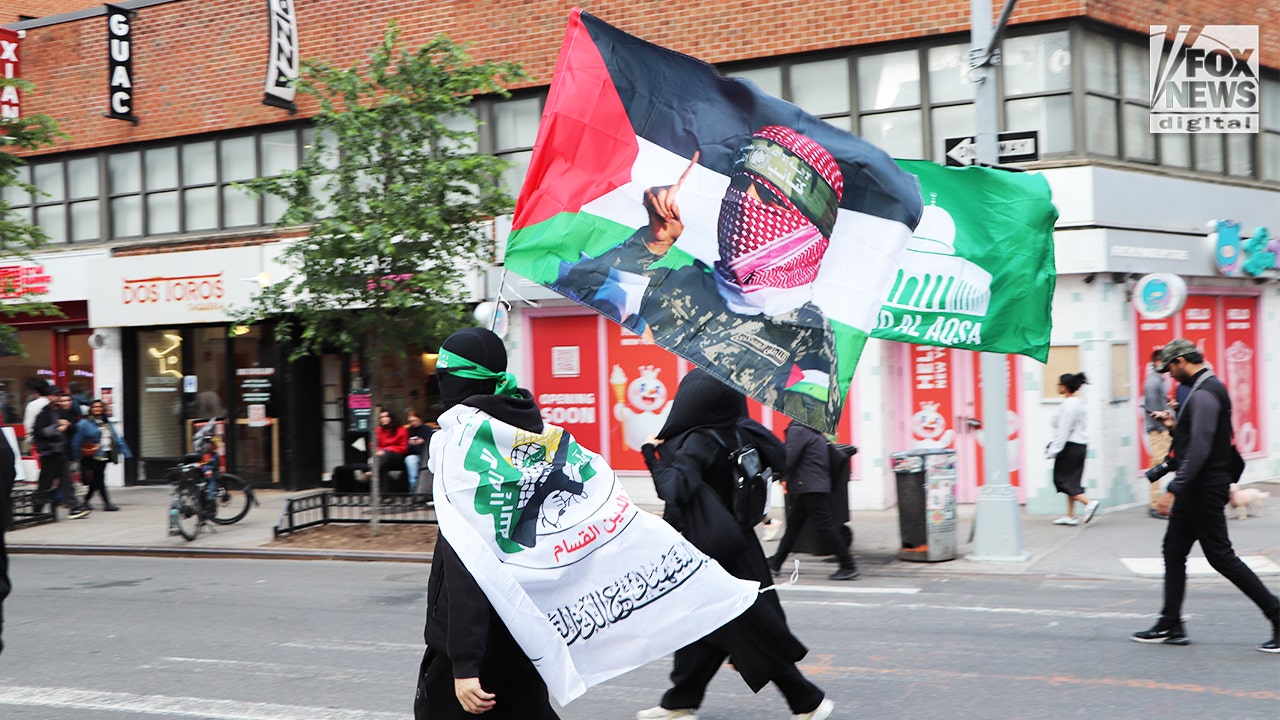
On May 15, 2026, an anti-Israel demonstration in Manhattan drew significant attention, featuring a large group of protesters waving various flags and making incendiary statements against Israel. This event occurred just after federal authorities arrested an alleged operative linked to Kataib Hezbollah, underscoring a broader context of rising tensions and anti-Semitic sentiments across the globe.
Demonstration Overview
The protest, which took place in Washington Square Park, attracted around 500 participants who openly displayed Palestinian flags and shouted slogans calling for the end of Israel’s existence. The atmosphere was charged as speakers incited the crowd, asserting that Palestinians would reclaim their land “by any means necessary.” Local leaders, including New York City Mayor Zohran Mamdani, condemned the alleged terror activities linked to Hamas and Kataib Hezbollah, noting that all forms of hate, including antisemitism, are unacceptable.
Intended Impact and Organization
The event appeared to be meticulously organized, with pre-printed signs and banners promoting severe anti-Israel rhetoric. Among the demonstrators was a young man draped in Hamas’s insignia, expressing overt support for the militant group. The gathering was coordinated by various anti-Israel organizations, notably the Muslim American Society (MAS) and Within Our Lifetime, which had been involved in previous protests that escalated into confrontations with Jewish communities.
These groups leveraged social media and professional event planning to amplify their message, indicating a high level of orchestration. Participants were equipped with ready-made banners and slogans suggesting a robust and financially-backed network promoting anti-Israel sentiment. Actions from this collective have often resulted in violent clashes and heightened tensions in areas featuring Jewish communities.
Rhetoric and Chants
As the protest unfolded, speakers like Nerdeen Kiswani led the crowd with chants such as “Globalize the intifada,” a phrase that has gained notoriety as a call to action against Israel. She boldly asserted that she would never recognize Israel’s right to exist, emphasizing that such views reflected a growing trend among certain activist groups. Other leaders echoed her sentiments, further galvanizing the crowd as they prepared to march through Manhattan.
Clearly, the messages and imagery displayed at the event aligned with a broader narrative that rejects not only Israel’s legitimacy but the very concept of a peaceful resolution, such as a two-state solution. Protesters voiced defiance against suggestions for compromise, asserting their determination to challenge the status quo.
The march gained traction throughout New York City, with demonstrators engaging in theatrical performances, such as surrounding vehicles and taking over intersections, signaling an organized effort to capture public attention and provoke dialogue—or controversy.
Conclusion
The protest serves as an emblem of the complex dynamics surrounding Israel-Palestine discussions in America today. As organized groups consolidate their efforts, merging various political ideologies, the potential for conflict and polarization increases. The visibility gained through such protests reflects not only the sentiments of those who support Palestinian rights but also raises vital questions about the implications of such demonstrations surrounding national and local sentiments concerning security, identity, and advocacy.