
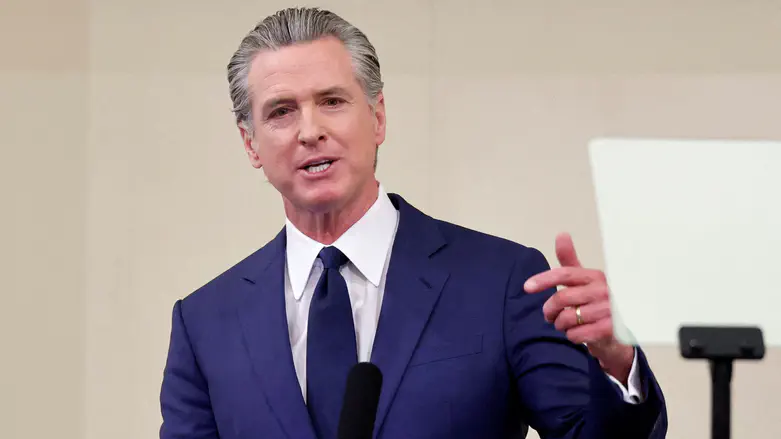
California Governor Gavin Newsom recently voiced significant concerns regarding American military support for Israel, asserting that it is time for such aid to be conditioned. This stance is reportedly gaining traction within the Democratic Party. As he campaigns in New Hampshire for a potential run for the presidency in 2028, Newsom’s comments come amid rising tensions and violence in the region.
Calls for Conditional Military Aid
In a candid conversation with the Washington Examiner, Newsom criticized Israeli Prime Minister Benjamin Netanyahu’s policies, arguing they have weakened the possibility of achieving a two-state solution. He stated, “Aid has to be conditioned,” emphasizing that Netanyahu’s approach has increasingly alienated him from not only international allies but also from the American populace. Newsom labeled Netanyahu’s recent dealings as “incalculably damaging,” suggesting that such leadership is contributing to ongoing conflict.
Furthermore, Newsom expressed strong disapproval of Israel’s military actions against Hamas, describing them as a “moral catastrophe.” However, he did not specify which types of military assistance he believes should be conditioned, acknowledging the differences between defensive systems like the Iron Dome and more aggressive weaponry. This distinction underscores a complex issue that many lawmakers are grappling with as debates around military support intensify.
Democratic Opposition to Unrestricted Aid
Newsom’s critique mirrors a growing sentiment among Democratic lawmakers who are increasingly hesitant to provide unconditional military support to Israel. Earlier this year, a significant number of Senate Democrats voted against a weapons sale to Israel. Additionally, more than 100 House Democrats voiced their opposition to another military measure proposed in July, although that proposal ultimately did not pass. This rising tide of dissent signals a shift in how military assistance may be viewed moving forward.
Newsom’s relationship with Netanyahu has been contentious; while he has publicly condemned certain Israeli policies, he has also indicated his support for the nation in various contexts. Earlier in 2023, he visited Israel and met with survivors of the Hamas-led attacks that occurred on October 7, showcasing the complicated nature of U.S.-Israel relations amidst conflict.
Impact of Upcoming Elections
As discussions regarding military aid and international relations intensify, speculation surrounding Newsom’s presidential aspirations persists. He has mentioned he would refrain from entering the race if former Vice President Kamala Harris decides to run. Harris is also critically examining Israel’s actions in Gaza and has called for more stringent oversight of military support from the U.S.
Harris’s criticism extends to both the Biden and Trump administrations, stating that they failed to leverage American influence to mitigate Israeli military operations. She pointed out the shortcomings in using U.S. leverage effectively during military escalations, emphasizing the need for earlier intervention to curtail violence.
In this politically charged environment, debates on U.S. military support for Israel are likely to play a crucial role in the upcoming elections. Both Newsom and Harris are navigating complex opinions that reflect broader shifts within their party. As both politicians hone their platforms, their statements might resonate significantly with constituents who are advocating for a more balanced approach to international relations.