
Understanding Apartheid Free Baltimore: A Push for Ethical Economic Choices
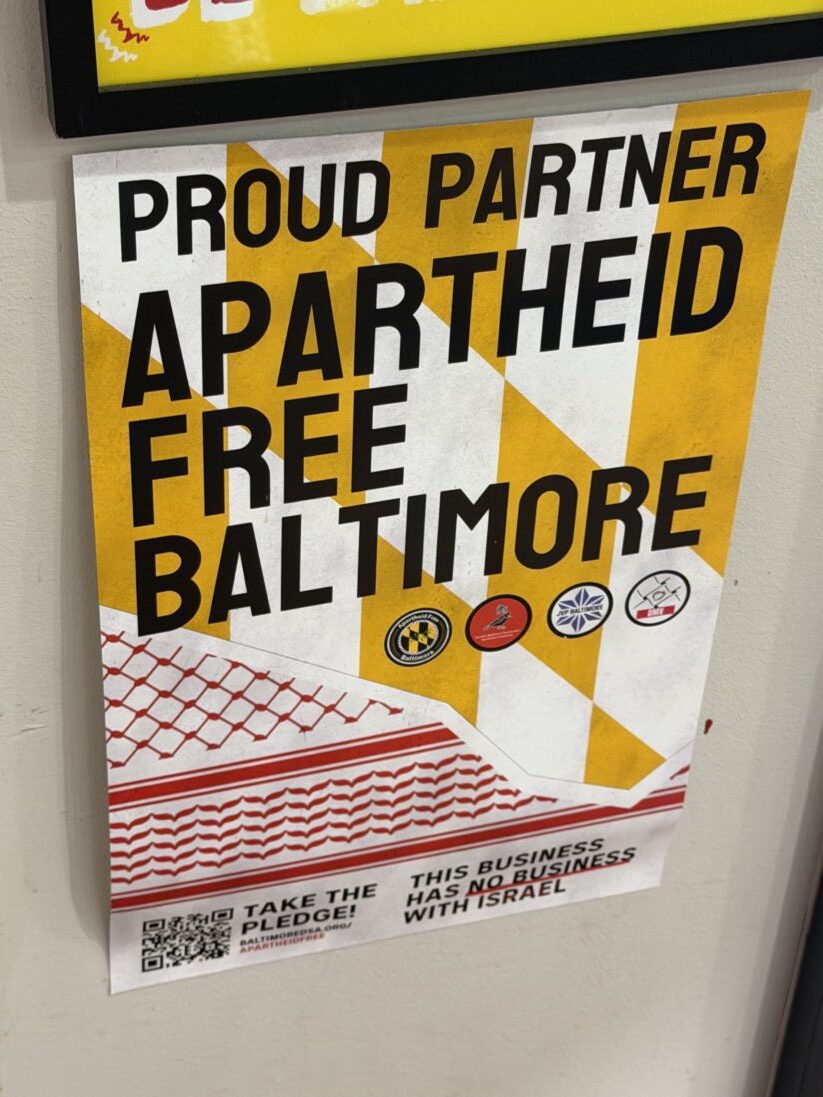
In Hampden, Baltimore, a unique initiative is making waves by encouraging local businesses to engage in ethical practices surrounding the Israeli-Palestinian conflict. The movement, known as Apartheid Free Baltimore (AFB), encourages establishments to avoid associations with companies that contribute to the conflict. One of its most distinct efforts is a sign prominently displayed at Common Ground Cafe, declaring it a “Proud Partner” of AFB and stating that it has no business ties with Israel.
Origins and Objectives of Apartheid Free Baltimore
Launched in 2024, Apartheid Free Baltimore emerged from a collaboration among various organizations, including Jewish Voice for Peace Baltimore, the Greater Baltimore Democratic Socialists of America, and the DMV Palestinian Youth Movement. Its primary mission aligns with the Boycott, Divest, Sanctions (BDS) movement, which aims to exert economic pressure on Israel to influence its actions regarding human rights in Palestine. By urging businesses to refrain from sourcing products from companies deemed complicit in human rights violations, the AFB hopes to foster a stronger ethical stance in local commerce.
The grassroots approach has seen significant support among local business owners. According to Jesse Gold, an organizer with JVP Baltimore, many businesses are eager to participate, as their values often reflect a commitment to human rights and ethical practices. This growing network includes Common Ground Cafe and 37 other businesses that have pledged to divest from companies that support Israel.
Community Reactions: A Divided Stance
While AFB’s ethical campaign garners support, it also faces criticism. Howard Libit, the executive director of the Baltimore Jewish Council, argues that such economic boycotts oversimplify the complexities inherent in the Israeli-Palestinian situation. He emphasizes that many Jewish community members may disagree with the Israeli government but feel that boycotts are not constructive ways to enact change. Libit stresses the importance of engaging in dialogue rather than isolating communities through economic measures.
Critics further argue that the campaign’s approach may alienate potential Jewish customers. Libit describes AFB as a “fringe” movement that does not represent the broader sentiments of the Jewish community, as it solely targets the Jewish state while remaining silent on human rights issues in other global conflict zones. This perspective raises questions about the potential impacts on local businesses and the community’s cohesion.
Future Aspirations and Concerns
As the AFB movement continues to grow, its organizers maintain a focus on promoting human rights for Palestinians and combating perceived injustices. Many supporters believe that the campaign aligns with a broader historical context of fighting systemic oppression, akin to the anti-apartheid efforts in South Africa. However, contrasting opinions highlight the dangers of conflating different historical and political contexts.
Among its aspirations, AFB emphasizes the right of Palestinians to self-determination while explicitly opposing any form of discrimination, including antisemitism. The organization acknowledges the criticisms but insists that their core values resonate with many Jewish Baltimoreans who share a vision of safety and freedom for all. Over 400 individuals have signed a pledge to boycott businesses seen as supporting Israel, illustrating the grassroots support for their cause.
As discussions surrounding Apartheid Free Baltimore evolve, tensions are likely to persist. The movement’s potential to reshape local commerce and advocacy raises important questions about dialogue, ethics, and community unity in the context of such a complex geopolitical issue. The intersection of business, ethics, and social justice continues to fuel conversations, ultimately shaping how communities navigate their values in a globalized world.