
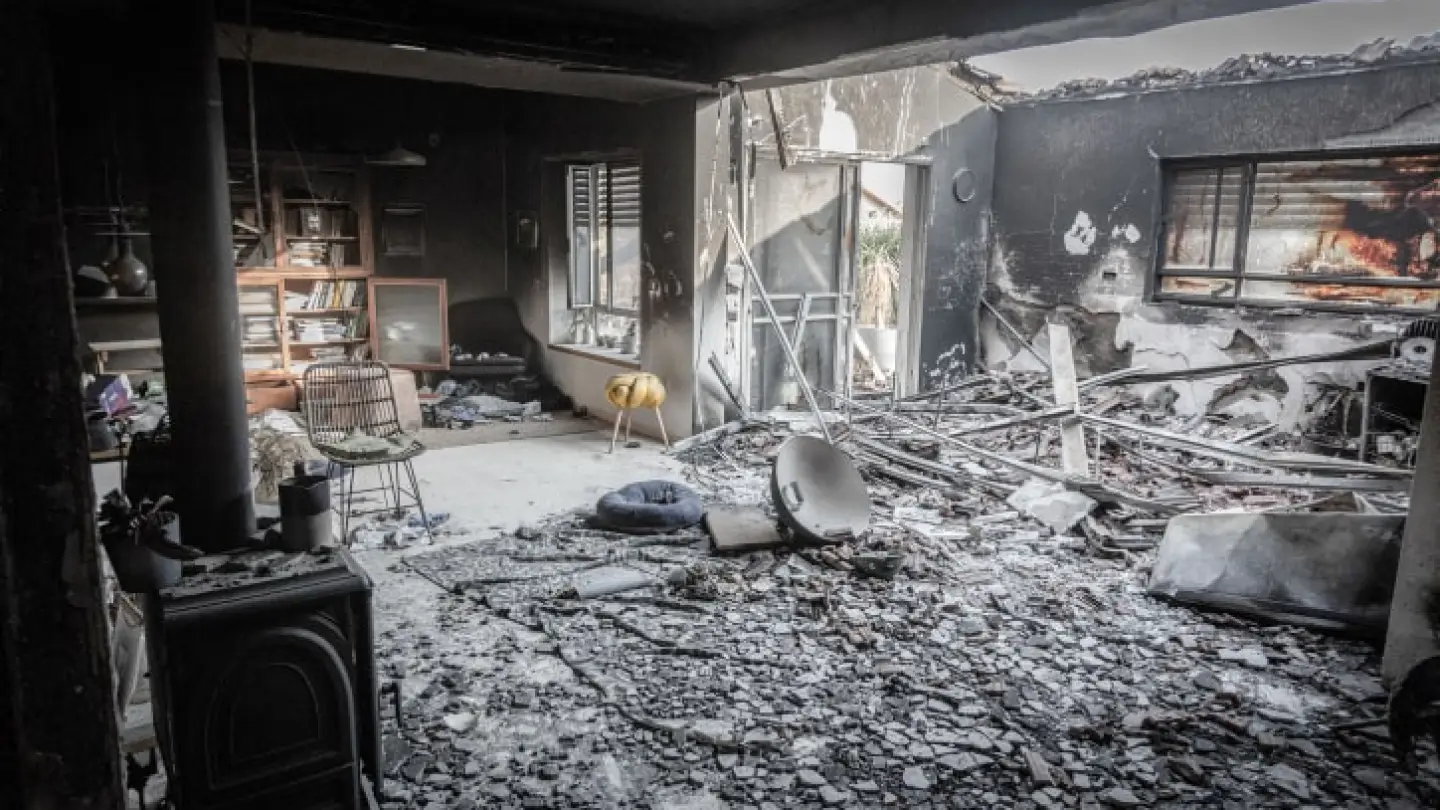
This week, the Israel Defense Forces (IDF) released a report investigating the devastating attack on the Paga outpost, officially known as Magen Be’eri, on October 7, 2023. This outpost, meant to protect the surrounding area, failed to fulfill its duties when 60 to 80 Hamas terrorists overran the position, resulting in 18 fatalities and 22 injuries among the 40-50 soldiers stationed there. With the outpost compromised, Hamas launched an attack on nearby Kibbutz Be’eri, resulting in the deaths of 101 civilians and 31 security personnel while taking 32 people hostage.
The Warning That Never Reached the Troops
A soldier stationed at the entrance of the outpost spotted the incoming assault but lacked a radio to communicate the threat effectively. In a desperate attempt, he ran to warn his fellow soldiers, but unfortunately, that message never got through to the mortar team. As the soldiers fought valiantly with dwindling ammunition and inadequate air support, the attackers utilized tactical measures such as piling mattresses and diesel against the fortified dining hall and setting it ablaze, forcing soldiers to contend with choking smoke.
The report indicates that the troops at the Paga outpost were largely focused on handling riots instigated by Hamas along the border prior to the attack. This regular experience shaped their mindset and training, leaving them ill-prepared for a simultaneous, large-scale assault. It concluded that there was a “systemic failure to prepare for a broad surprise attack,” highlighting how the soldiers were trained to react to ongoing threats rather than potential surprises. This troubling pattern of thinking raises serious questions about Israel’s preparedness for future conflicts.
Lessons Unlearned: Historical Context
Israel has repeatedly failed to learn from past conflicts. The Agranat Commission analyzed failures after the 1973 Yom Kippur War, and the Winograd Commission scrutinized shortcomings following the 2006 Lebanon War. In a similar vein, the IDF has produced detailed investigations into various incidents, yet it struggles to act on these findings before history repeats itself. Just days after the Paga probe, new intelligence surfaced when police uncovered a tunnel under construction in the Arab town of Qalqilya. This discovery reinforces a worrying trend of ongoing threats, as the Palestinian Authority Security Forces increasingly resemble a paramilitary organization rather than a policing body.
The Regavim Movement’s recent report sheds light on how the Palestinian Authority Armed Forces have evolved since the Oslo Accords. Originally limited by international agreements, they now operate with approximately 65,000 combat-trained personnel, many with prior terrorist affiliations, and are armed with advanced weaponry. This shift indicates a significant risk: the potential for organized military action aimed at seizing territory.
A Call for Proactive Measures and Tactical Readjustments
This evolving landscape necessitates urgent reevaluation. If small-scale groups of terrorists can overrun fortified positions like Paga, it raises critical questions about the security of urban areas such as Rosh HaAyin or Efrat. The ongoing characterization of the Palestinian Authority as a partner in security threatens to lull Israel into complacency, especially after past assurances regarding deterrence in Gaza proved unfounded.
To effectively counteract these threats, the Israeli government must publicly acknowledge the Palestinian Authority Security Forces as a strategic military risk and not merely a law enforcement body. Immediate actions should include enforcing existing limitations on manpower and weaponry, actively dismantling units equipped for military-style operations, and urging international partners to hold the Palestinian Authority accountable for their military capabilities.
In conclusion, Israel must adopt a proactive stance, reinforcing the communities along the seam line with well-drilled battalions prepared for a range of potential attacks. It is imperative that Israel learns from past mistakes rather than repeating the cycle of inaction that leads to tragedies like that experienced at Paga. The time for preventive measures is now before another devastating event occurs, and the danger escalates beyond what we can imagine.