
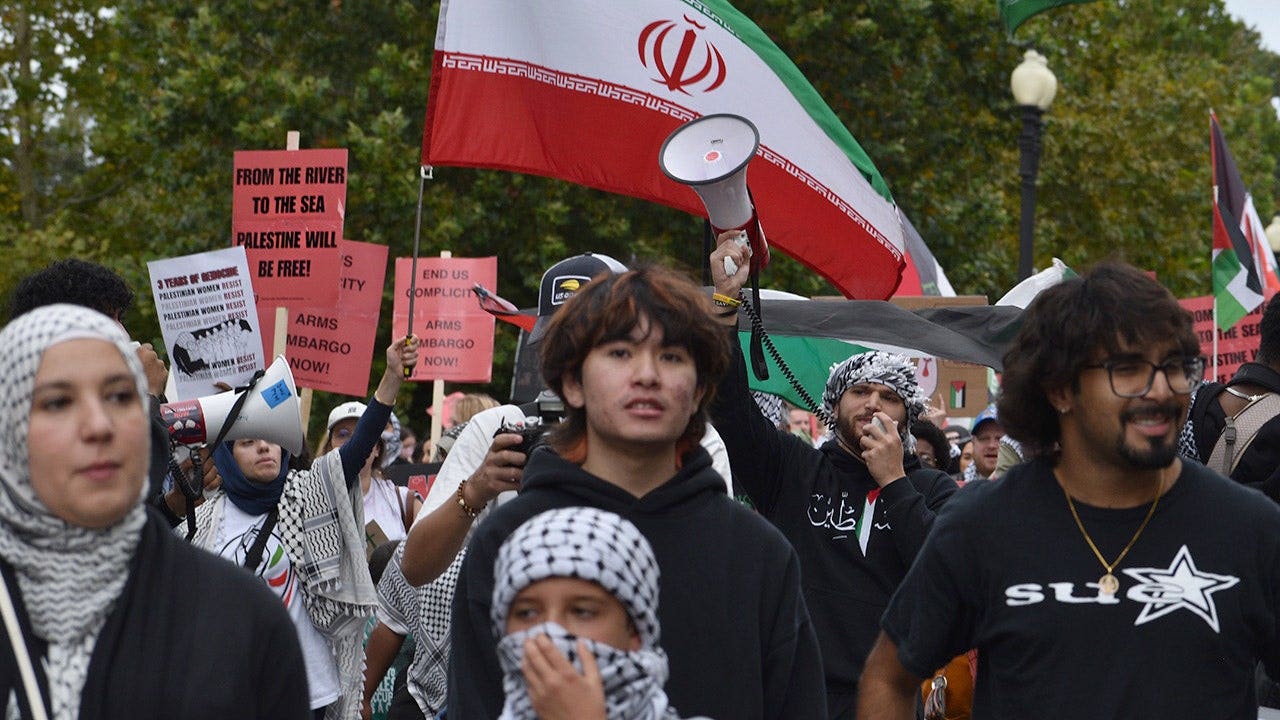
This past weekend saw a significant surge in anti-Israel protests across major cities worldwide, including Washington, D.C., London, and Paris. Thousands of activists took to the streets, chanting slogans like “Free, free Palestine” and “From the river to the sea, Palestine will be free.” These coordinated demonstrations occurred in response to ongoing tensions and conflicts involving Israel, drawing attention to the long-standing divide in the region.
Activists’ Vision of a Unified Palestine
In an unprecedented move, several prominent leaders within the anti-Israel movement openly shared their intentions regarding a vision for a unified state. Their goal is a single state called “Palestine,” which would encompass the current territories of Israel, the West Bank, and Gaza. This vision includes ensuring equal rights and citizenship for Palestinians alongside the Jewish population living in Israel today. Notably, this shift in rhetoric has sparked discussions about the future of the Jewish state and how it could coexist with a majority Palestinian population.
The current demographic landscape indicates around 10 million people reside in Israel, nearly 8 million of whom are Jewish. In contrast, there are approximately 13.5 million Palestinians when accounting for those in the West Bank, Gaza, and the diaspora. The anti-Israel leaders argue that if their vision is realized, it would fundamentally alter the identity of Israel as a Jewish nation-state, leading to its de facto dissolution.
Protest Aims and Global Responses
Recent protests reflect a clear rejection of the two-state solution that has been a focal point of international diplomatic efforts for decades. Protesters in various cities openly voiced their disagreement with established frameworks for peace, emphasizing slogans that called for the end of Israeli occupation. During demonstrations, activists promoted the narrative that a single state, where Palestinians can exercise equal rights, is essential for achieving peace and justice for all the region’s inhabitants.
Responses from Israel and its supporters continue to challenge the accusations of apartheid or genocide often leveled against them. Many argue that such claims inadequately address the complexities surrounding human rights and governance in Arab and Muslim-majority states. The ongoing discourse underscores the divide between those advocating for Palestinian rights and those defending Israel’s right to exist as a nation-state for Jews.
The Call for a New Era in Governance
Among the vocal figures in the protests is Hatem Abudayyeh, a Palestinian-American activist advocating for a secular, democratic state of Palestine. He emphasizes the importance of recognizing the right of return for Palestinian refugees and dismantling what he describes as a “racist system” associated with Zionism. This perspective mirrors the anti-apartheid movements of the past and conveys a belief that international consensus is gradually shifting against the current Israeli state model.
Further diversifying the discourse, Maryland congressional candidate Sam Husseini proposes alternative potential names for the envisioned state, including “1948,” which signifies the year Israel was declared a state but is also remembered by Palestinians as the beginning of their displacement.
Envisioning a Future
The protests and discussions taking place are not merely about slogans but reflect profound aspirations for political change. Activist Miko Peled stresses that a future “Free Palestine” means creating an equitable and democratic society for both Palestinians and Israelis. He asserts that the country should revert to its historical name, Palestine, suggesting that doing so would create a legitimate foundation for peace and inclusion.
Overall, these protests and the sentiments within them highlight a critical juncture in the long-standing Israeli-Palestinian conflict. The demand for a single, democratic state has gained traction, posing significant questions about national identity, rights, and the path forward for both peoples. As demonstrators worldwide unite under these calls, the pursuit of this vision resonates deeply, making it a pivotal moment for the future of the region.