
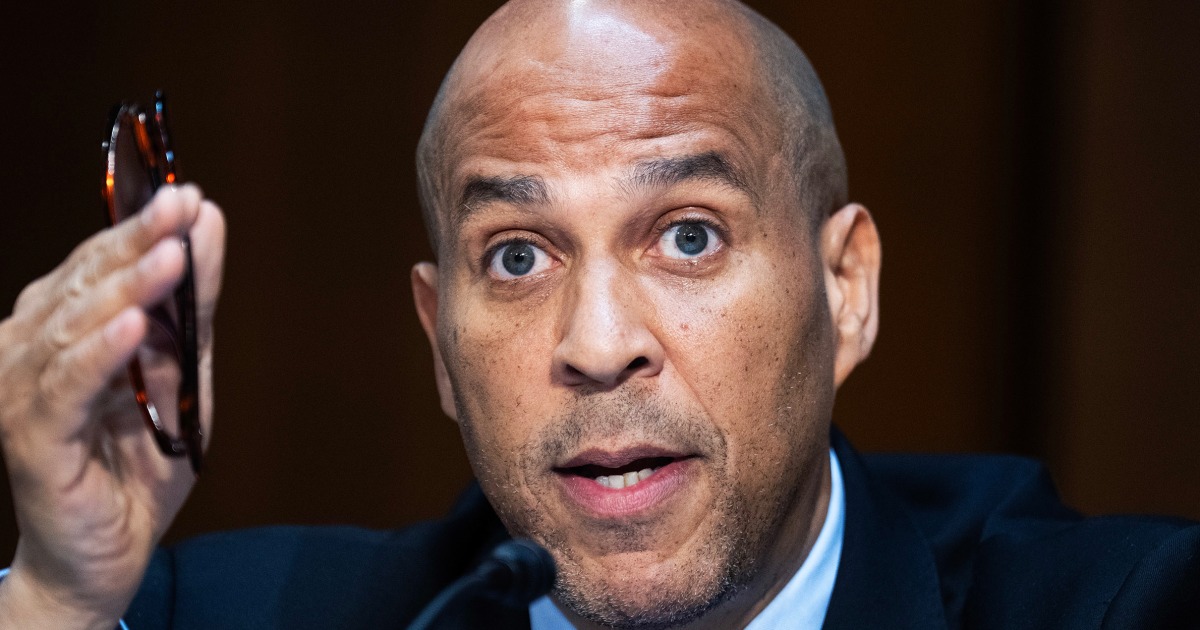
Senator Cory Booker from New Jersey recently expressed serious concerns regarding the peace negotiations in the Middle East during an appearance on NBC’s “Meet the Press.” He criticized both President Donald Trump and Israeli Prime Minister Benjamin Netanyahu, suggesting that their respective leaderships pose significant risks to the prospects for peace, especially in light of ongoing ceasefire discussions between the United States and Iran taking place in Switzerland.
Worries About Leadership and Peace Negotiations
Booker stated that there is a considerable reason for apprehension regarding the leadership of both Trump and Netanyahu, characterizing them as “two criminal presidents.” He highlighted Trump’s legal troubles and Netanyahu’s ongoing corruption trial to support his point. According to Booker, the actions of these leaders have led to a failure in governance that threatens to derail progress towards peace in the Middle East. “These are both failed leaders,” he declared, emphasizing that their influence should be a cause for concern as they continue to complicate any possible avenues for peaceful resolutions.
After criticizing the current state of leadership, Booker referenced the heightened tensions surrounding the negotiations with Iran. Reports indicate that U.S. intelligence agencies fear that Israel could further complicate discussions. These negotiations are critical, coming shortly after the U.S. government signed a memorandum of understanding aimed at ending hostilities in the region.
Ceasefire Developments and Regional Impact
Just days after the memorandum was announced, tensions escalated again, with Iran claiming the closure of the Strait of Hormuz due to Israeli military actions. This closure could significantly affect shipping and economic activities in the region, increasing an already volatile situation. The memorandum stipulates that the strait must remain open for 60 days, underlining the importance of maintaining peace to facilitate ongoing dialogue.
Vice President JD Vance has also been active in these discussions, highlighting that progress has been made in stabilizing the ceasefire in Lebanon. He remarked on the collaborative efforts among the U.S., Israel, Pakistan, and Qatar in pursuing regional peace, stating, “There are, of course, going to be some disagreements about how to get there, but I feel great about where we are in Lebanon.” Vance’s involvement illustrates the complexity of the negotiations, with various nations working together to traverse hurdles in diplomacy and security.
Critiques of Leadership and Future Directions
Conversely, not all views are optimistic. Booker, when asked whether Trump should receive credit for any peace efforts, likened it to praising an arsonist who sets fire to a building and then is celebrated for leaving the scene. He condemned the Trump administration’s approach to foreign policy as a disaster, arguing it has led to a surrender of U.S. power and a loss of respect from adversaries. Booker’s comments reflect a growing sentiment among some political analysts and commentators that the current leadership may hinder the diplomatic avenues required for sustainable peace.
In a dramatic statement on social media, Trump warned Iran to stop its proxies in Lebanon or face severe consequences, suggesting a continuation of his aggressive stance. This rhetoric echoes the sentiments of many critics who argue that such statements could further escalate tensions in an already unstable region.
The outcome of these negotiations and the influence of leadership figures like Trump and Netanyahu will likely shape the future of peace in the Middle East. As various stakeholders navigate complex dynamics, the international community will be watching closely to see if lasting solutions can be reached amidst ongoing discord.