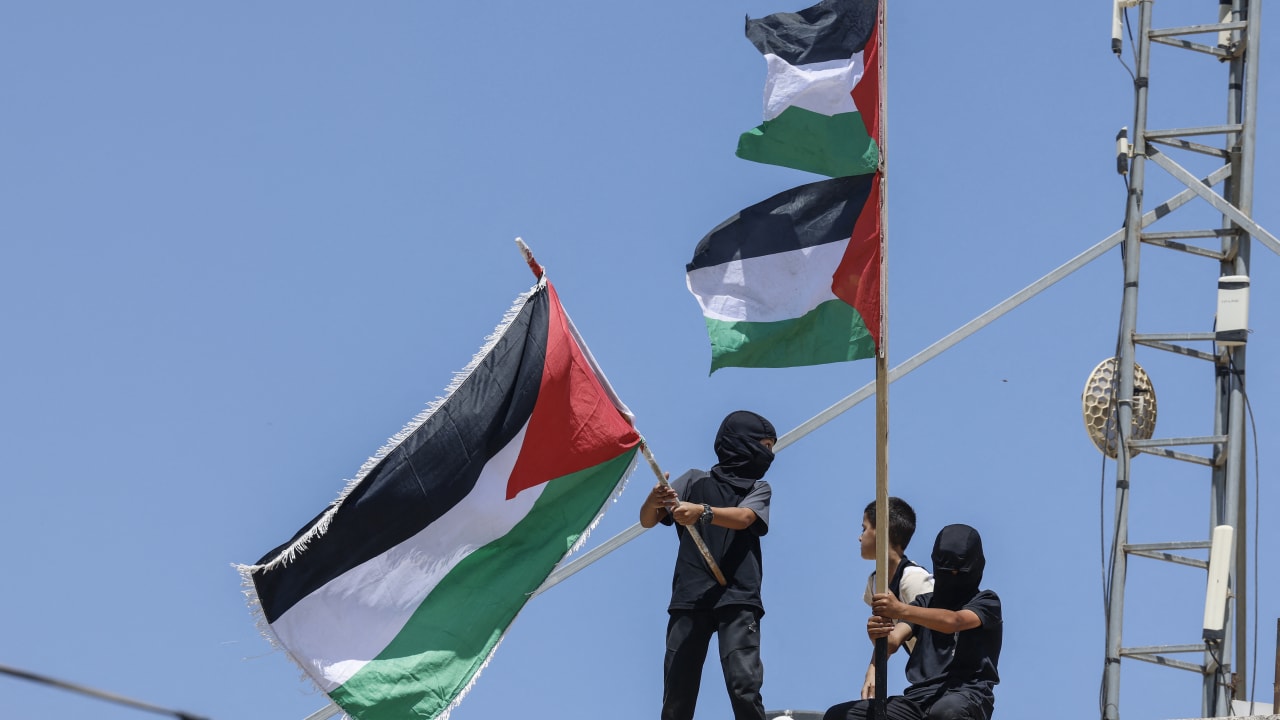
A recent survey conducted by the Institute for National Security Studies (INSS) reveals notable shifts in Palestinian perceptions regarding the Israeli-Palestinian conflict. With a substantial number of participants, this study sheds light on the prevailing sentiments in the West Bank about Israel’s legitimacy and potential resolutions to the conflict.
Survey Findings on Israeli Existence
According to the poll, conducted from June 27 to July 2, 2026, when 400 Palestinians were surveyed, a larger portion (46%) believes Israel has no right to exist compared to 41% who think otherwise. Notably, 42% of respondents expressed a conviction that the end of Israel’s existence is achievable, while 32% felt this aim is impossible. Such figures highlight an ongoing challenge to dialogue and negotiations in the region.
Views on Conflict Resolution
In analyzing potential solutions to the Israeli-Palestinian conflict, over a quarter of respondents (27%) favored a two-state solution. A significant segment (26%) preferred a single Palestinian state devoid of any Jewish presence, while only 17% expressed the desire for a Palestinian state that would allow Jewish citizens or residents. Contrarily, despite many not recognizing Israel’s right to exist, a majority (52%) indicated that they favor negotiation over armed resistance, with only 12% advocating for violent approaches to resolving the conflict.
Perceptions of Violence and Governance
Interestingly, more than half (57%) of those surveyed believed that violence has failed to achieve its goals, prompting a 40% consensus encouraging Hamas to disarm. Moreover, a significant number expressed a preference against Hamas governing the Gaza Strip. When participants were asked who should manage the territory, 32% selected the current U.S.-backed National Committee, while 21% supported the Palestinian Authority. Only a mere 5% expressed a preference for Hamas as the sole governing body.
Concerns and Leadership Preferences
The survey revealed that unemployment is the foremost concern among respondents, with 97% highlighting it as a pressing issue. Settler violence was also a significant topic of worry for 96% of those surveyed, with many reporting personal experiences related to such violence. In terms of leadership, 34% of participants supported imprisoned Fatah leader Marwan Barghouti as a potential replacement for Palestinian Authority President Mahmoud Abbas, while only 8% favored Abbas’s deputy, Hussein al-Sheikh.
Overall, the findings of this survey illustrate the complexities within Palestinian society as tensions continue to shape opinions on the Israeli-Palestinian conflict, governance, and potential avenues for peace. Understanding these perspectives is crucial for formulating effective strategies aimed at resolving the longstanding conflict.