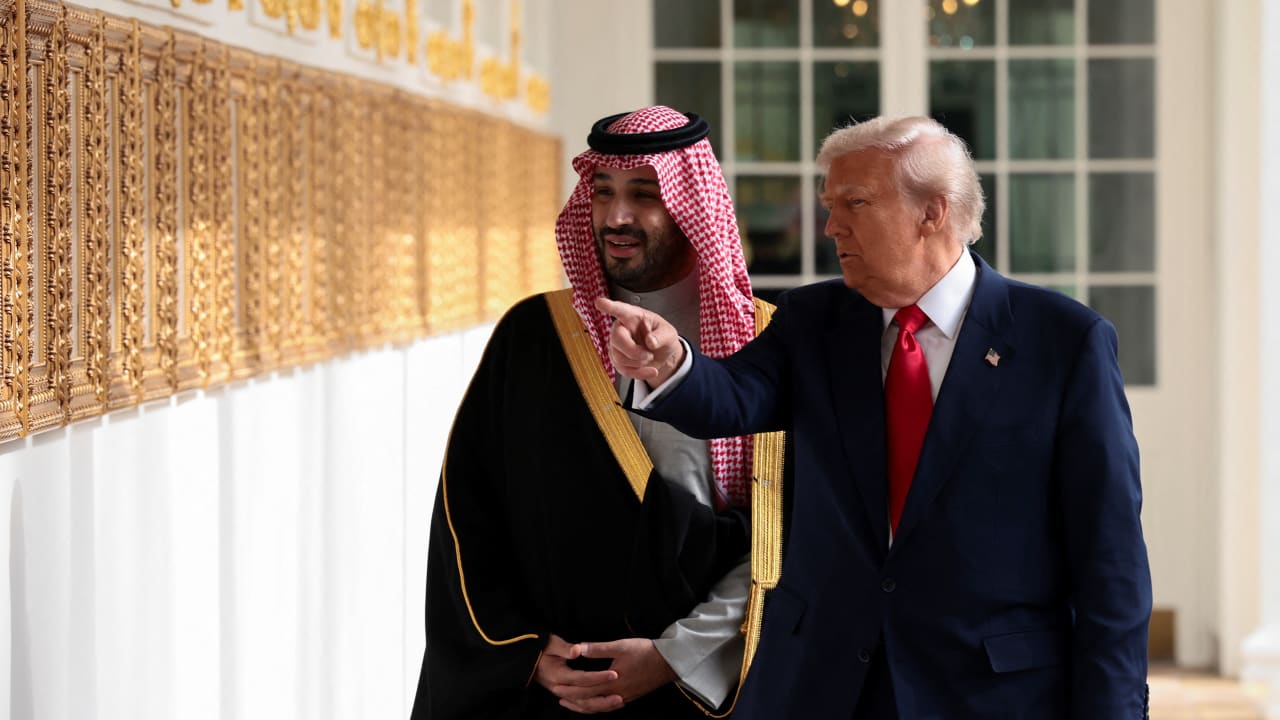
On Wednesday, a bipartisan group of U.S. senators urged the Trump administration to declassify and publish all details regarding a proposed civil nuclear energy agreement with Saudi Arabia, which includes specific classified “side letters.” This request underscores the senators’ commitment to transparency and accountability.
Senators Demand Clarity on Nuclear Agreement
In a communication directed at U.S. Secretary of State Marco Rubio and Energy Secretary Christopher Wright, the lawmakers emphasized the necessity for the Senate and the public to fully understand the commitments involved in the agreement. Notably, this type of transparency has been standard practice in past 123 nuclear agreements made with other nations, where relevant information has not been withheld. The senators stressed that citizens deserve to know the extent of the obligations accepted both by the United States and by Saudi Arabia.
Bipartisan Support for Transparency
The letter was spearheaded by Democratic Senators Jeff Merkley of Oregon and Ed Markey of Massachusetts, with endorsements from 13 additional Democrats, one Independent, and two Republicans—Rand Paul of Kentucky and John Kennedy of Louisiana. This diverse coalition illustrates widespread concern over the implications of such agreements, particularly regarding nonproliferation commitments.
Following the submission of the proposal to Congress in August, a 90-day review period commenced, allowing lawmakers a window to express their disapproval if necessary. As part of this ongoing evaluation, there is increasing pressure for the release of the accompanying classified documents, particularly the side letters that clarify specific conditions or agreements related to nuclear development.
Controversial Aspects of the Agreement
The proposed nuclear deal has sparked debate about whether Saudi Arabia should be required to normalize relations with Israel as a condition for its implementation. Trump has publicly stated that the agreement will only take effect if such normalization occurs; however, aides in Congress have pointed out that this requirement is not explicitly addressed in the agreement itself. Interestingly, the recent letter from the senators did not mention this contentious issue, instead focusing on the need for a full disclosure of the deal’s text.
Critics of the agreement raise serious concerns about its provisions on nuclear energy. Some Congressional Democrats and nonproliferation advocates argue that the deal fails to prevent Saudi Arabia from engaging in uranium enrichment and nuclear waste reprocessing. These are critical pathways that could potentially lead to the development of nuclear weapons. In contrast, the United Arab Emirates secured stringent controls on such activities when it negotiated its civil nuclear agreement with the United States back in 2009, setting what has been referred to as the “gold standard.”
Government Response and Next Steps
As of yet, there has been no response from the State or Energy Departments regarding the senators’ letter. In the face of increasing calls for transparency and accountability from lawmakers, the Biden administration’s approach to this agreement may set important precedents for how future nuclear agreements are handled.
This bipartisan initiative underscores the significant scrutiny surrounding the nuclear deal with Saudi Arabia. As lawmakers continue to advocate for transparency, the debate over the balance between energy cooperation and nonproliferation will likely remain a focal point of discussion in U.S. foreign policy.