
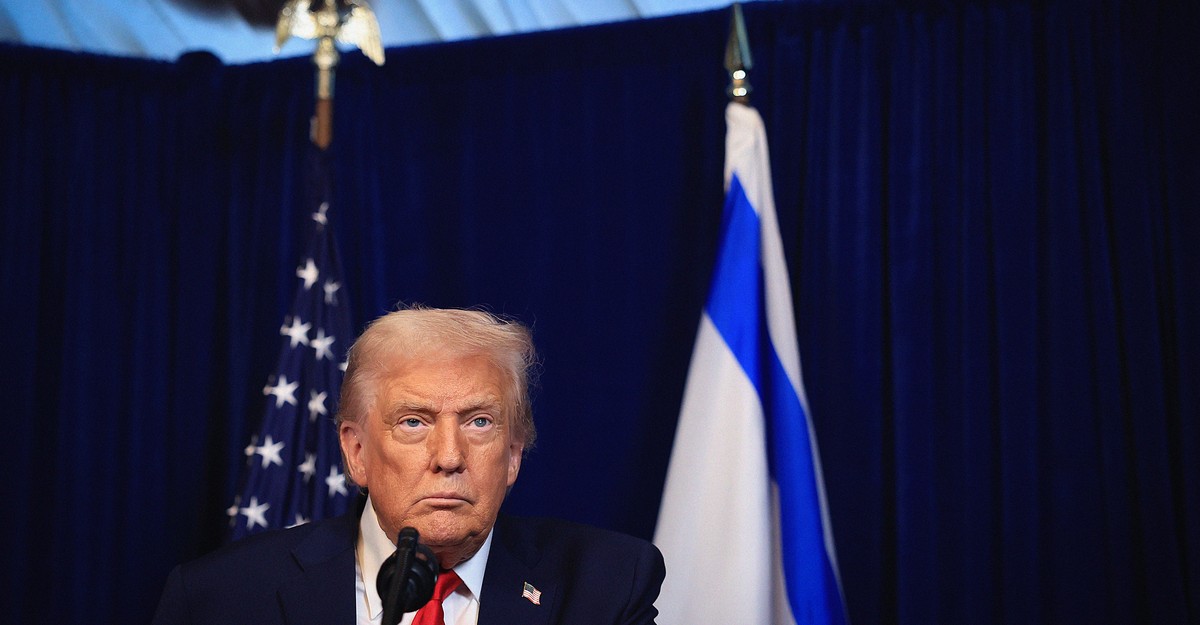
A recent exchange between Donald Trump and Israeli Prime Minister Benjamin Netanyahu has shed light on the increasing tensions in U.S.-Iran relations. A U.S. official disclosed that during a call, Trump harshly criticized Netanyahu for considering military action against Beirut, warning that such moves could jeopardize American diplomacy with Iran. Trump’s blunt message suggested that without his support, Netanyahu could find himself in serious trouble politically. This contentious interaction highlights the complexities involved as the U.S. seeks to navigate a volatile geopolitical landscape.
The Struggle for a Nuclear Deal
The situation surrounding the potential completion of a nuclear deal with Iran seems increasingly dire. Trump’s arguments indicate a preference for avoiding escalation in the near term, but there’s a growing sentiment that merely delaying action will not yield long-term stability. Analysts suggest that while achieving peace is possible, it may only come as a temporary reprieve, with the likelihood of renewed violence looming on the horizon. In essence, Trump appears to be opting for a strategy of procrastination rather than facing pressing issues head-on.
Notably, a senior administration official indicated that Trump believes any meaningful modification to Iran’s stance requires significant military pressure. This could manifest in either prominent ground operations with the risk of American casualties, or targeted strikes on Iran’s infrastructure, which could provoke retaliation. The increasing complexity of the Iranian political landscape adds another layer of difficulty; some officials claim that the regime has seen some internal shifts that could potentially lean toward more pragmatic governance.
Pragmatism or Confrontation?
Iran’s top negotiator, seemingly aligned with a more confrontational approach, has publicly stated that the regime operates under a principle of gaining concessions not through dialogue alone, but through military prowess. This suggests that Tehran is not viewing negotiations merely as a means of communication but as part of a larger strategy to maintain its defensive postures. The regime’s stance raises questions about the efficacy of diplomatic efforts, as it seems unwilling to concede leverage gained through past confrontations.
Additionally, perspectives from within Washington underline the broadening gap between U.S. and Iranian positions. Some experts advocate for a strategic pause, suggesting that the U.S. economy should first stabilize before any substantial military actions are considered. They believe that the diplomatic landscape could be momentarily recalibrated through narrow agreements that exchange economic support for limited military concessions, although these are far from being considered long-term solutions.
A Temporary Solution or a Prelude to More Conflict?
Examining historical trades between the U.S. and other nations sheds light on possible future scenarios. For example, the U.S.-China trade war illustrates how initial confrontations can lead to prolonged negotiations filled with small accomplishments that disguise the absence of substantial progress. The key difference, however, lies in the inherent volatility of the Iranian situation, where the stakes involve military readiness and regional security.
Israel’s ongoing concerns about Iran’s military ambitions cannot be overstated. Any perception that Iran has regained its strength will likely spur Israel into preemptive action to curb rearmament. The ongoing missile launches by Iran against neighboring countries demonstrate a tangible escalation that risks further conflict. As tensions mount, the potential for an inevitable clash appears more certain, complicating Trump’s ability to navigate both Israeli interests and Iranian maneuvering effectively.
In conclusion, the dialogue between the U.S., Israel, and Iran is fraught with misunderstandings and strategic miscalculations. As Trump faces internal and external pressures, finding a sustainable resolution will remain a significant challenge. The complexities inherent in U.S.-Iran relations demand careful management, but the call for a more direct and confrontational approach may lead to further entrenchment on both sides. The tug-of-war between military action and diplomatic attempts encapsulates a precarious future fraught with uncertainty.