
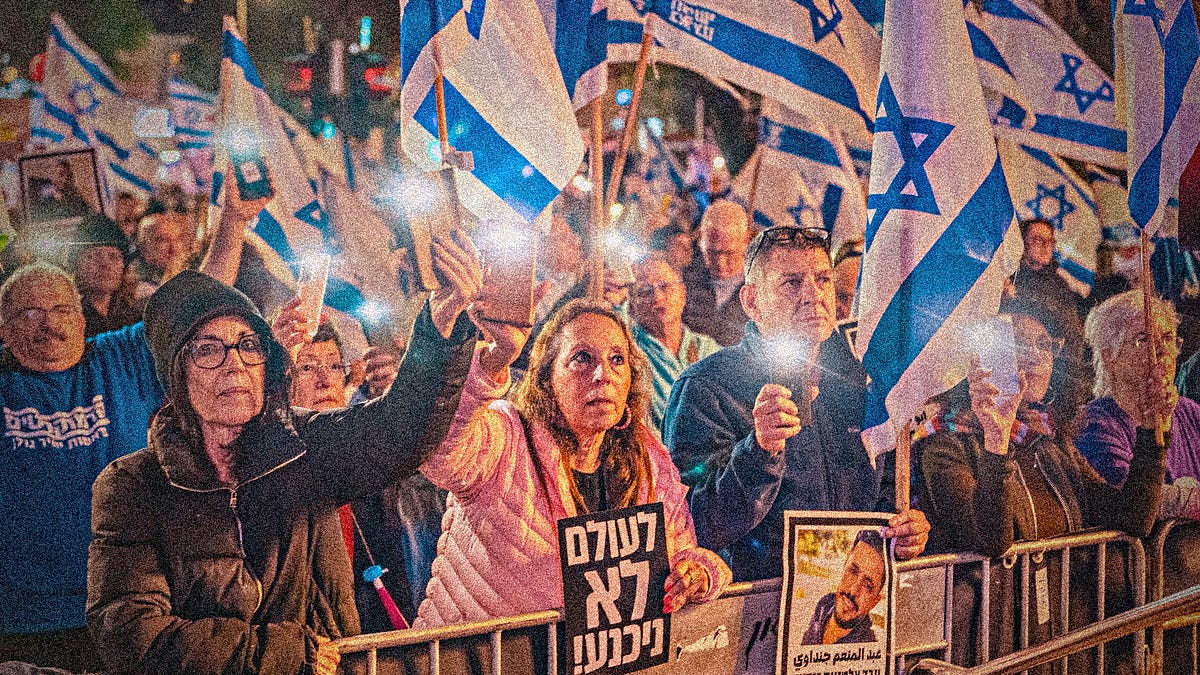
On October 27, Israelis will cast their votes, facing a pivotal decision about the role of their judicial system in governance. Prime Minister Benjamin Netanyahu, currently on trial for corruption, is leading an initiative aimed at diminishing the authority of Israel’s Supreme Court. His coalition recently passed legislation that empowers the ruling coalition to have greater influence over judicial appointments. If Netanyahu’s bloc gains a majority, it will solidify a shift toward absolute majority rule.
### Democracy or Majority Rule?
Israelis now confront a stark choice: to preserve their democratic framework, which limits majority power, or to adopt a model where the majority can dictate terms without checks. Netanyahu and Justice Minister Yariv Levin have framed their proposed judicial reform as a necessary correction against an overreaching judiciary. However, many critics argue that the underlying agenda mirrors the transformation of democracy seen in countries like Hungary under Viktor Orbán.
Israel’s democratic structure is notably more fragile than that of the U.S. With its parliamentary system, governments often enjoy a built-in majority, and there are no second chambers to moderate legislation. The absence of a formal constitution means that Basic Laws can be easily modified by a simple majority in the Knesset, the Israeli parliament. Currently, the primary safeguards against unchecked executive power are the Supreme Court’s role in invalidating unconstitutional laws and the attorney general’s authority to advise against unlawful government actions.
### The Public Response
The proposed overhaul has sparked immense civil resistance. Following Levin’s announcement in January 2023, a wave of protests erupted, bringing tens of thousands into the streets every week. Though protests have been interrupted by crises, they once drew upwards of half a million participants, a significant segment of Israel’s population. This public pushback has drawn international attention, with foreign legal experts noting that Israeli demonstrators have set a precedent for countering threats to judicial integrity.
This movement was not merely about policy but rather represented a deep-seated commitment to the ideals that informed Israel’s founding. Protesters waved flags and echoed values rooted in the nation’s Declaration of Independence, emphasizing their desire to preserve a liberal democratic identity. Scholars from Hungary and Poland have commented on the significance of the Israeli protests, viewing them as a beacon for defenders of democracy in their own countries.
### The Historical Context
Historically, the Zionist movement emphasized a commitment to democratic values, an unusual stance during its early days. Delegates from the first Zionist Congress were elected democratically, and women were afforded voting rights long before they were recognized as such in many other nations. Prominent figures like Theodor Herzl envisioned a Jewish state where all citizens, regardless of background, would have equal rights.
Ben-Gurion’s formulation of the Israeli Declaration of Independence further underscores this commitment. However, he also imposed military rule on Arab populations, reflecting the complexities and contradictions that have marred Israel’s democratic aspirations. Jabotinsky advocated for the protection of minority rights and expressed concerns about majority tyranny; his warnings resonate today as Netanyahu grapples with accusations of seeking to curtail judicial independence.
### Conclusion: A Defining Choice
The upcoming election represents not just a contest between political parties but a fundamental debate about Israel’s identity. Whether the nation will embrace a vision of liberal democracy respecting minority rights or veer toward unchecked majority rule will hinge on voter decisions in the coming weeks. The founding principles of Israel, hinging on a balanced democratic ethos, will either endure through public commitment or face a daunting challenge in the context of shifting political dynamics. The stakes could not be higher for the future of Israeli democracy.