
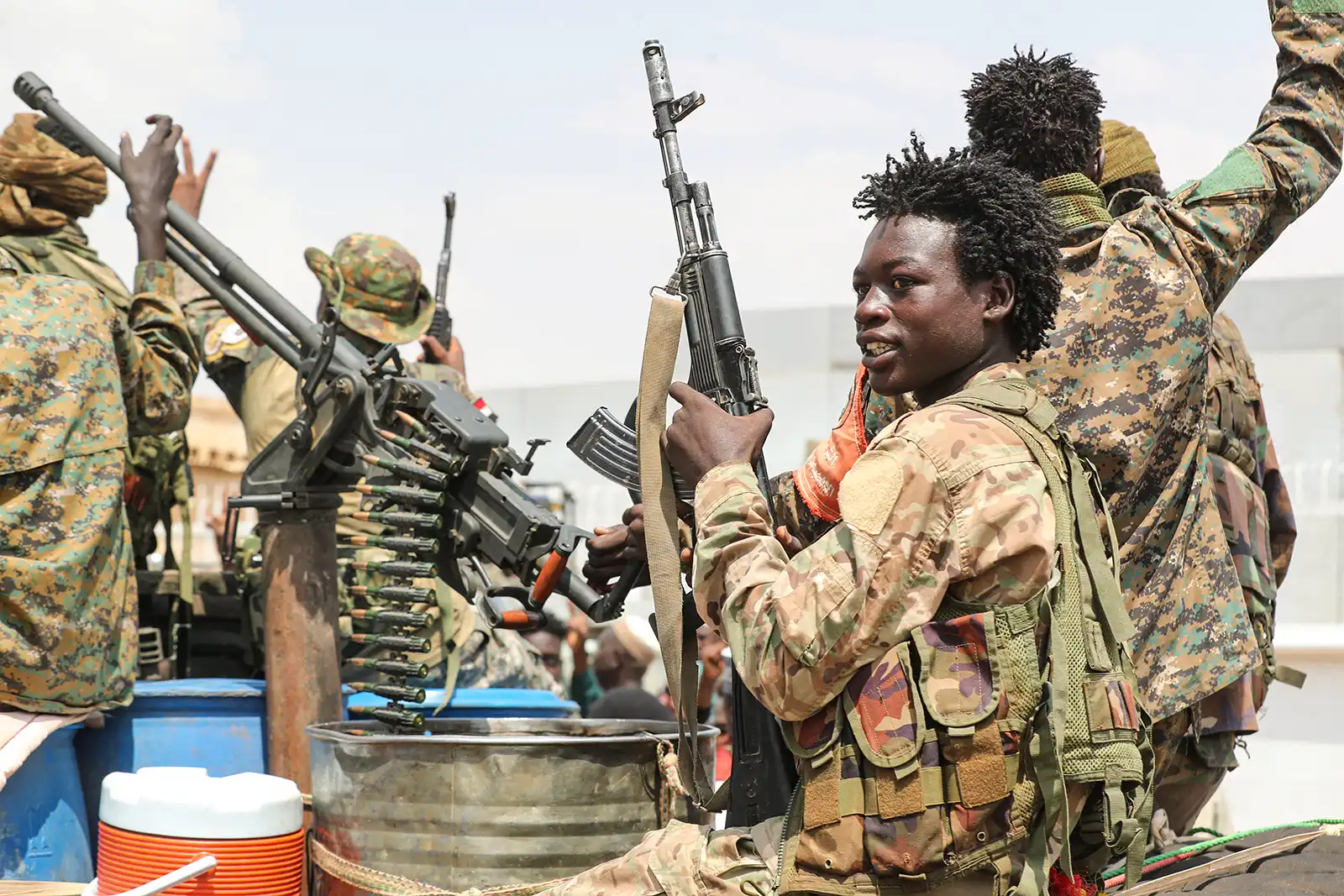
Sudan’s ongoing crisis is not merely a tale of violence; it is a narrative shaped by socio-economic pressures that push people to the brink. The reality is that many Sudanese individuals are left with no viable options, forced to accept impoverished wages just to survive. The proposed 90-day ceasefire, while temporarily halting hostilities, fails to tackle the systemic issues underpinning the conflict, effectively maintaining the status quo.
The Misguided Focus on Managing Conflict
Seemingly endless negotiations by officials often revolve around managing the conflict rather than addressing its root causes. Abdalla Hamdok, who served as the civilian prime minister during Sudan’s transitional government from 2019 to 2021, exemplified this mentality during his time at the United Nations General Assembly. His approach underscores a broader trend in which political leaders focus on smoothing over tensions rather than enacting genuine reform that could lead to sustainable peace.
Within this framework, the civilian political parties represented by the Forces for Freedom and Change have been dismissive of grassroots initiatives like the Resistance Committees’ charter. This document was designed to empower the very citizens who instigated the revolution in 2018-19. As the spokesperson for these committees from their inception until 2023, I witnessed firsthand the rejection of this grassroots effort by established political players who mischaracterized it as “unrealistic.”
Exclusion from Political Dialogue
In October 2021, during the coup led by General Burhan, we refused to allow elite politicians to speak on our behalf. Our concerns were valid: these leaders struck questionable power-sharing agreements with Burhan and the Rapid Support Forces (RSF), agreements that precipitated the current turmoil. Rather than being seen as agents of change, we have often been left in the shadows while powerful actors freely negotiate their agendas.
The U.S. foreign policy towards Sudan mirrors this neglect, focusing on maintaining a superficial facade of civilian representation. Washington’s actions, crucially, do not reflect the lived reality of Sudanese people but cater to international priorities. Over the decades, Sudan has served various geopolitical interests— from being a Cold War ally to acting as a buffer for European migration. The toll of these foreign manipulations has often been invisible to those whose lives are directly affected; displaced Nubian villages, for instance, stand as a stark reminder of the price paid in the name of progress.
Addressing Underlying Issues for True Peace
The decades-long imposition of austerity measures, labeled as “necessary reforms,” has led to the decline of essential services like public education and healthcare, which could uplift the Sudanese populace. Instead, these policies perpetuate a cycle of despair and economic decline. With the dire economic climate, many youth are coerced into joining militias merely to make ends meet.
For lasting peace in Sudan, it is essential for external powers like the United States to look deeper into the motivations behind the conflict. An effective approach would involve imposing sanctions on companies profiting from unethical gold mining practices, particularly those exploiting child labor. The time has come for the U.S. to reconsider the moral implications of including these entities in peace discussions.
In conclusion, any earnest bid for peace in Sudan must confront the fundamentals that fuel the conflict. It is not enough to impose superficial sanctions or chase after the symptoms of war; the root causes must be addressed for real progress to occur. Ignoring the voices and needs of everyday Sudanese citizens only serves to perpetuate the cycle of violence and despair.