
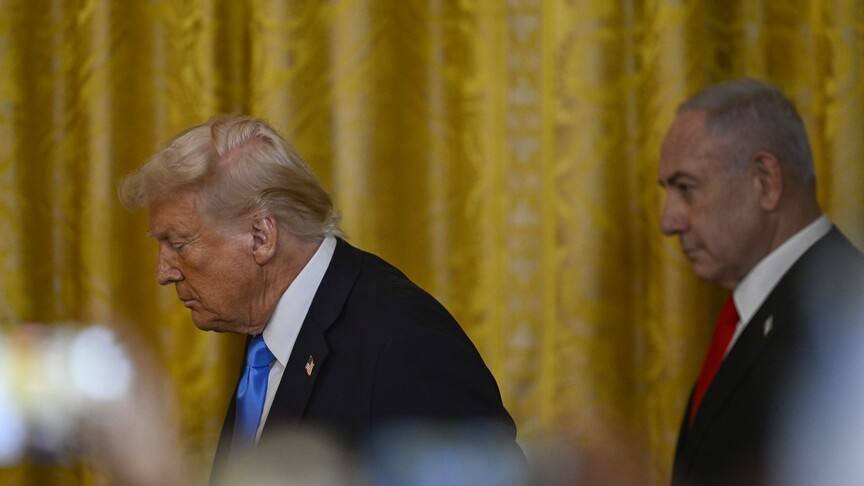
On September 6, 2026, U.S. President Donald Trump addressed the recent trade restrictions imposed by several countries on Israeli settlements in the occupied West Bank. His comments come amid growing international concern over Israel’s settlement policies and actions in the region.
Trump’s Engagement with Global Leaders
In response to questions about the trade measures enacted by twelve nations, including the U.K., France, and Canada, Trump expressed a desire to communicate with Israel and the countries involved. “I’ve just seen it, and I’ll be speaking to Israel,” he stated, indicating that he aims to understand the rationale behind these actions. His remarks suggest an intention to clarify the underlying motivations for the sudden trade restrictions imposed on goods from Israeli settlements.
International Responses to Israeli Settlements
The countries taking action against Israel are aligning against the backdrop of ongoing tensions in the region. On Tuesday, nations—including Denmark, Finland, Iceland, and Norway—declared plans to impose trade limitations on products originating from settlements viewed as illegal under international law. This growing consensus among nations signals a potential shift in the global stance toward Israeli settlement activity, which has long been a contentious issue in the Israeli-Palestinian conflict.
The Situation on the Ground
According to Palestinian sources, approximately 750,000 Israeli settlers inhabit around 156 settlements and 360 outposts in the occupied West Bank, including East Jerusalem. These figures highlight the extensive presence of Israeli settlements in territories claimed by Palestinians. The Israeli government, under Prime Minister Benjamin Netanyahu, has continued to promote settlement expansion, claiming the establishment of 104 new illegal settlements and the creation of 160 agricultural outposts since late 2022. This persistent growth has drawn widespread criticism from various international entities, fueling the desire for increased accountability.
Future Implications
Trump’s planned discussions with both Israel and the nations implementing trade restrictions could lead to significant diplomatic implications. If a dialogue emerges, it might pave the way for renegotiating policies that impact the Israeli-Palestinian conflict. The reactions from the involved countries will also be crucial in shaping future discussions around settlement expansion and trade practices. As international pressure mounts, the dynamics of this longstanding dispute may evolve in ways that reflect shifting global perspectives.
As the situation develops, the responses from key players and the diplomatic efforts undertaken could significantly alter the landscape of Middle Eastern politics, especially concerning issues of sovereignty, trade, and human rights. The forthcoming conversations could determine whether cooperation or further division prevails in this complex geopolitical environment.