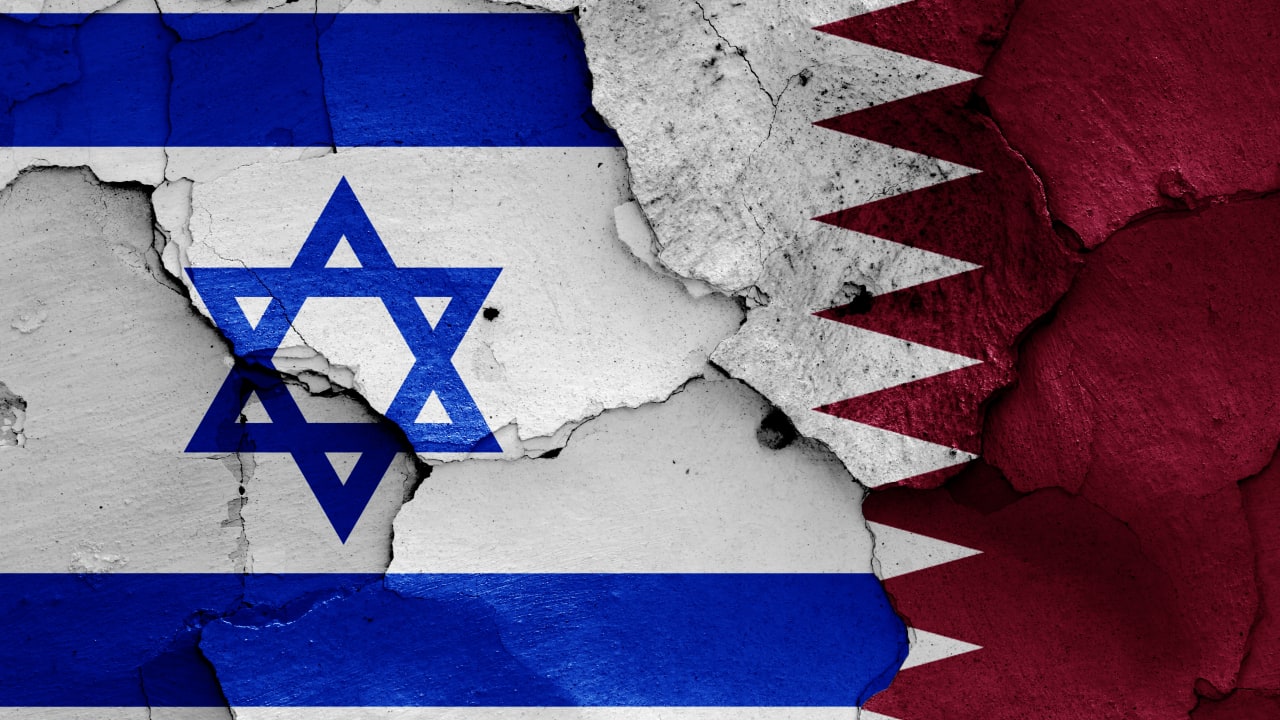
Newly disclosed documents highlight Israel’s collaboration in facilitating financial support from Qatar to the Gaza Strip, unveiling a complex relationship marked by public denouncement and covert agreements. This revelation raises critical questions about the ongoing dynamics in the region, particularly regarding Hamas’s governance in Gaza.
Revealing the Qatari Funding Mechanism
An investigative report by TIME has uncovered that multiple Israeli administrations have played a pivotal role in creating and sustaining a system through which Qatari funds reach Gaza, specifically aimed at humanitarian assistance during Hamas’s rule. Correspondence from senior officials sheds light on the significant yet clandestine operation to support civil society in an area under conflict.
One notable letter from Yossi Cohen, the former head of Mossad, addressed to Qatar’s Emir, Sheikh Tamim bin Hamad Al Thani, expressed Israel’s appreciation for the Qatari humanitarian initiatives, asserting their importance to enhance living conditions in Gaza and to maintain broader regional stability. Such acknowledgments starkly contrast with public denunciations from Israeli leaders who often criticize Qatar for its support of Hamas.
Maintaining Financial Assistance
The investigation revealed another piece of correspondence from 2020, where an official from Israel’s National Security Council urged Qatar to continue its financial support through established channels. The correspondence stressed the necessity of ensuring that Qatari assistance is delivered directly to Gaza without going through third parties, indicating a well-orchestrated approach to aid management.
This duality in Israel’s approach—publicly condemning Qatari financial support while privately requesting its continuation—has caused frustration among Qatari officials. The tensions reflect a broader geopolitical chess game where both nations navigate their public stances while managing a pragmatic involvement in Gaza’s humanitarian needs.
The Future of Aid Distribution
As tensions rise, the documents reveal Qatar’s desire to modify the existing aid distribution systems in 2023 to lessen reliance on both Hamas and the Israeli government. However, numerous sources indicate that Israel is interested in maintaining the current framework. This struggle for control not only shapes the distribution of humanitarian aid but also influences the political landscape within Gaza.
With ongoing discussions about the structure of financial aid, Israel’s role continues to evolve, especially in the wake of notable events such as the recent escalations involving Hamas. Two weeks before a significant attack on October 7, 2023, Mossad director David Barnea requested a renewal of Qatari funding, representing the delicate balance of leveraging economic support as a means to deter violence.
Consequences and Implications
The implications of this intricate relationship between Israel and Qatar extend beyond immediate financial assistance, affecting the governance of Hamas and the Palestinian Authority. Critics argue that continuous support has helped sustain Hamas’s control over Gaza, maintaining a fractured political landscape among Palestinian factions.
Israeli Prime Minister Benjamin Netanyahu has defended the funding’s intent, claiming that the goal was to uphold a functioning civil administration in Gaza. His government’s position remains controversial, as it raises ethical questions regarding orchestrating humanitarian aid amidst a conflict zone, challenging the notion of moral responsibility and the long-term consequences of such policies.
This investigation serves as a reminder that relationships in zones of conflict are often intertwined with humanitarian undertones, revealing how international dynamics shape local realities. As narratives unfurl, stakeholders must reckon with their roles, responsibilities, and the complexities that govern these fraught landscapes.