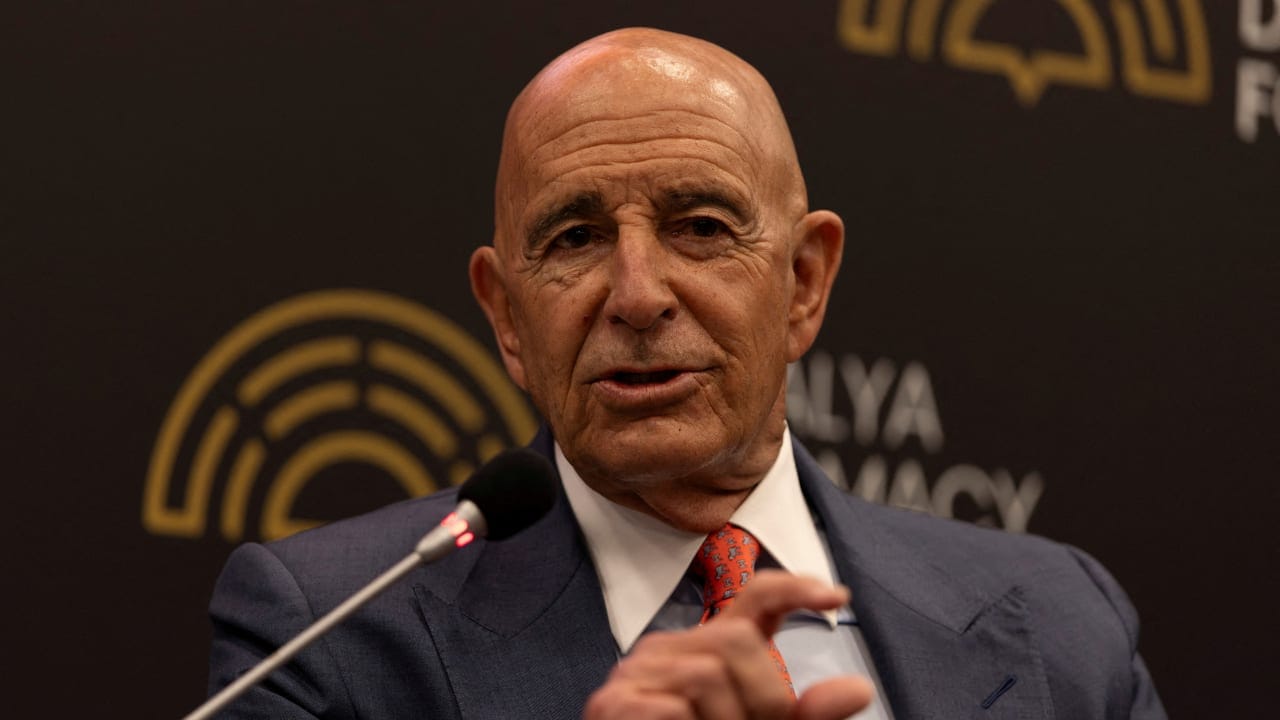
The recent statements from US Ambassador to Turkey, Tom Barrack, regarding the Golan Heights have stirred significant discourse concerning international recognition and geopolitical instability. Barrack, who serves as the special envoy to Syria and Iraq, has presented contrasting views on the status of this contentious region, aligning with US policy established during the Trump administration.
Shifting Positions on Golan Heights Recognition
On Sunday, Barrack reaffirmed the longstanding US position that recognizes the Golan Heights as Israeli territory, stating, “United States policy on the Golan was set by President Trump in 2019 and is unchanged.” This assertion appears to contradict earlier remarks made during an interview where he characterized Israel’s presence in the Golan Heights as an occupation, claiming it was “against the UN resolutions” and the “international order.” These conflicting statements highlight the complexities surrounding the recognition of international borders and territorial sovereignty.
Despite the US acknowledging the Golan Heights as part of Israel for nearly a decade, Barrack’s thoughts on the matter reflect a divide between US policy and international perceptions. He expressed concerns that Israel’s actions in the region contravene established resolutions, emphasizing that Syria has consistently maintained its claim over the Golan Heights since it was captured by Israel during the Six-Day War in 1967.
The Context of Ongoing Conflicts
The backdrop for Barrack’s recent comments includes Israel’s military actions in Syria, particularly a strike on the Abu al-Duhur military airfield in Idlib, which was purportedly linked to potential Turkish troop deployments. This situation further complicates the regional dynamics, involving multiple stakeholders dedicated to asserting their influence over the area. Israel’s military operations suggest an active engagement in regional conflicts, raising the stakes and complexities for all parties involved.
As tensions grew, Barrack deemed Israel’s strike “serious and worrisome,” suggesting it might serve political motives due to the upcoming Israeli elections. His suggestion that these actions could be aimed at provoking Turkey indicates a significant escalation in the already fraught relations between Israel and its neighbors. Moreover, Barrack has advocated for establishing a deconfliction mechanism to mitigate potential violence among Israel, Turkey, and Syria, recognizing that effective communication is essential for regional stability.
The Future of Golan Heights Negotiations
The future of the Golan Heights remains a pivotal point of contention in Israeli-Syrian diplomacy. Although the Syrian delegation recently expressed a desire to separate negotiations surrounding the Golan Heights from other matters, the region’s status continues to loom large in any discussions. This shift could indicate a prioritization of other issues, emphasizing Israel’s withdrawal from areas it has captured after December 2024. The implications of this move could significantly shape the future of peace negotiations in the region.
The ongoing geopolitical maneuvers underscore the complicated nature of the Golan Heights issue. As Barrack continues to navigate US foreign policy towards this topic, the potential for shifting alliances and renewed negotiations presents both challenges and opportunities for stability in this volatile region. The international community and neighboring nations will undoubtedly keep a close watch on these developments, as they could possess profound implications for the broader Middle East landscape.