
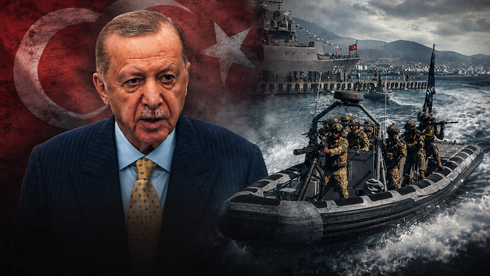
The escalating tensions between Israel and Turkey, particularly heightened in the wake of recent military developments in Syria, have prompted renewed examination of a pivotal question: How formidable is the Turkish military? This query has gained crucial relevance for Israel’s defense apparatus in recent years, revealing layers of complexity beyond mere numbers.
Turkey’s Military Position in NATO
Turkey stands not only as a critical member of NATO but also as a significant regional military force. Its influence stretches across vital geographies—from the Black and Aegean Seas through Syria and Iraq, reaching even North Africa. Ahead of NATO’s summit in Ankara early this year, the alliance underscored Turkey’s stature as possessing the second-largest army, following the United States. The country’s strategic placement between Europe, Asia, and the Middle East, combined with control over the Bosporus and Dardanelles straits, enhances its military significance and tactical advantages.
Troop Strength and Equipment
According to Global Firepower data for 2026, Turkey maintains approximately 481,000 active-duty personnel, alongside 380,000 reservists and around 150,000 paramilitary members. This brings the total military manpower to over one million, positioning Turkey as the 10th largest military globally. Turkey’s ground forces act as the backbone of its military capabilities, boasting around 2,284 tanks and approximately 98,000 various vehicles. The artillery force is notably robust, with over 1,000 self-propelled systems and 635 towed guns, alongside multiple rocket launchers.
Turkey’s military composition reflects a blend of older Western technology and more modern domestic innovations. Historically reliant on American and European weapons, Turkey has significantly invested in the development of self-sustained military capability, producing a range of tanks, artillery, and aerial defense systems. This shift has not only reduced dependence on foreign supplies but also allowed Turkey to enhance its operational self-sufficiency.
Aerial and Naval Capabilities
Turkey operates a diverse aerial fleet, estimated at around 1,101 aircraft, including 201 fighter jets, 301 training aircraft, and 509 helicopters. The primary component of this fleet is the F-16, although Turkey is simultaneously working on developing its own fighter jet, the KAAN, as part of its aim to minimize reliance on foreign technologies. The commitment to innovate is clear, as Ankara continues to engage with U.S. military programs while pursuing development of its indigenous systems.
Naval capabilities are another critical aspect of Turkey’s military. The Turkish Navy comprises 192 vessels, enhancing operations across the Black Sea, Aegean Sea, and Mediterranean. The TCG Anadolu, Turkey’s largest multipurpose assault ship, represents an innovative approach by incorporating unmanned aerial systems as part of its operational strategy.
The Future of Turkey’s Military Power
Turkey’s defense spent has grown substantially, with estimates placing the 2026 budget around $51.4 billion according to Global Firepower. This increase reflects a broader industrial transformation, as military production shifts from foreign dependency to domestic manufacturing. With over 4,500 companies now involved in Turkey’s defense sector—up from just 56 in 2002—the country is making significant strides in self-sufficiency, allowing it to exert greater influence regionally.
In conclusion, Turkey’s military is becoming a force that transcends the label of simply being “large.” With vast troop numbers, advanced domestic technology, and a strategic geographic position, Turkey is positioning itself as a formidable military player. As relationships with Israel continue to strain, understanding Turkey’s capabilities is no longer theoretical but increasingly a vital concern for national security strategy.