
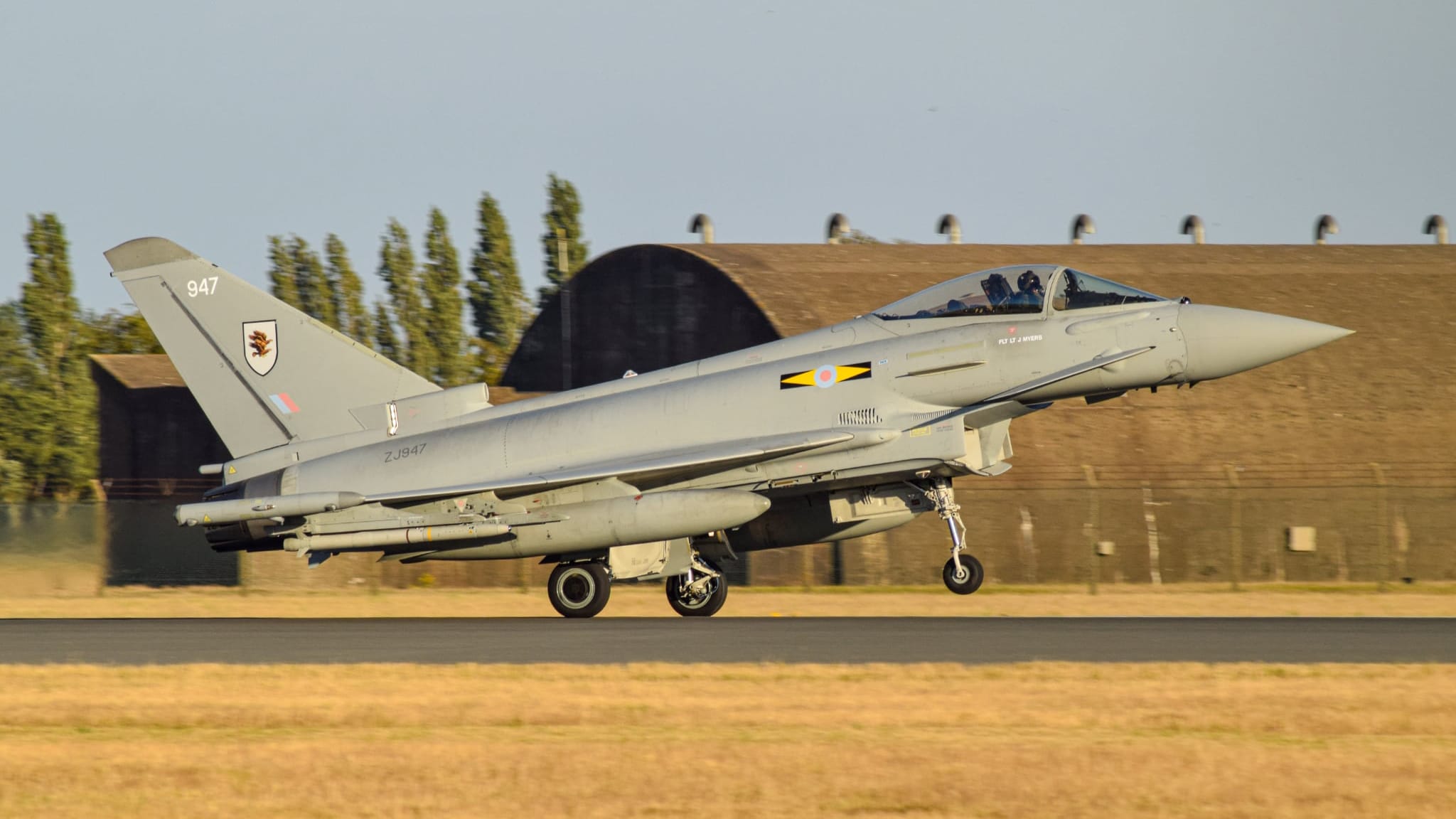
Greater Manchester Police are currently probing a fabricated bomb threat directed at a Qatar Airways Boeing 777, which triggered a swift response from the Royal Air Force’s Quick Reaction Alert (QRA) Typhoon jets. This incident, occurring on July 25, 2026, underscores the seriousness of hoax threats in aviation and the consequences they can unleash.
Details of the Investigation
On July 25, 2026, authorities confirmed that a 14-year-old boy is being questioned in connection with the bomb scare involving the Qatar Airways flight, which was on its way to Manchester Airport. According to reports, the aircraft, identified as A7-BAJ and flying under the flight designation QTR52N from Doha to Manchester, was intercepted by armed Typhoon jets, code-named RIGID 11 and RIGID 12, shortly before 1800 UTC. The fighters, launched from RAF Coningsby, successfully escorted the airliner to a safe landing, where it was met by a notable police presence.
The Response Protocol
Intercepting aircraft in response to bomb threats has become standard procedure for many countries over recent years. When such threats arise, the initial aim is to obtain a visual confirmation of the aircraft’s conditions, especially when deviating from its expected flight path. Interestingly, a similar hoax involving a Qatar Airways flight occurred in 2014, which also required an armed response, revealing how persistent these threats can be.
While RAF Typhoons are routinely armed—typically equipped with both Meteor missiles and Advanced Short-Range Air-to-Air Missiles (ASRAAM)—use of force against civilian aircraft is only sanctioned under extreme circumstances. The quick action taken by the fighter jets in this case highlights the importance of readiness and the seriousness with which authorities treat potential threats to passenger safety.
The Impact of Hoax Calls
Chief Inspector Gary Homa of Operations at Manchester Airport expressed grav concern over such hoaxes. He emphasized that these types of false alarms pose serious risks, draining essential emergency resources and instilling unnecessary fear among passengers and crew. Although this incident concluded safely, he warned that making false bomb threats is not a trivial matter, often leading to severe repercussions.
As the investigation unfolds, authorities are probing the exact role of the 14-year-old boy in the hoax. It has yet to be confirmed whether he was the one who instigated the call or if he has some other connection to the event. Importantly, he was not a passenger aboard the aircraft.
Public Reaction and Social Media Buzz
The intercept was witnessed by many on the ground, leading to social media posts capturing the dramatic moment when the Typhoon aircraft engaged with a commercial airliner. Many observers initially speculated that the intercept was routine, often assumed in cases where aircraft lose communication with air traffic control. However, the context of a bomb threat shifted the narrative significantly.
In an age where social media plays a pivotal role in disseminating information quickly, the incident sparked widespread discussion online, fueling both concern and intrigue from onlookers. This situation serves as a reminder that aviation safety is a collective effort, necessitating caution, swift action, and collaboration among various safety agencies.
While the immediate threat was neutralized, the ongoing investigation serves as a crucial step in ensuring that such incidents are comprehensively dealt with, reaffirming the commitment of security forces to uphold public safety in aviation.