
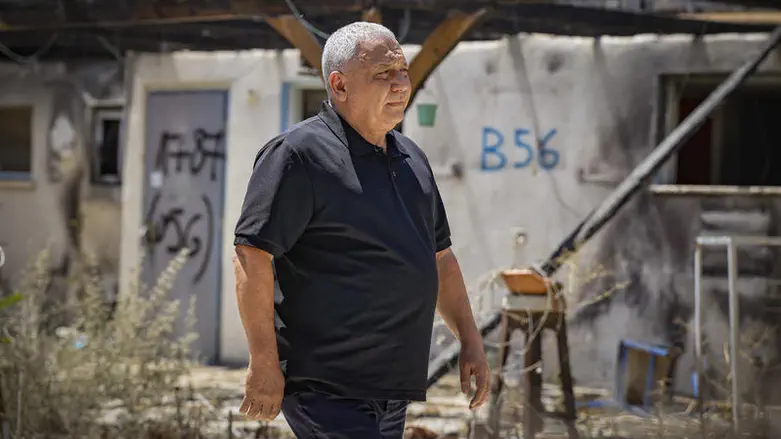
Yashar! The ongoing political climate surrounding Israeli leadership is increasingly complex, particularly concerning relations with Qatar. Recently, Gadi Eisenkot, the chairman of the Yashar party, publicly distanced himself from the bold statements made by Naftali Bennett regarding Qatar’s status. Bennett suggested that if elected prime minister, he would categorically label Qatar as an enemy state. However, Eisenkot insists that such declarations demand careful consideration, emphasizing the extensive diplomatic and security ramifications they entail.
Eisenkot’s Call for Careful Assessment
During a visit to Kibbutz Nir Oz, Eisenkot emphasized that while Qatar’s conduct towards Israel is indeed problematic, decisions regarding its classification should follow a thorough professional evaluation and incorporate insights from relevant security agencies. “Israel must scrutinize its approach to Qatar and make thoughtful decisions,” he stated. Drawing from his experience in the Security Cabinet, he warned against making policy changes as mere campaign rhetoric. Eisenkot firmly stated that these issues warrant serious diplomatic dialogue rather than impulsive political maneuvering.
Contrasting Views on Qatar
Eisenkot’s comments came just a day after Bennett asserted that he would act immediately to declare Qatar an enemy state. Bennett’s position stems from Qatar’s perceived role in bolstering Hamas and influencing events in Gaza, leading him to propose excluding Qatar from any influence in Israel’s decision-making process. While Eisenkot recognized Qatar’s negative actions against Israel, he reiterated the importance of policy shifts evolving from in-depth consultations with organizations like the Mossad and Shin Bet, rather than political posturing.
Commitment to Inquiry and Future Planning
Additionally, during his visit alongside former hostage Gadi Mozes, Eisenkot expressed his commitment to initiating a state commission of inquiry into the events of October 7, should he lead the next government. When questioned about potential candidates for defense minister, Eisenkot refrained from making premature commitments. He noted that various coalition partners and seasoned party leaders are better suited for cabinet roles, underlining the current priority of winning the election and forming a government that prioritizes a Zionist and statesmanlike approach.
Views on Hamas and Security Policies
Eisenkot’s perspective on Hamas paints the organization as one incapable of being engaged in a lasting agreement with Israel. He views Hamas primarily as a terrorist entity that must be dismantled to ensure Israel’s safety. Eisenkot advocates for a strategy rooted in strength, eschewing any concessions made from a position of weakness. Regarding Judea and Samaria, he called for a reassessment of the discourse surrounding the Israeli-Palestinian conflict in light of recent events. Eisenkot believes the immediate focus should be on counter-terrorism efforts and bolstering security rather than engaging in discussions about long-term solutions.
In conclusion, Gadi Eisenkot is advocating for a thoughtful and strategic approach to both foreign and domestic policy, particularly concerning Israel’s interactions with Qatar and the broader security landscape. His stance reflects a desire for responsible governance, aiming to ensure safety and stability in challenging times.