
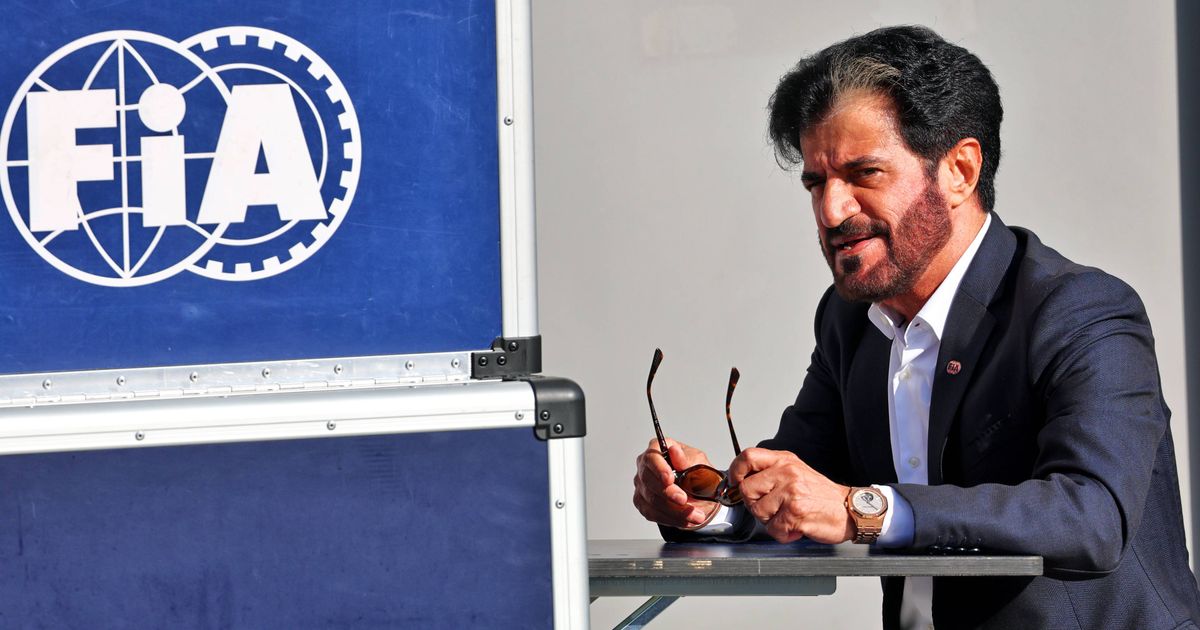
FIA President Mohammed Ben Sulayem has recently addressed the ongoing uncertainty surrounding the conclusion of the current Formula 1 season. With the clock ticking down to a mid-September deadline set by F1 CEO Stefano Domenicali, the implications of potential changes loom large, especially due to the precarious security situation in the Middle East. Ben Sulayem emphasized that ensuring the safety of drivers and team personnel remains a paramount concern.
Safety at the Forefront of Decision-Making
Speaking to the Associated Press during the Monza race weekend, Ben Sulayem reassured stakeholders that no drastic changes would be made unless absolutely necessary. He noted that he is in constant communication with Domenicali and that plans for the end of the season will proceed unless there are compelling reasons to alter them. Currently, the calendar lists the Qatar Grand Prix slated for November 29 and the season finale in Abu Dhabi on December 6; however, there is speculation that a backup race at Imola in Italy could become the new finale.
“Our approach remains business as usual,” stated Ben Sulayem. He underscored the significance of weighing decisions carefully and not rushing to conclusions about cancellations. The safety of all involved in F1 operations is critical, and Ben Sulayem made it clear that human lives take precedence over motorsports.
Human Concerns Over Sporting Events
Reflecting on his background from the United Arab Emirates, Ben Sulayem expressed the emotional weight of the current geopolitical tensions. He articulated a clear stance: “Human lives are more important than motorsport.” It is vital for F1 to act responsibly and thoughtfully, especially in such uncertain circumstances. He also mentioned that there is no immediate emergency concerning the scheduling of races for the 2027 season, allowing time for careful evaluation.
This perspective highlights the careful balance that must be maintained in sports management, particularly in environments where safety is threatened. Canceling races without due consideration could lead to both logistical challenges and reputational damage for F1.
Imola: A Backup Plan with Potential Championship Consequences
In late July, Domenicali announced a mid-September deadline to assess the feasibility of Middle Eastern races. The rising tensions, particularly between Iran and the U.S., have already impacted the racing calendar, leading to the cancellation of two earlier races in Bahrain and Saudi Arabia. With the F1 looking to the future, these factors will influence decisions on the conclusion of the season.
Another important element to consider is the state of the World Endurance Championship (WEC), which has already opted to remove planned races in the Middle East, shifting focus to European locations like Barcelona and Monza for its season-ending events. Domenicali acknowledged the importance of evaluating the situation thoroughly and acting in a timely manner.
Should Qatar and Abu Dhabi ultimately be removed from the calendar, the 2026 season could visibly shrink from 23 to 21 races. Current championship leader Kimi Antonelli holds a 66-point lead over his teammate George Russell, intensifying the stakes as the season draws closer to an end. If Imola serves as the final race location, Antonelli’s pursuit of becoming F1’s youngest champion could culminate just a short drive from his hometown of Bologna.
In summary, while uncertainty hangs over the final races, the priority remains the safety and well-being of everyone involved in the sport. The decisions made in the coming days will significantly shape the future of F1 and its fervent community.